
About Stoneblood · A story from our founder
We begin with shilajit.
But the mission is much larger.
Stoneblood began with a decision that changed the direction of my life: I wanted to be an Earth Nurse.
Read my story
A different kind of service
I had been in nursing school, preparing to follow a conventional path into health and service. But something in me knew I was supposed to leave. My concerns about medicine, the rate of burnout, and a calling to serve larger ecological and social systems led me in another direction.
I stepped away without knowing exactly what would come next.
The very next day, I was guided to shilajit.
An unexpected teacher
At the time, I did not fully understand what I had found—or what had found me.
While I was working with refugees in a community garden project, one of the community leaders came over upon our introduction, looked me straight in the eyes, and said:
I have seen you in many dreams. You will be like my son. I will teach you!
And he did. This precious man, a freedom fighter who had fought injustice in his own country, shared deeply about his ancient Southeast Asian culture and the secrets of “stone blood.”
Through that relationship, I began to understand that substances like shilajit cannot be separated from the landscapes, traditions, and ways of seeing the natural world that surround them.
A hundred samples. One name.
I began studying it, gathering it, working with it, and trying to understand what this remarkable substance actually was. I had not been taught its Western name, so I sent approximately 100 samples across India, asking people in industry and natural medicine, from different regions and traditions, to help me identify it.
Again and again, the same name came back: Shilajit.
That process became one of the first great confirmations that I was on a path worth following. What had begun as a strange discovery in the mountains connected me to a tradition stretching across cultures and generations.
Learning from the land
My education continued, and it changed the way I approached the work. I did not want Stoneblood to become another company that discovers something valuable in nature, packages it, and extracts as much money from it as possible.
I wanted to understand where it came from. I wanted to understand the land. And I wanted to understand what responsibility comes with receiving something valuable from the Earth.
Over the years, I began going deeper into the mountains, learning from the places where shilajit forms and developing a relationship with the landscape itself.
The mountains are not factories.
The land is not an endless resource.
I see shilajit as a reminder of processes unfolding across enormous spans of time—rock, minerals, plants, microorganisms, water, pressure, climate, elevation, and the slow intelligence of the Earth itself. That deserves reverence.
The larger mission
Stoneblood exists because I believe a business can take from the Earth only if it is also willing to give something back. My mission is not simply to sell shilajit. It is to build something capable of serving the larger systems that make life possible.
Human health cannot ultimately be separated from environmental health. Clean water, living soil, healthy ecosystems, strong communities, and human wellbeing are expressions of the same interconnected system.
We are not separate from the land. We come from it. We depend upon it. And if we are fortunate enough to build prosperity from something the Earth provides, some of that prosperity should return to the Earth.
What I want Stoneblood to help make possible
I want this company to become a vehicle for restoration. These are the ambitions guiding the business I am building.
Restore the land
Support ecological remediation and regenerative projects that care for living systems.
Share what we learn
Support environmental education and a deeper understanding of the places we depend on.
Strengthen communities
Support sustainable livelihoods and technologies that help people care for the places they live.
The goal is relationship
Relationship with the mountains. With the land. With the people who use what we create. With the traditions and teachers who helped us understand what we had found. And responsibility to the generations that come after us.
I believe every business that depends upon the natural world should eventually ask a simple question:
If we are fortunate enough to receive something valuable from the Earth, what are we going to return?
Stoneblood is my answer to that question.
The story began with a decision to leave nursing school. It continued through mountains, teachers, research, and a hundred samples sent across India. And it continues today.
To build a business that serves the Earth, serves humanity, and returns resources to the living systems that sustain us all.
A note from our founder
Hear from our founder
More of the story, in his own words.
Stoneblood: Sacred Food of the Mountain
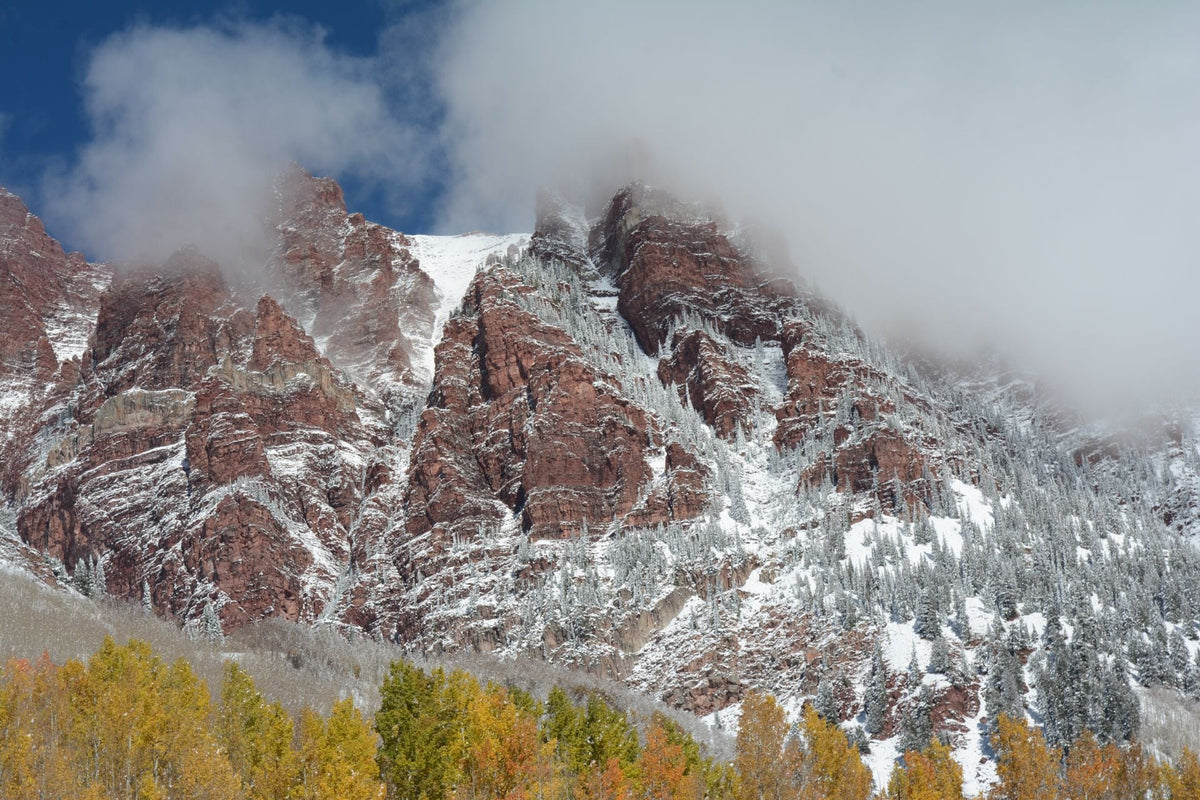
The name Stoneblood comes from the way shilajit appears in the mountains: a dark, mineral-rich substance emerging from cracks in ancient stone. It looks as though the mountain itself is releasing something concentrated from deep within its body.
To us, this is not merely a visual resemblance. The name expresses a relationship.
Stoneblood is an animistic name. It recognizes the mountain not as an inert pile of material, but as a living system shaped by water, minerals, plants, microorganisms, pressure, heat, and time. Shilajit is formed through the interaction of that entire community of life.
It is the blood of stone—not literally, but symbolically: a concentrated nourishment carried from the body of the mountain.
Blood as Sacred Food
In the modern world, blood is often associated only with injury or death. But throughout human history, many cultures have also understood blood as a source of life, strength, nourishment, and continuity.
Across Africa, Asia, Europe, and the Americas, animal blood has traditionally been prepared as food. It has appeared in broths, sausages, stews, ceremonial meals, and combinations with milk, grains, herbs, or spices. What today might be called a “superfood” was often understood more simply as valuable nourishment—rich in iron, protein, minerals, and the vitality of the animal.
These traditions differ greatly, and no single belief represents every culture. Yet many share a principle that deserves respect: when life provides nourishment, nothing should be wasted.
Blood was not always treated as refuse. It could be honored as one of the most concentrated foods an animal offered. Its use acknowledged both the gift of life and the responsibility of receiving that gift.
This understanding helps explain the deeper meaning of Stoneblood. Shilajit is not blood in the biological sense, but it carries a similar symbolism. It is dark, concentrated, mineral-rich, and drawn from a larger living body. It represents nourishment gathered and transformed over time.
It is sacred food from stone.
The Blood of Mother Earth
The name also evokes an older and more intimate image: the menstrual blood of Mother Earth.
Menstruation is the movement of life through cycles—preparation, release, rest, and renewal. In some cultural and spiritual traditions, menstrual blood has been regarded as sacred because it reveals the generative power of the body. It is connected with fertility, transformation, the moon, and the recurring rhythms through which life renews itself.
In this sense, the mountain is not dead matter. She is part of the body of the Earth.
The dark resin that emerges from her stone can be seen poetically as Earth’s own sacred flow: a mineral menstruum released from ancient layers, carrying the memory of plants, water, soil, organisms, and geological time.
This metaphor is not intended to reproduce or claim any one Indigenous teaching. It expresses Stoneblood’s own animistic philosophy: the Earth is alive, matter carries memory, and nourishment is created through relationship.
Naming Through Observation
Many Indigenous and traditional cultures of Southeast Asia developed extraordinarily detailed knowledge of their local forests, mountains, waterways, animals, and medicinal plants. These are many distinct peoples and traditions—not one uniform culture—but their knowledge was often refined through generations of attentive observation.
People watched where a plant grew, when it flowered, which animals sought it, how it changed with the seasons, and how the body responded when it was prepared in different ways. Foods and medicines were often named according to their color, shape, habitat, behavior, effect, or relationship with other parts of nature.
A name could carry an entire body of knowledge.
It could tell people where something belonged, how it should be approached, or what quality it expressed. Naming was not simply classification. It was a way of remembering relationships.
Stoneblood emerged from that same spirit of observation.
I saw a dark substance flowing from stone. I understood it as nourishment created by the mountain. The name came from what the material itself appeared to be telling me.
The Responsibility Within the Name
If Stoneblood is sacred food from a living Earth, then it cannot be treated as just another commodity.
The name carries an obligation.
It asks us to harvest carefully, to disturb as little as possible, and to recognize that ancient natural substances are not created on a human timetable. It reminds us that taking from the Earth must be accompanied by gratitude, restraint, and service.
Stoneblood is therefore more than a brand name. It is a statement about how we see the world.
The mountain has a body.
The Earth moves in cycles.
Her materials carry memory.
And what flows from her stone should be received as sacred nourishment—not merely extracted, but honored.

The story begins with a bottle.
Explore Magic Brown Double Strength, or begin with Original Stoneblood.