
Last Updated: November 12, 2026
Quick Summary
Choose a liquid shilajit for smoothies by comparing strength, label directions and lot documentation. Stoneblood offers two liquid shilajit drops, Original and Double Strength Magic Brown, and each has its own directions, so follow the label on the bottle you buy. Check the serving unit printed on the label before measuring into your blender.
- Compare the two strengths: Original is standard strength, while Double Strength is more concentrated.
- Double Strength Magic Brown directions are 3 to 4 drops once daily; Original is about one dropper daily.
- Read the serving unit on the label, since drops, droppers and milliliters are not interchangeable.
- Match any lot-specific documentation to the lot number printed on your bottle before relying on it.
- Blend your smoothie first, then add the drops and blend or stir briefly to spread them through.
Table of Contents
- Why Liquid Shilajit Works Well in Smoothies
- How to Read a Shilajit Label Before You Buy
- Checking Quality Documentation for a Specific Lot
- Choosing Between Original and Double Strength
- How to Take Shilajit Drops in a Smoothie
- Shilajit Taste in Smoothies and Flavor Pairings
- A Simple Shilajit Smoothie Recipe to Start With
- Your Next Step: Pick a Bottle and Request Its Lot Documentation
- Frequently Asked Questions
Why Liquid Shilajit Works Well in Smoothies
Stoneblood Shilajit sells its shilajit as liquid drops, which makes it easy to add to a smoothie without measuring out a powder or chewing a resin.
The format also keeps things simple. A 1 fl oz (30 mL) dropper bottle fits in a bag or on a countertop, and you add drops to whatever you are already blending. Our two current options are Stoneblood Original and Magic Brown Liquid Shilajit Drops (Double Strength), and the right choice depends on how strong you want your drops to be.
How to Read a Shilajit Label Before You Buy
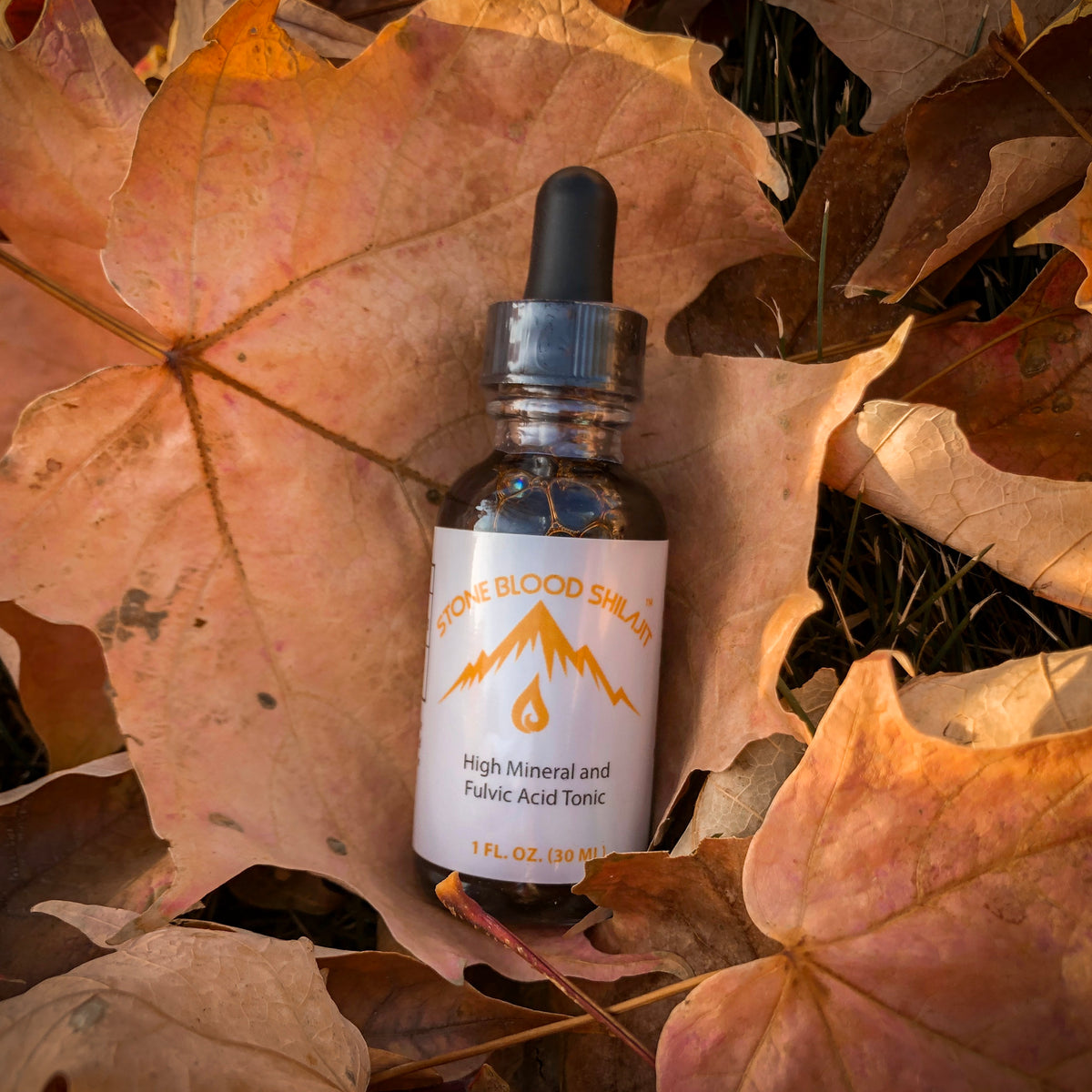
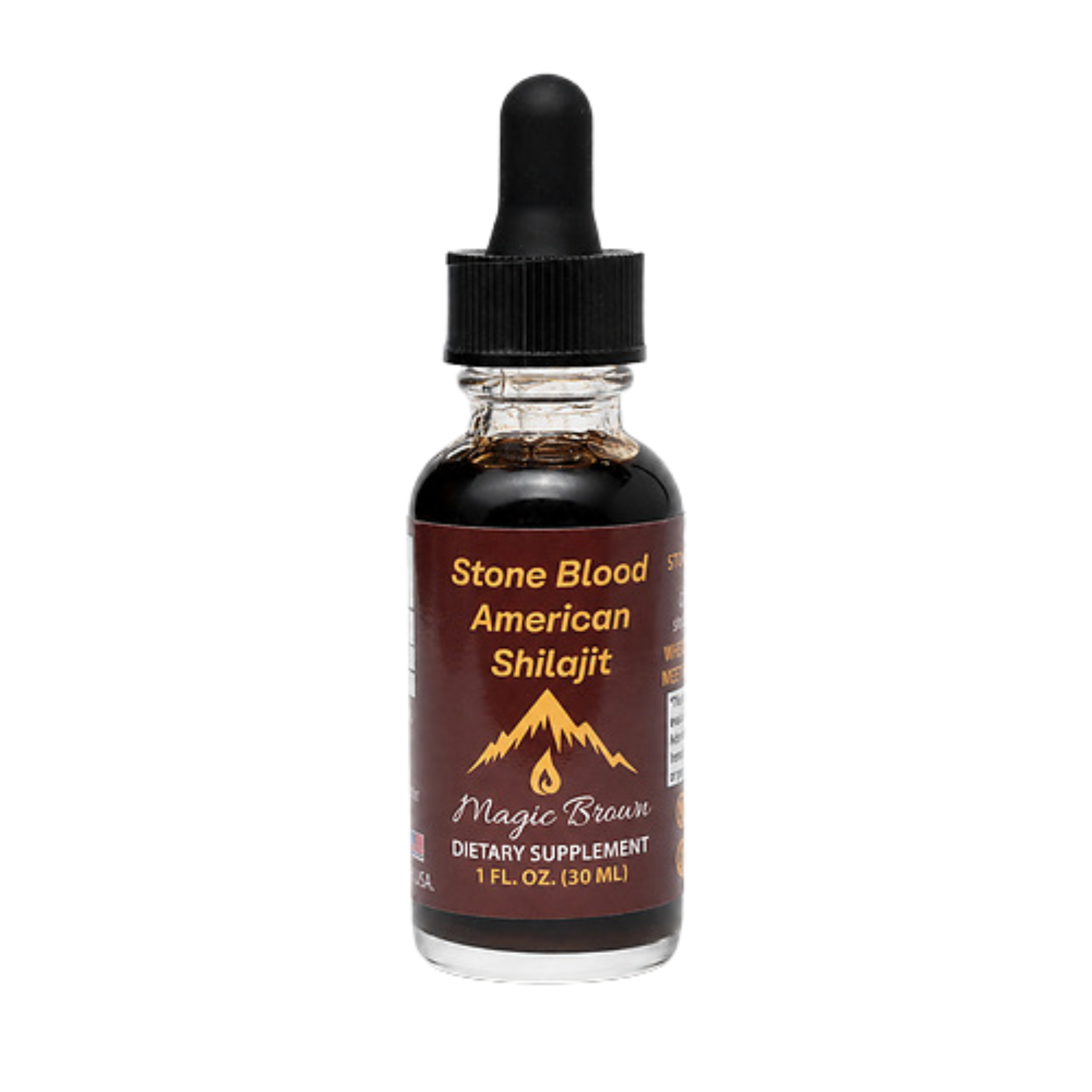
For a liquid product headed into a smoothie, the label is where the real comparison happens, so it helps to read it in a fixed order. Work through the six checks below on any bottle you are considering, including ours.
1. Ingredient list. Read the full list, not just the front of the bottle. Our Original and Double Strength Magic Brown drops list purified shilajit extract and water. A liquid that adds sweeteners, flavorings, preservatives, thickeners or a long list of unfamiliar additives is a different kind of product, and you should know that before you blend it into a drink you have already sweetened with fruit or honey.
2. Serving size and how it is expressed. This is the single most useful line on a liquid label, and it is the one readers skip. Serving size may be written as drops, as a dropper, or as a volume in milliliters. Those are not interchangeable. Read the serving exactly as printed and use that unit when you measure into the blender.
3. Directions for the specific product. Two bottles from the same brand can carry different directions. Our Stoneblood Original label calls for about one dropper (roughly 10 to 15 drops) daily, while Double Strength Magic Brown currently calls for 3 to 4 drops once daily. Never carry one product's directions over to the other. If the directions on your bottle differ from what you read here, contact Stoneblood to confirm the product and lot before use.
4. Concentration and strength wording. Liquid products vary in how concentrated they are, and labels signal this in different ways, a strength name, a "double strength" descriptor, or a stated amount of shilajit per serving. Compare like with like: two bottles that both say "liquid shilajit" can be dosed very differently. If a label does not make its serving clear, that is a reason to ask the seller before you buy rather than to assume.
5. Bottle size and format. Both of our products come in a 1 fl oz (30 mL) dropper bottle. The size should be stated plainly on the label. A dropper bottle is convenient for smoothies because you can add drops directly to the blender, but confirm the format matches how you actually plan to use it.
6. Origin and who bottles it. Our bottles state that they are wildcrafted and refined in Utah, USA, and that bottling, sealing and packaging are performed by Blue Mountain Labs in Lindon, Utah. If a label is vague about where the material comes from or who packages it, ask the seller directly. A specific answer is more useful than a slogan.
A quick way to use this: photograph the back label of any product you are comparing, then line the photos up side by side and check all six items in the same order. The differences that matter, serving unit, directions, concentration wording, show up fast.
Watch out: A front label that says "liquid shilajit" tells you the format, not the serving. If you choose a bottle based on the front panel alone, you can end up measuring the wrong unit into your smoothie.
The six label checks are easier to compare side by side, so here is a quick reference.
| Label check | What to look for | Why it matters |
|---|---|---|
| Ingredient list | Purified shilajit extract and water | Extra sweeteners or additives change the product |
| Serving size | Drops, dropper or mL, as printed | These units are not interchangeable |
| Directions | Specific to the product | Never carry one product's directions to another |
| Concentration wording | Strength name or stated amount | Similar-sounding bottles can be dosed very differently |
| Bottle size and format | 1 fl oz (30 mL) dropper bottle | Confirm the format fits how you blend |
| Origin and bottler | Utah origin and named bottler | Vague sourcing is a reason to ask the seller |
Checking Quality Documentation for a Specific Lot
"Third-party tested" is one of the most common phrases on a shilajit label and one of the least explained. Testing results apply to the specific sample and lot that was tested, not to every bottle a brand has ever made, so the useful question is not whether a company tests but whether you can match a report to the bottle in your hand. Here is how to do that.
Start with the lot number. The lot number is the identifier printed on your bottle that ties it to a production run. Without it, a report is just a document. Write down the lot number before you contact anyone.
Ask for the report for that lot, not a sample report. Email stonebloodshilajit@gmail.com with your bottle's lot number and ask for the documentation tied to it. The Quality & Safety page summarizes the testing we have available, along with the sample and lot details behind it, so you can compare what you receive against the summary.
Read the report in four passes. You do not need a science background to check the basics:
- Identity: Does the report name the product and the lot number, and do both match your bottle?
- What was tested: Does the report list the specific tests that were run, rather than a general statement that testing occurred?
- The laboratory: Is the lab named on the report? A report without a named laboratory is hard to verify.
- The date: When was the sample tested? A report from years ago describes an older run, not the bottle in front of you.
Compare the report to the label. The product name, lot number and format on the report should line up with the bottle. If the report describes a different product, a different lot, or a different format, ask before you use it. A mismatch is not proof of a problem, but it is a reason to get a clear answer.
Ask what the report does not tell you. A lot-specific report describes the sample that was tested. It does not automatically mean every bottle is identical, and it is not a guarantee of purity or safety for your individual use. Treat it as one piece of information, not a verdict. If you have questions about whether a product is appropriate for you, that is a conversation for a qualified healthcare professional.
Keep the paperwork with the bottle. Store the report alongside your bottle or save it to your phone. If you reorder later, you will have a baseline to compare the new lot against, and you will notice quickly if the documentation you receive does not match the product.
Watch out: A certificate of analysis that is not tied to a lot number cannot be matched to your bottle. If a seller sends a generic report when you ask about a specific lot, ask again for the lot-specific document before you rely on it.
Choosing Between Original and Double Strength
Our two liquid drops differ in strength, and that is the main decision to make. Stoneblood Original is the standard-strength option. Its directions call for about one dropper (roughly 10 to 15 drops) daily in water, food, coffee or tea.
If you want a more concentrated drop, Double Strength Magic Brown is the choice to compare. Its current directions are 3 to 4 drops once daily. Because the two bottles are dosed so differently, never swap one set of directions for the other. Always follow the label on the bottle you actually have.
How to Take Shilajit Drops in a Smoothie
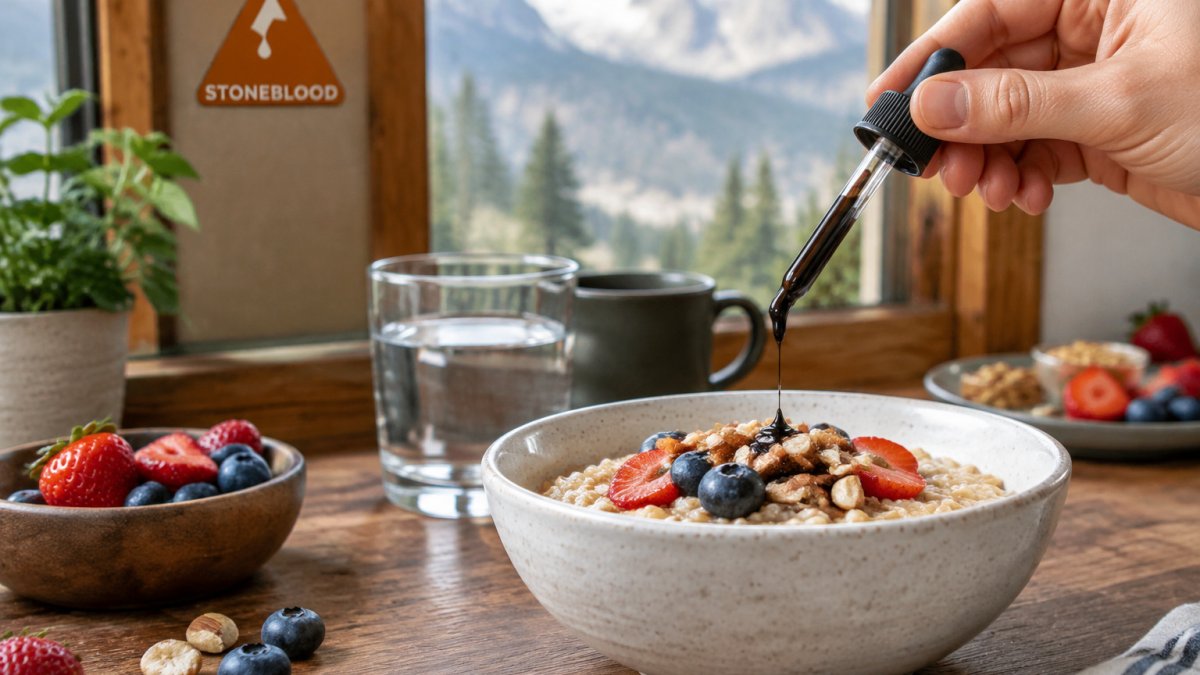
Once you have your bottle, the process is simple. Blend your smoothie first, then add the drops and blend or stir briefly so they spread through the liquid. Adding drops after blending works well when you want to keep the texture smooth.
Use the amount printed on your label for your specific product. See the Original product page for its label directions before you add it to a smoothie for the first time. Adjust only within what the label allows.
Shilajit Taste in Smoothies and Flavor Pairings
Liquid shilajit has an earthy flavor.
For a more mellow smoothie, try a creamier base like almond milk or coconut milk, plus a little lemon juice to brighten the blend. If you want to go deeper on mixing and flavor, our guide on adding liquid shilajit to plant-based smoothies covers the details.
A Simple Shilajit Smoothie Recipe to Start With
This basic recipe is easy to adjust to your taste:
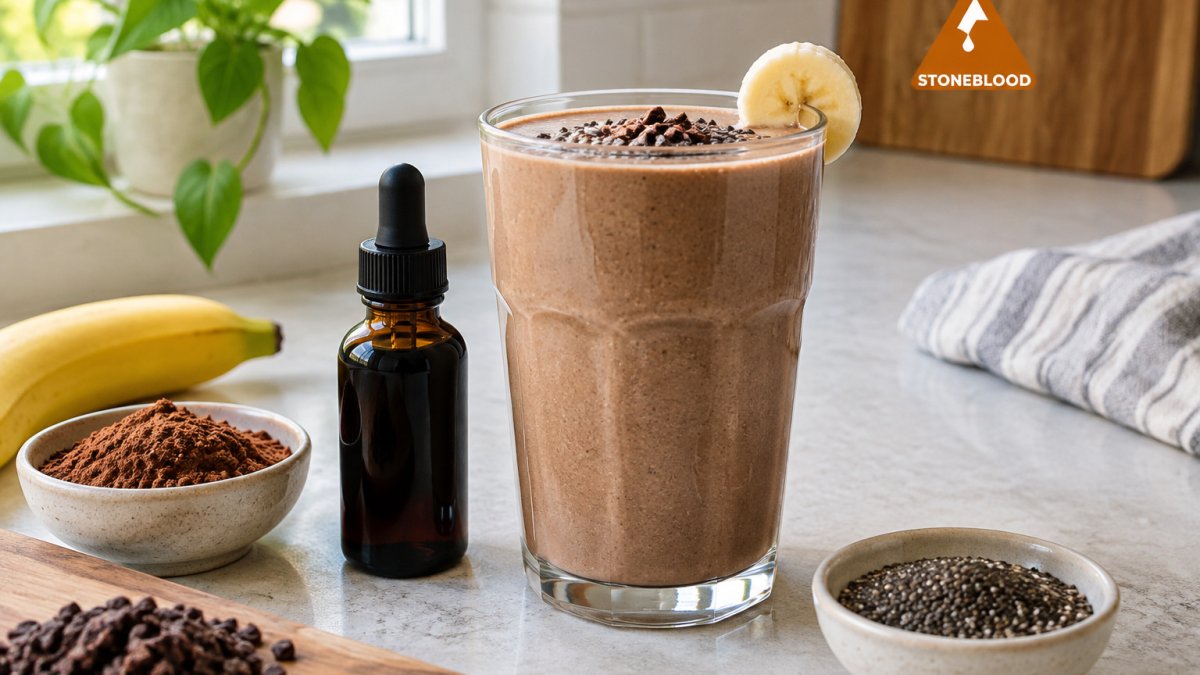
- 1 cup unsweetened almond milk
- 1 frozen banana
- 1/2 cup frozen mixed berries
- 1 tablespoon cacao powder
- 1 teaspoon honey, optional
- Shilajit drops, measured according to your product label
Blend the milk, banana, berries, cacao and honey until smooth. Add your drops, then blend briefly again.
Your Next Step: Pick a Bottle and Request Its Lot Documentation
Choosing a liquid shilajit for smoothies comes down to three things: the strength that fits your routine, a label you can read clearly, and documentation for the lot you are buying. Start by comparing the two strengths, then check the label and request your lot's documentation before you blend your first batch.
These statements have not been evaluated by the Food and Drug Administration. This product is not intended to diagnose, treat, cure, or prevent any disease. Consult a healthcare professional before starting any supplement, especially if you are pregnant, nursing, taking medication or managing a health condition.
Frequently Asked Questions
Which liquid shilajit is best for smoothies?
The best choice depends on the strength you want and whether the lot has documentation you can review. Stoneblood offers two liquid options: Stoneblood Original, a standard-strength drop, and Magic Brown, a double-strength drop. Because Magic Brown is concentrated, its directions are 3 to 4 drops once daily, while Original is taken as one dropper (about 10 to 15 drops) daily. Compare the directions on each bottle, pick the strength that fits your routine, and request the lot documentation before you start.
How do you mix liquid shilajit into a smoothie?
Add the drops after the other ingredients are blended, then pulse briefly so the liquid disperses evenly. Follow the directions printed on your specific bottle, since Original and Magic Brown are dosed differently.
What should you check on a liquid shilajit label?
Check the product name, bottle size (Stoneblood bottles are 1 fl oz, or 30 mL), the ingredient list, which should show purified shilajit extract and water, and the directions for that exact product. Confirm the lot number is printed so you can match it to any documentation. If the directions on the bottle differ from what you read online, contact Stoneblood to confirm the product and lot before use.
Where can you find quality documentation for a specific shilajit product?
Start with the Quality and Safety page on the Stoneblood site, which summarizes available testing for the refined shilajit and finished products, along with the sample and lot details. Results apply only to the sample and lot tested, so use the lot number on your bottle. To request documentation for your bottle, email stonebloodshilajit@gmail.com with that lot number.

Share:
How to Mix Shilajit Drops Into Oatmeal and Breakfast