
Quick Summary
To spot authentic shilajit drops, read the label first and check for a clear ingredient list, directions and a lot number. Color and smell are weak clues on their own, so ask the seller for a lot-specific quality report and confirm the lab, date and tests it covers.
- Check that the bottle lists a lot or batch number and the directions for use.
- Stoneblood Original ingredients are purified shilajit extract (resin) and water.
- Color and smell are weak evidence; a mislabeled product can look correct.
- Skip the burn or heat test, which is not a purity test and can damage the bottle.
- Request a report tied to your bottle's lot, then check the lab name and test date.
Table of Contents
- Why Shilajit Drops Are Hard to Judge by Looks Alone
- What a Shilajit Drops Label Should Tell You
- Physical Characteristics of Liquid Shilajit
- How Shilajit Third-Party Testing Works
- Reading a Lot-Specific Quality Report
- Shilajit Sourcing: Questions Worth Asking
- Requesting Documentation for Your Stoneblood Bottle
- Frequently Asked Questions
How to Spot Authentic Shilajit Drops: 7 Label Checks
Last Updated: November 19, 2026
Why Shilajit Drops Are Hard to Judge by Looks Alone
Shilajit is a dark, mineral-rich resin, and many products sold under its name look nearly identical on a shelf. Liquid drops make the problem harder, because a dark brown liquid tells you very little about where it came from or how it was handled. At Stoneblood Shilajit, we think the smartest first step is to read the label and ask for documentation, not to trust what the bottle looks like.
Color and smell can offer clues, but they are weak evidence on their own. Many ingredients and preparations can look similar in a bottle. A product that appears dark and earthy may still be poorly sourced, mislabeled, or inconsistent from one batch to the next.
That is why this guide focuses on checks you can actually perform: reading the label, understanding what a lot-specific report covers, and asking the seller the right questions. Each check is more useful than a home test that promises a clear answer it cannot give.
What a Shilajit Drops Label Should Tell You
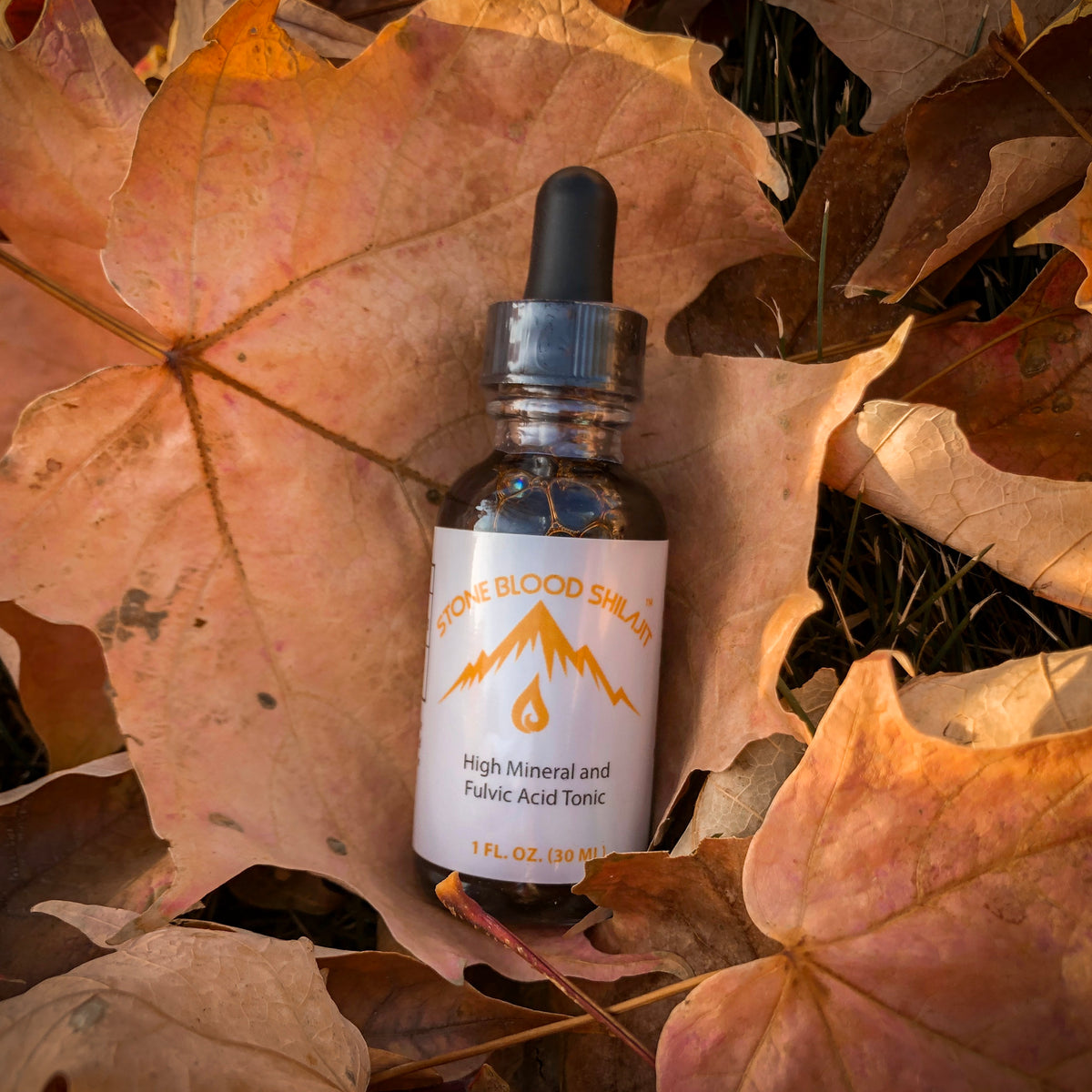
A clear label is the starting point for judging any shilajit drops product. Look for the product name, the bottle size, the ingredient list, and the directions for use. You can also use our checklist for reading a liquid shilajit label to go through each item in order.
Check that the ingredients are stated in plain terms. For Stoneblood Original, the listed ingredients are purified shilajit extract (resin) and water. A label that is vague about what is inside deserves a closer look.
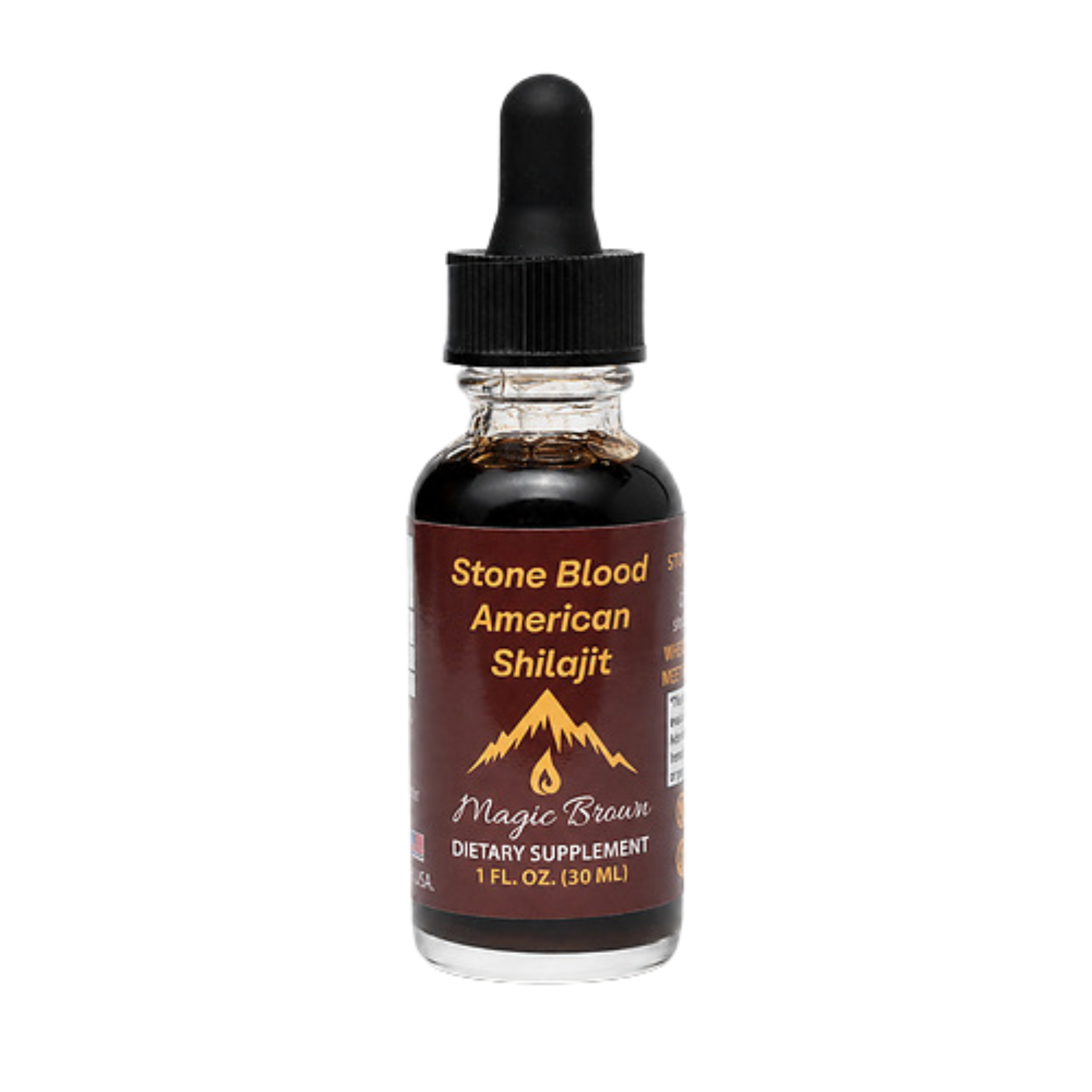
Directions matter too. Stoneblood Original is labeled for one dropper, about 10 to 15 drops, daily. Stoneblood Magic Brown, the double-strength version, is labeled for 3 to 4 drops once daily.
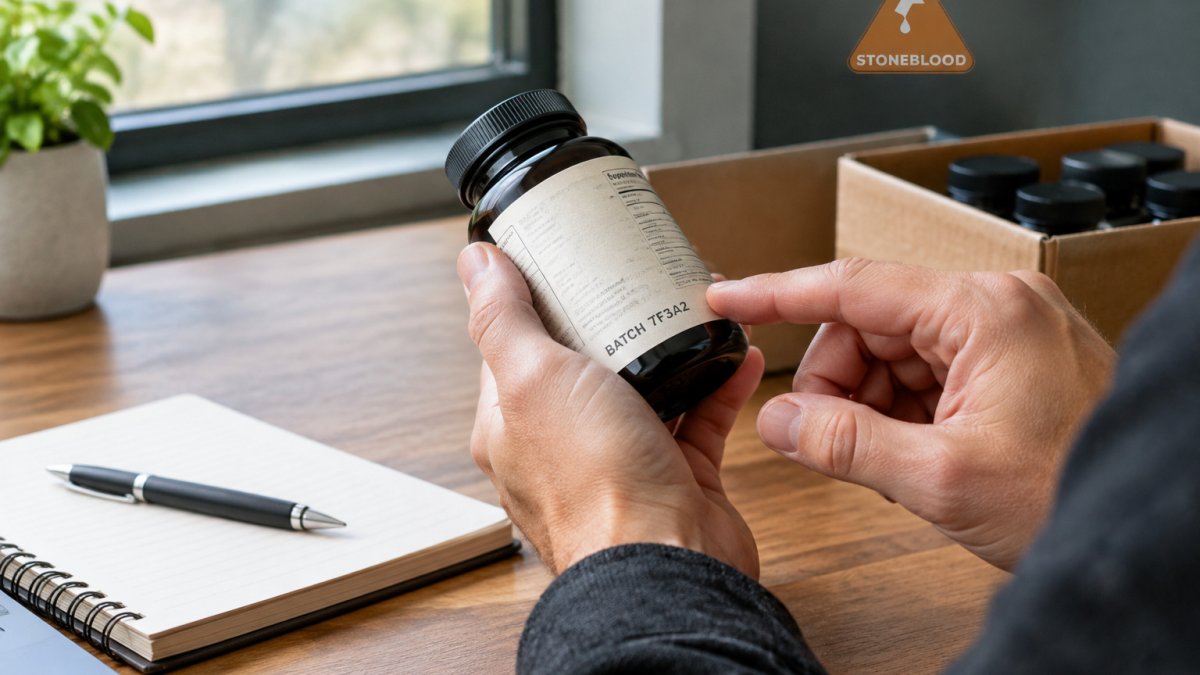
Finally, look for the Food and Drug Administration disclaimer and a lot or batch number. The lot number is more useful, because it ties the bottle to a specific production run you can ask about.
Physical Characteristics of Liquid Shilajit
Liquid shilajit is typically a dark brown to near-black liquid with a glossy sheen and an earthy, mineral-like aroma. Because drops are already dissolved and diluted, they give you fewer visual clues than a jar of resin does. What you can observe is limited to color, clarity, smell, taste, and how the drops behave in water.
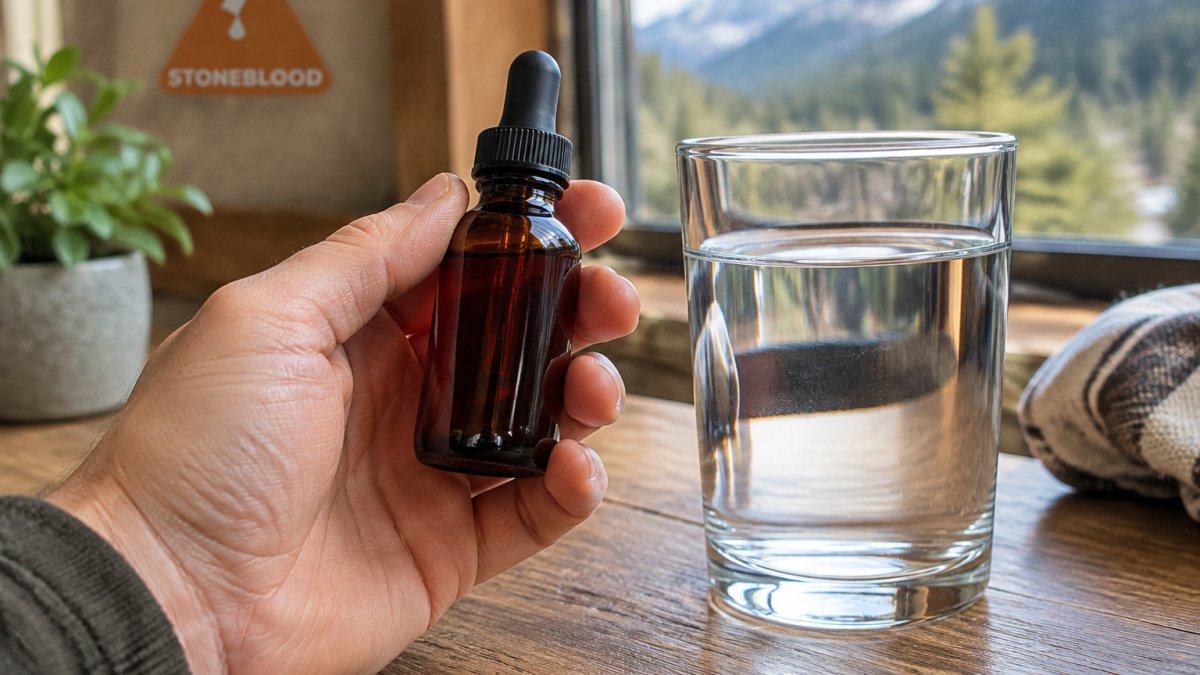
Here is what each clue is actually worth:
- Color. Dark brown is common, but color alone proves nothing. Ingredients such as caramel color, molasses, or plant extracts can darken a liquid that contains little or no shilajit. A uniform, consistent color across bottles from the same lot is a mild positive sign; a dramatic color shift between two bottles of the same product is worth a question to the seller.
- Clarity and sediment. A refined liquid should look smooth and consistent. A little sediment can settle in a natural product, but heavy grit, an oily film, or layers that will not recombine after gentle shaking are reasons to contact the seller before use.
- Smell. An earthy, mineral, slightly smoky aroma is typical. A sour, solvent-like, or strongly perfumed smell is a warning sign, not proof of anything by itself.
- Taste. Taste is a weak test, because a bitter additive can mimic that profile, and tasting an unknown product is not a reliable safety check.
- Solubility in warm water. A few drops stirred into warm water should disperse fairly evenly. Large oily slicks, floating flakes, or a gritty residue that will not dissolve suggest the product may not be a well-refined liquid, though some natural variation is normal.
Watch out: the popular burn or heat test, where a drop is heated to see if it bubbles, melts, or leaves ash, is not a purity test. It can damage a bottle, produce fumes, and tell you nothing reliable about identity or contaminants. Skip it.
Treat every physical observation as a preliminary clue, not a verdict. A product can look, smell, and mix exactly right and still be mislabeled, and a genuine product can look slightly different from one lot to the next.
The table below summarises what each physical clue can and cannot tell you about a liquid shilajit drop.
| Clue | What it shows | Limit |
|---|---|---|
| Color | Dark brown is common | Can be darkened by additives |
| Clarity and sediment | Smooth, consistent liquid | Heavy grit or oily film needs a question |
| Smell | Earthy, mineral aroma is typical | Solvent or perfume smell is a warning |
| Taste | Weak test only | Bitter additives can mimic the profile |
| Warm water test | Disperses fairly evenly | Some natural variation is normal |
| Burn or heat test | Not a purity test | Can damage the bottle; skip it |
How Shilajit Third-Party Testing Works
Third-party testing means an independent laboratory, not the brand itself, analyzes a sample of the product. A testing report, often called a certificate of analysis, lists what was measured and the results. Used well, these reports can help a buyer evaluate a specific sample.
The key word is "sample." A report describes the material that was tested, identified by a sample or lot number. It does not automatically cover every bottle sold. For that reason, ask whether the report matches the lot printed on your bottle.
Stoneblood's Quality and Safety page summarizes the testing available for refined shilajit and finished products, along with the sample and lot details. Those details apply only to the sample and lot that were tested. Reading that scope carefully is more useful than trusting a general statement like "third-party tested" on its own.
Be cautious of testing claims that sound absolute. A product cannot be guaranteed free of every possible contaminant, and no single report proves safety for all uses.
Reading a Lot-Specific Quality Report
To use a quality report well, start with the lot number. Find the lot or batch number printed on your bottle, then confirm the report refers to that same lot or to a sample closely tied to it. A report for a different lot tells you about that lot, not yours.
Next, check the date and the laboratory name. A report should identify the lab that performed the analysis and when the testing was done. Reports without clear dates or lab details are harder to trust.
Then look at what was tested. The tests included in a report depend on what was analyzed for that sample. A good report lists each test, the result, and the limit it was compared against. If a test is missing, ask why rather than assuming it was done.
Finally, note the sample scope. Ask whether the results cover the finished bottle or an earlier stage such as the refined extract. Both can be useful, but they answer different questions.
Shilajit Sourcing: Questions Worth Asking
Where a shilajit comes from matters, and the answer should be specific. Stoneblood Original and Magic Brown are wildcrafted and refined in Utah, USA. Ask any seller where the resin was collected, who handled it, and where the product was bottled.
Useful questions to ask include:
- Where was the resin harvested, and by whom?
- Is the product refined, and where?
- Who bottles and packages it?
- Can you provide a report for the lot on my bottle?
- How do you trace a bottle back to its production run?
Good sellers answer these questions clearly and provide documents. For Stoneblood, bottling, sealing, and packaging are performed by Blue Mountain Labs in Lindon, Utah, and the company can be asked about sourcing for your lot.
A Decision Path for an Uncertain Bottle
Most buyers do not need a perfect answer, just a clear next step. Work through these stages in order and stop as soon as a product fails one:
- Read the label first. If the ingredient list is vague, the directions are missing, or there is no lot or batch number, set the bottle aside. Without a lot number you cannot request lot-specific documentation, which removes your best verification tool.
- Compare the label to the product page. If the directions or ingredients on the bottle differ from what the seller publishes, contact the company to confirm which product and lot you have before use. Do not guess at directions.
- Ask the seller the sourcing questions above. Clear, consistent answers and an offer to share documents are a good sign. Vague answers, or answers that change depending on who you ask, are a reason to walk away.
- Request the lot-specific report. Ask for the documentation tied to the lot on your bottle and check the lab name, the test date, and what was actually tested. If the report covers a different lot, it does not answer the question about yours.
- Decide. If the label, the seller's answers, and the lot documentation line up, you have done the checks available to a buyer. If any step stalls, treat the product as unverified and either keep asking or avoid it.
Watch out: a confident tone is not documentation. A seller who says a product is "lab tested" or "pharmaceutical grade" without naming the lab, the lot, or the tests has told you nothing you can check. Ask for the report itself.
For Stoneblood, you can request documentation for your bottle by emailing stonebloodshilajit@gmail.com with the lot number and product name. The Quality and Safety page at /pages/quality-safety summarizes what testing is available and how sample and lot details are scoped.
Requesting Documentation for Your Stoneblood Bottle
If you want to verify a bottle you already own, the process is simple. Find the lot number printed on the bottle.
When you write, be specific. Name the product, either Stoneblood Original or Magic Brown, include the lot number, and ask which reports are available for that lot.
Keep the bottle's label and your order details handy. They help confirm which product and lot you have.
Remember that documentation answers questions about a specific sample or lot. Use it as one part of your decision, alongside the label, the seller's answers, and your own judgment.
These statements have not been evaluated by the Food and Drug Administration. This product is not intended to diagnose, treat, cure, or prevent any disease.
Read more: Request lot-specific documentation with our guide to requesting lot-specific quality documentation, or learn to read the batch number on your bottle in How Do You Read a Supplement Batch Number?.
Ready to see the details for yourself? Check out Stoneblood Original shilajit drops or Magic Brown double-strength drops, then request the report for your lot.
Frequently Asked Questions
How can you tell whether shilajit drops are authentic?
No single check proves authenticity. Start with the label: it should name the product, list purified shilajit extract and water as ingredients, and state where the resin was wildcrafted and refined. Then look for lot-specific testing and a lot number you can match to a report. Physical traits such as a dark, glossy liquid with an earthy smell are useful clues, but they cannot confirm purity on their own. Treat appearance as a first filter, and rely on documentation for verification.
What should a shilajit drops label include?
A useful label names the exact product and strength, lists the ingredients, states the bottle size in fluid ounces and milliliters, and gives clear directions. It should also show a lot number and point to where the origin and testing are described. For Stoneblood, the Original and Magic Brown bottles are 1 fl oz (30 mL) dropper bottles with purified shilajit extract and water as the ingredients. If a label leaves out the lot number or product details, ask the seller before you buy.
Are home tests enough to verify shilajit authenticity?
Home checks such as observing color, smell and how the liquid mixes in water can flag products that look or act very differently from what you expect. They cannot confirm identity, contaminant levels or purity, and a product that passes them may still not match its label. Documentation tied to the specific lot, along with the product's label and sourcing details, gives you a far more reliable basis for a decision.

Share:
How Do You Read a Supplement Batch Number?
7 Steps to Add Shilajit Drops to Tea Without Losing Taste