Last Updated: November 16, 2026
Quick Summary
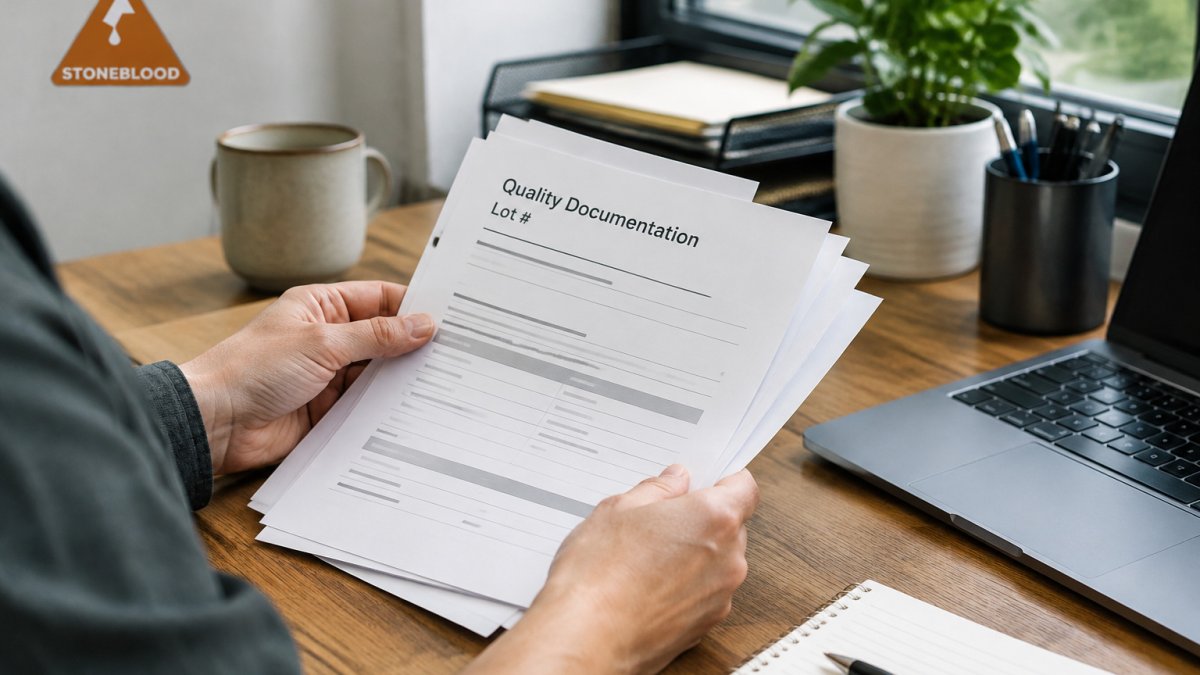
To learn how to request lot specific quality documentation, find the lot number printed on your bottle, confirm the product name, and send a written request naming the document you want. A certificate of analysis shows the actual test results for that lot. Include the lot number, product, bottle size and purchase details so the reply matches your bottle.
- Find the lot number printed on the 30 mL bottle label before contacting anyone.
- Ask for a certificate of analysis when you want the actual test results.
- Ask for a certificate of conformance when you need a yes or no check against specifications.
- Confirm the lot number on any report matches your bottle before relying on it.
Table of Contents
- Why Lot-Specific Documentation Matters
- Finding the Lot Number on Your Stoneblood Bottle
- Types of Quality Documents and What Each One Covers
- What Details to Include in Your Request
- How to Read a Lot-Specific Quality Report
- Response Times, Unavailable Records, and Document Control
- Requesting Your Bottle's Documentation Today
- Frequently Asked Questions
Why Lot-Specific Documentation Matters
Lot-specific quality documentation tells you how one particular batch of a product was tested and produced, and knowing how to request lot specific quality documentation lets you see that record for your own bottle. When you request documentation for your lot, you can see what was checked for that specific run.
Many buyers assume a general claim like "third-party tested" covers every bottle. A lot-level record is different. It ties a result to a lot number, so you know which batch the paperwork describes. Stoneblood Shilajit offers its shilajit as a liquid drop in 30 mL bottles.
Here is the simple reason it matters: a general statement cannot tell you what is in your bottle. A lot record can, if one exists for your lot.
Finding the Lot Number on Your Stoneblood Bottle
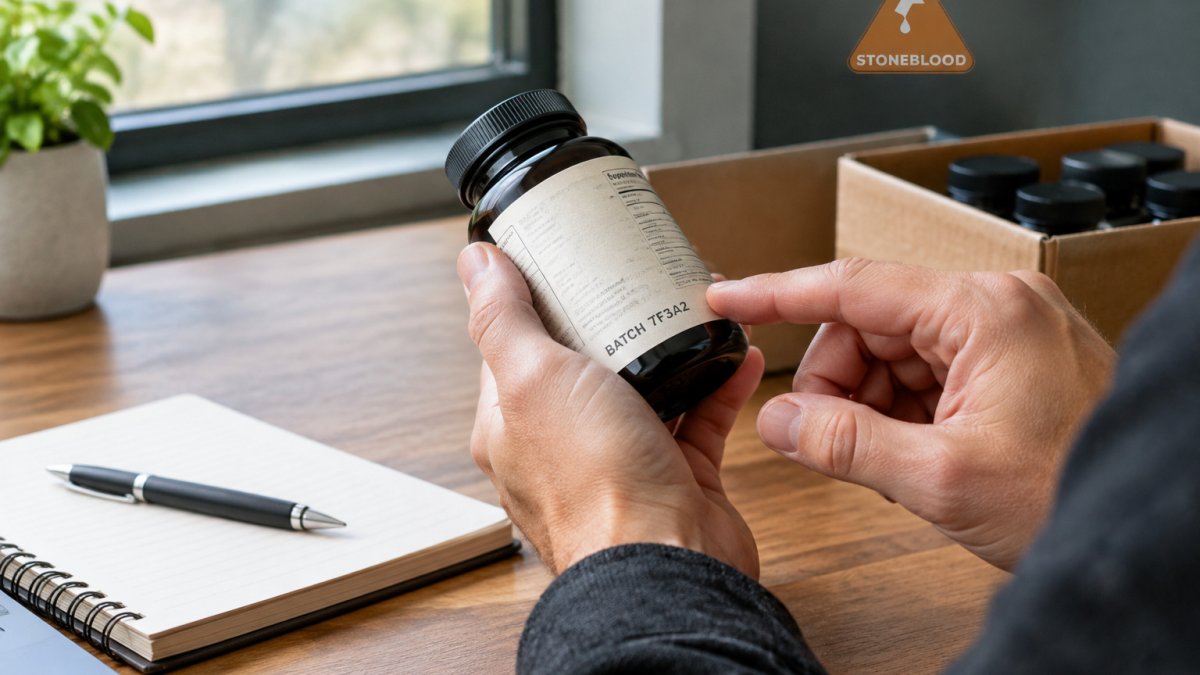
Before you contact anyone about how to request lot specific quality documentation, find the lot number on your bottle. Look at the printed label on the 30 mL bottle for the lot number.
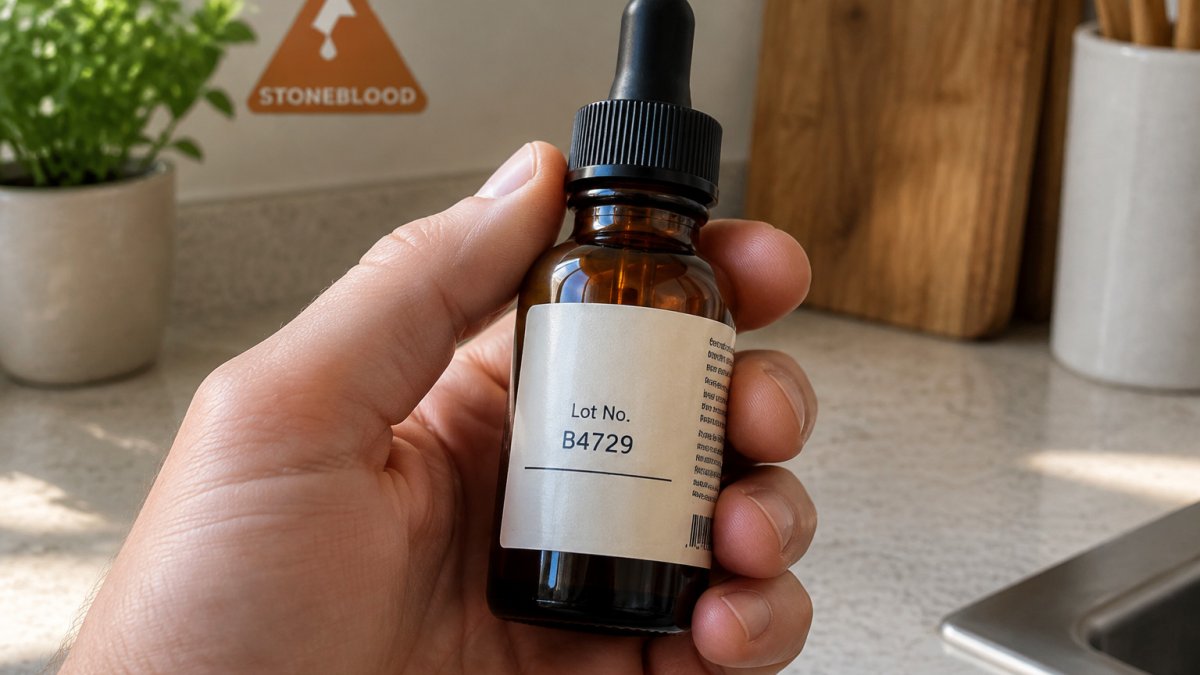
Follow these steps:
- Pick up your bottle and turn it so the label faces the light.
- Look for the word "Lot" or a batch code printed on the label.
- Write the full code down exactly as printed, including any letters and dashes.
- Note which product you have, either Double Strength (Magic Brown) or Original.
Keep the bottle label handy. You will need the lot number and product name when you send your request.
Types of Quality Documents and What Each One Covers
Different documents answer different questions, and asking for the wrong one is the most common reason a request comes back with a partial answer.
- Certificate of analysis (COA): A lot-specific report that lists the tests performed on a sample from that lot and the result of each test, usually alongside the specification or limit the result is compared against. Ask for the COA when your question is "what was tested on this lot, and what did the results show?"
- Certificate of conformance (CoC): A statement that the lot met stated specifications, typically without reproducing every test result. Ask for a CoC when your question is "does this lot meet the specification?" and you do not need the underlying numbers.
- Inspection or test report: Records of the checks run during production or before release, which may include visual inspection, packaging checks, or in-process measurements. Ask for this when your question is about how the lot was handled during production rather than about a final test result.
- Production or batch record summary: Shows the production steps tied to the lot number, what went in, in what order, and under what conditions. Ask for this when your question is about process rather than test outcome.
- Traceability record: Connects the finished lot back to incoming materials or forward to where the lot was shipped. Ask for this when your question is about origin or distribution rather than quality testing.
A quick way to choose: if you want numbers, ask for the COA. If you want a yes/no statement against a specification, ask for the certificate of conformance.
Watch out: a certificate of conformance is not a substitute for a COA. It confirms that specifications were met without showing you the results, so if your purpose is to review actual test values, request the COA specifically by name.
Ask Stoneblood Shilajit what is available for your specific lot rather than assuming a particular document exists.
The main quality documents differ in what they show, so match the document to the question you need answered.
| Document | What it covers | Ask for it when |
|---|---|---|
| Certificate of analysis (COA) | Tests run on a lot sample and each result | You want to see the actual test results |
| Certificate of conformance (CoC) | Statement that the lot met specifications | You need a yes/no check against specs |
| Inspection or test report | Checks made during production or before release | You ask how the lot was handled |
| Production or batch record summary | Production steps tied to the lot number | You ask about the process |
| Traceability record | Links the lot to materials or shipments | You ask about origin or distribution |
What Details to Include in Your Request
A clear request gets a faster answer. Include these details:
- The exact lot number printed on your bottle
- The product name (Double Strength / Magic Brown or Original)
- The size of the bottle (30 mL)
- Your order number or the date and place of purchase
- The specific document type you want
- Your contact details for the reply
Request Email Template
Subject: Request for Lot-Specific Quality Documentation, Lot [lot number]
Hello,
I purchased Stoneblood Shilajit [product name], 30 mL, lot number [lot number], on [purchase date] (order number [order number], if available).
Could you please send me the quality documentation available for this lot, including [certificate of analysis / certificate of conformance / test report]?
Thank you. You can reach me at [your email] or [your phone].
[Your name]
Fill in each bracket before you send. Missing details slow the reply.
How to Read a Lot-Specific Quality Report
When the document arrives, look for these parts:
- Lot number: Confirm it matches the number on your bottle.
- Product name and size: Make sure the report describes the product you hold.
- Test names and results: Check what was tested and what the result was.
- Test date and reporting lab: Note when testing happened and who ran it.
- Specifications or limits: Compare each result against the stated target.
If the lot number on the report does not match your bottle, contact Stoneblood Shilajit before relying on that document. A report for a different lot tells you nothing about your bottle. You can also read how to verify supplement sourcing transparency in our guide on how to verify supplement sourcing transparency.
For background on what Stoneblood is and how it is made, see what Stoneblood is. If you are comparing lab-tested shilajit more broadly, our guide on lab tested shilajit purity verification explains how these checks work. Readers interested in where the minerals come from can also read about North American sourcing.
Response Times, Unavailable Records, and Document Control
Most of the difficulty in requesting lot documentation comes after the email is sent. This section covers what to expect, how to follow up without burning goodwill, what to do when a record cannot be produced, and how to handle the documents once you have them.
What turnaround to expect
Response times depend on the brand's record system and staffing, so treat any estimate as a planning figure rather than a commitment. A common pattern is an acknowledgment within a few business days and the documents themselves after someone has pulled the lot file. If your request is tied to an audit, a customer requirement, or a shipment deadline, say so in the first email and give the date you need the documents by, deadlines move requests up the queue more reliably than repeated follow-ups.
How to follow up
If you have not heard back, send one polite follow-up that repeats the lot number, the product name, and the specific document you asked for, and reply within the original email thread so the history stays attached. Wait a reasonable interval before following up again. If the second follow-up also goes unanswered, escalate to a second contact channel, a contact form, a phone number on the order record, or the address your order confirmation came from, and reference the original request date.
When a record is unavailable
Some lots will not have every document, and a record can also be missing because it was never created, was archived, or covered a different lot. If the brand says a document is not on file, ask these questions in one reply:
- Which documents do exist for this lot?
- Is there a record for a nearby lot from the same production run, and does the brand consider it representative?
- Can the brand confirm in writing which specifications the lot was released against?
- Is there a revision or reissue of the document that supersedes the one you received?
A written reply stating that a document is not on file is itself useful information, keep it. Do not accept a document for a different lot as a substitute for your own; a report for another lot does not describe your bottle.
Document control and confidentiality
Quality documents are usually controlled records, which affects how you can use them:
- Check the revision status. Look for a revision number, issue date, or "superseded" marking. If a newer revision exists, ask for it.
- Expect redactions. Brands commonly redact internal codes, supplier names, pricing, and proprietary method details. Redactions on those fields are normal; a redaction over the lot number or the test result is not, and you should ask why.
- Ask before sharing. Before posting a document publicly or forwarding it to a third party, ask the brand whether it is confidential and whether redistribution is permitted. Many controlled documents are issued for the recipient's use only.
- Store it with your order records. Keep the file alongside your receipt, order number, and a note of the lot number and product name, so the document and the bottle it describes stay linked.
Watch out: a document that arrives without a lot number, or with a lot number that does not match your bottle, should not be filed as your record, reply and ask for the correct one before relying on it.
Requesting Your Bottle's Documentation Today
Start with your bottle. If you hold a Double Strength bottle, you can review the product details on the Stoneblood American Shilajit Magic Brown page to confirm which bottle you have before you write. If you have the Original formula, the Shilajit Original Liquid Drops page lists its details for the same check.
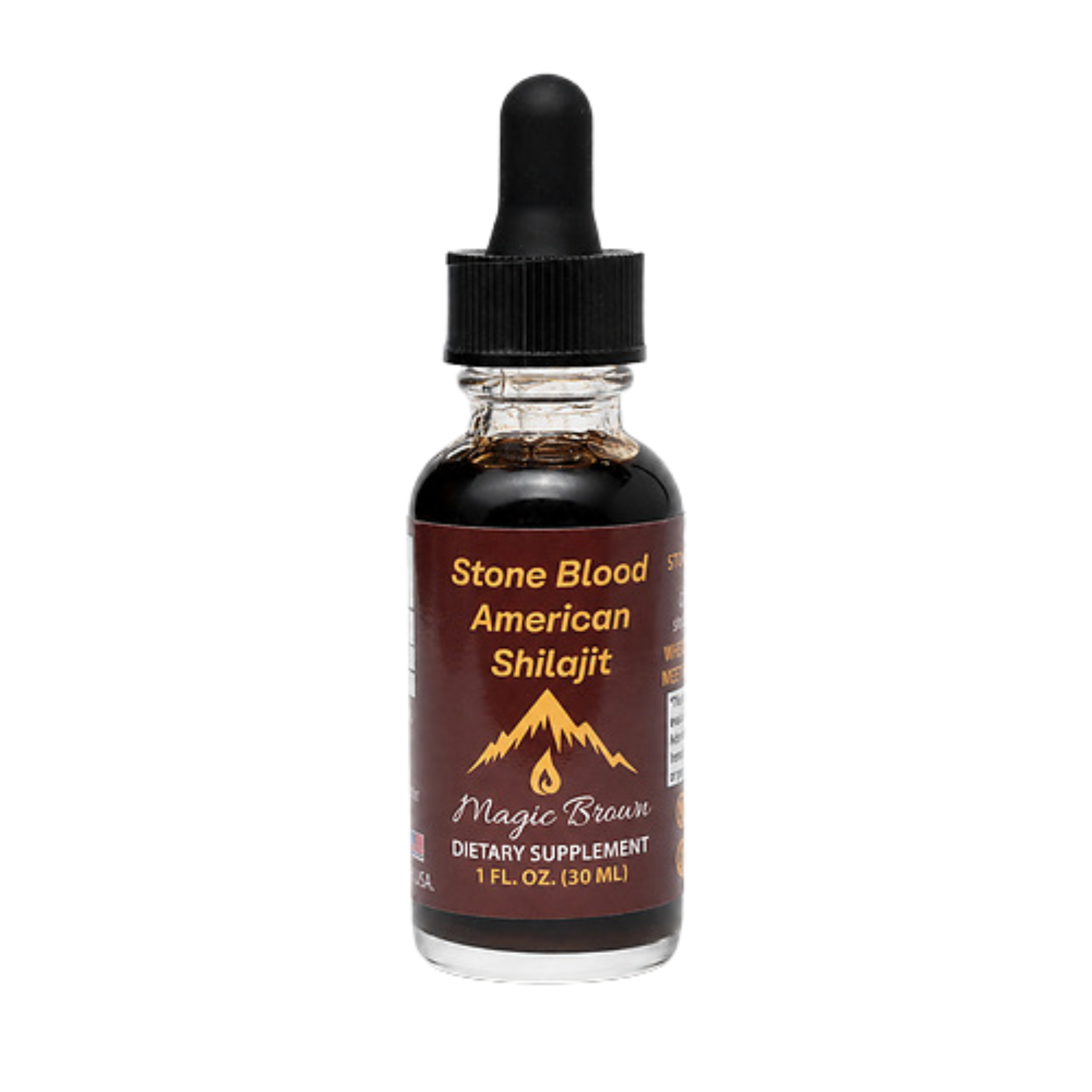
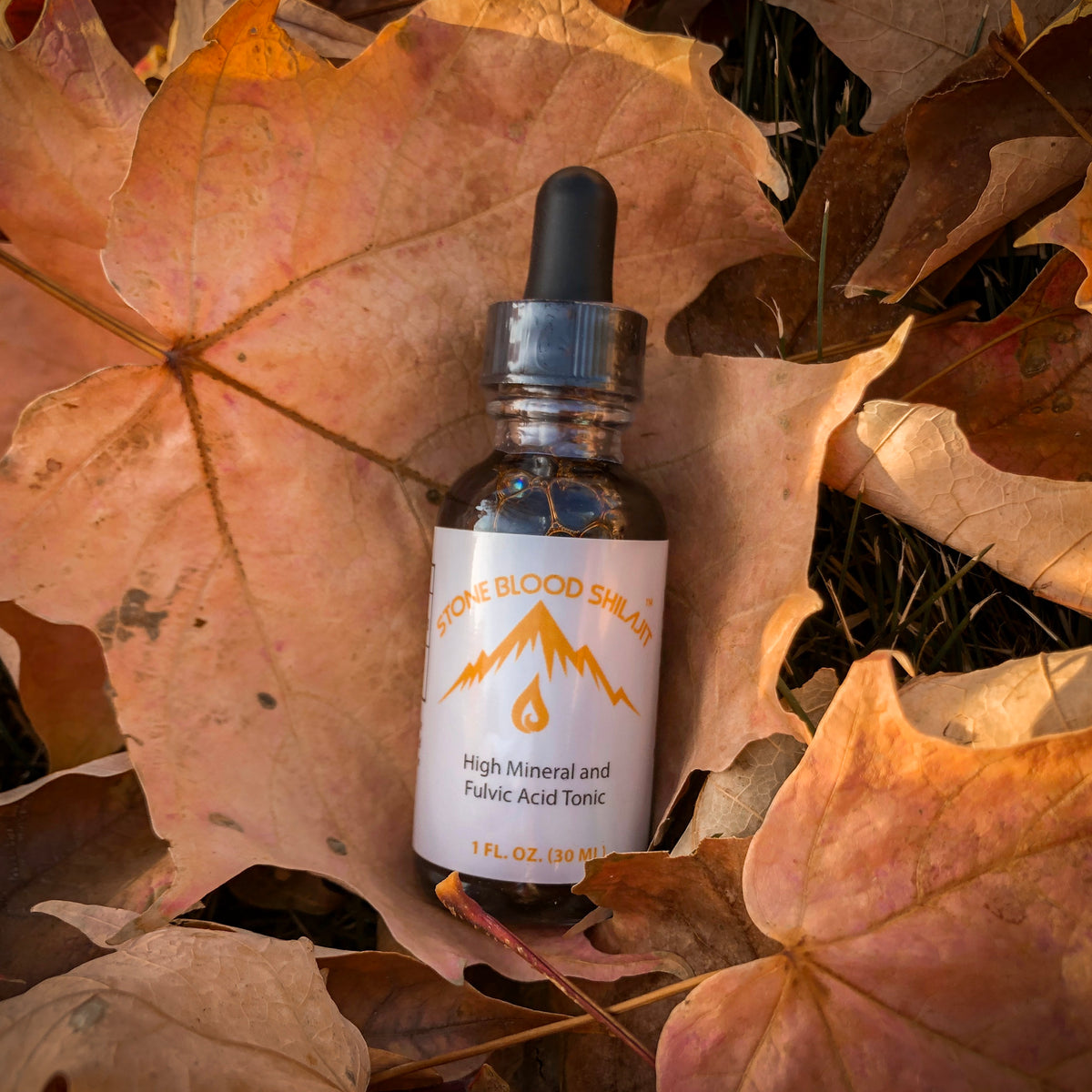
Review the quality and safety information at /pages/quality-safety, then request documentation for your specific lot.
Current directions for Double Strength are 3-4 drops once daily. Original directions are one dropper (about 10-15 drops) daily. If your bottle's label differs from these, contact Stoneblood to confirm the product and lot before use.
These statements have not been evaluated by the Food and Drug Administration. This product is not intended to diagnose, treat, cure, or prevent any disease.
These statements have not been evaluated by the Food and Drug Administration. This product is not intended to diagnose, treat, cure, or prevent any disease. Consult a healthcare professional before starting any supplement, especially if you are pregnant, nursing, taking medication or managing a health condition.
Frequently Asked Questions
What is lot-specific documentation?
Lot-specific documentation is a record tied to one production batch, identified by its lot number. Unlike a general product specification, which describes the product in the abstract, a lot-specific report describes what was tested or recorded for the batch that matches your bottle. When you request documentation, include the lot number exactly as printed on the label so the record you receive corresponds to your product. If a document does not list a lot number, ask the brand to confirm which batch it covers before relying on it.
How do I verify a lot number on a quality report?
Compare the lot number printed on your bottle label with the lot number on the quality report, character by character. Check the product name, the date fields and any sample identifiers as well. If the numbers do not match exactly, the report may cover a different batch, so do not assume it applies to your bottle. Contact Stoneblood with a photo of your label and ask them to confirm which documentation matches your lot.
What should I do if a report does not show a lot number?
Do not treat an unlabeled report as lot-specific. Reply to the brand, explain that the document does not list a lot number, and ask whether a version tied to your batch is available. Include your bottle's label details and purchase information so the request can be matched to the right production record. If the brand cannot provide a lot-matched document, the report should be treated as general information only.

Share:
How to Choose a Shilajit Dropper Bottle: A Buyer's Guide
Who Brought Shilajit to Utah and When?