
Quick Summary
To choose a shilajit dropper bottle, check the sourcing and documentation of the product, then inspect the bottle itself: amber or dark glass, a tight cap, an intact seal, and a dropper with a graduation line. Read the label directions for your specific product, since Stoneblood's Original and Double Strength drops use different serving directions.
- Stoneblood's Original and Double Strength Magic Brown liquid drops both come in 1 fl oz (30 mL) dropper bottles.
- Choose amber or dark brown glass to limit light exposure during storage.
- Inspect the seal, cap threads, bulb and pipette tip before first use.
- Follow the directions printed on your bottle, since the two products differ.
- Keep the lot number with your receipt to request documentation for your bottle.
Table of Contents
- What a Shilajit Dropper Bottle Should Do for You
- How to Choose High Quality Shilajit Before You Look at the Bottle
- Bottle Material and Dropper Design: A Comparison
- Reading the Shilajit Dropper Bottle Label
- Checking Lot-Specific Quality Documentation
- How to Store Shilajit Liquid and Protect the Bottle
- Shilajit Liquid Taste and Mixing: Choosing a Bottle You Will Use
- Booking Your Next Step: Choosing Between Stoneblood Shilajit Options
- Frequently Asked Questions
How to Choose a Shilajit Dropper Bottle: A Buyer's Guide
Last Updated: November 15, 2026
What a Shilajit Dropper Bottle Should Do for You
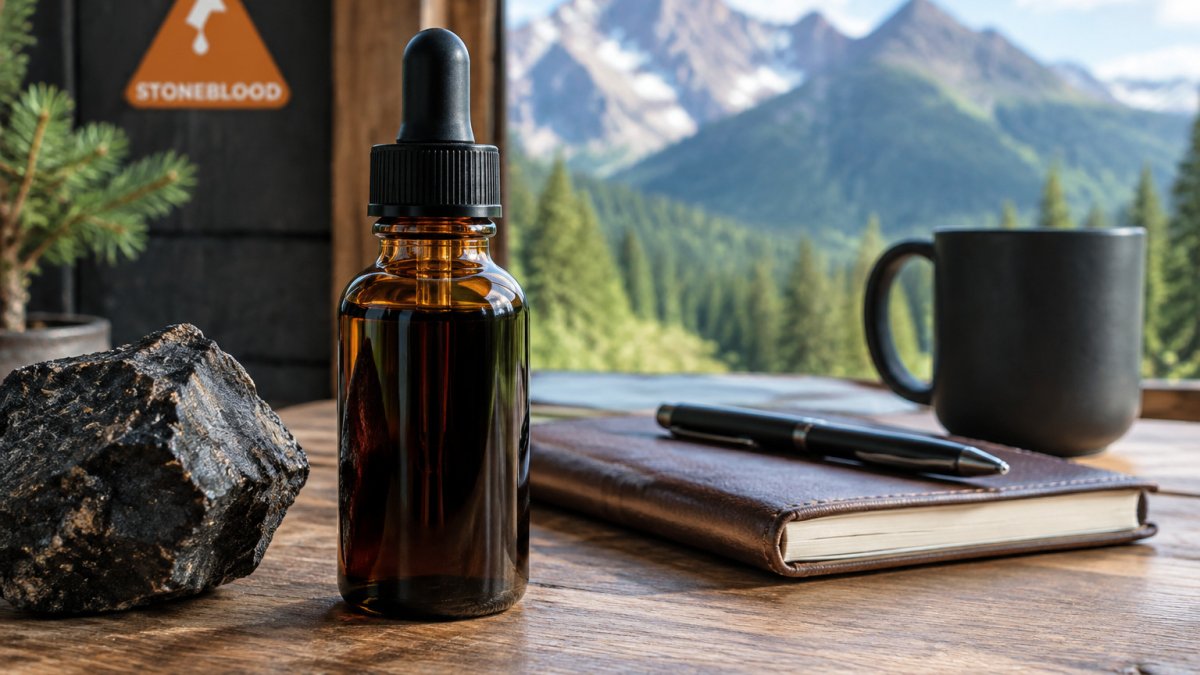
Stoneblood Shilajit sells its shilajit as liquid drops in 1 fl oz (30 mL) dropper bottles, so the bottle is part of daily use.
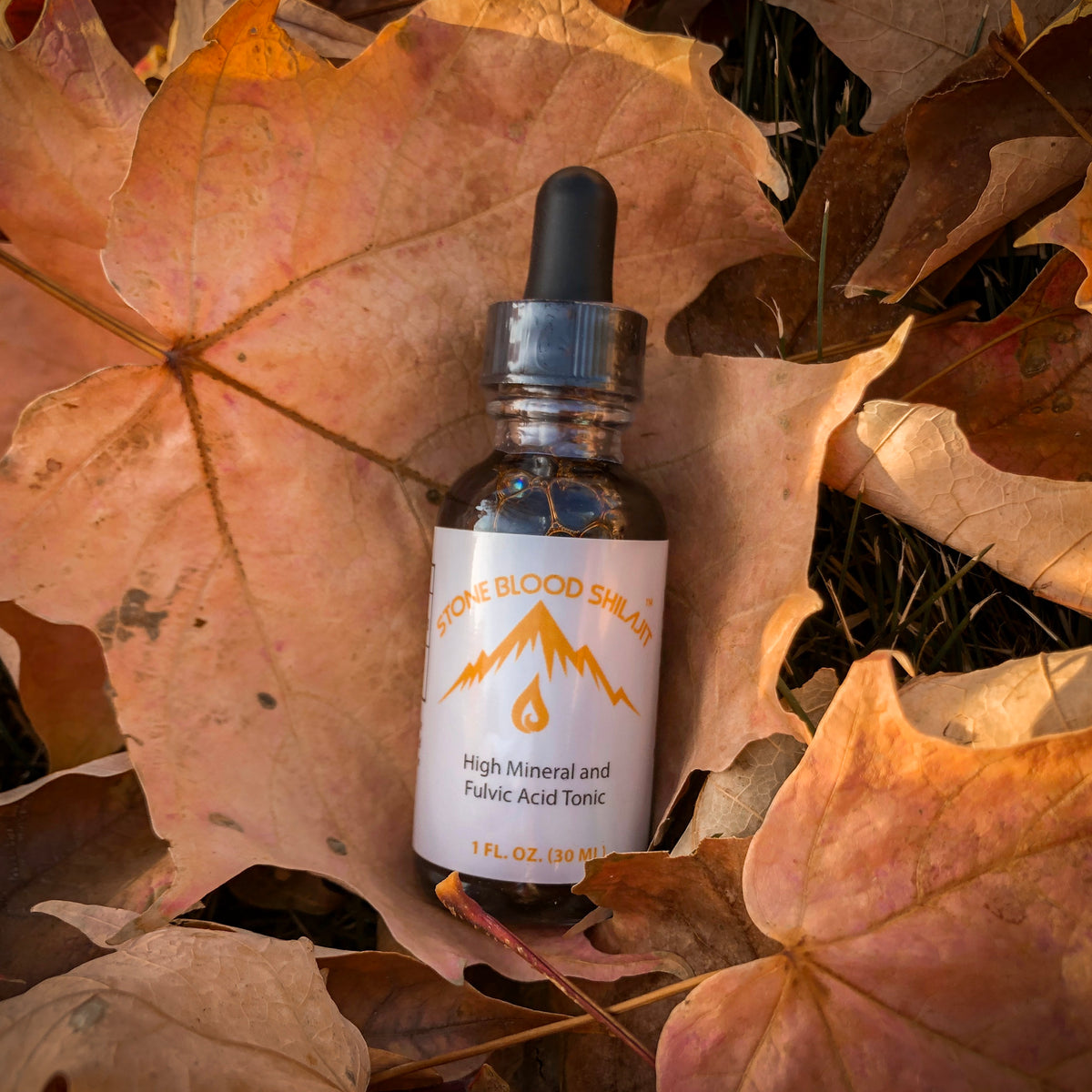
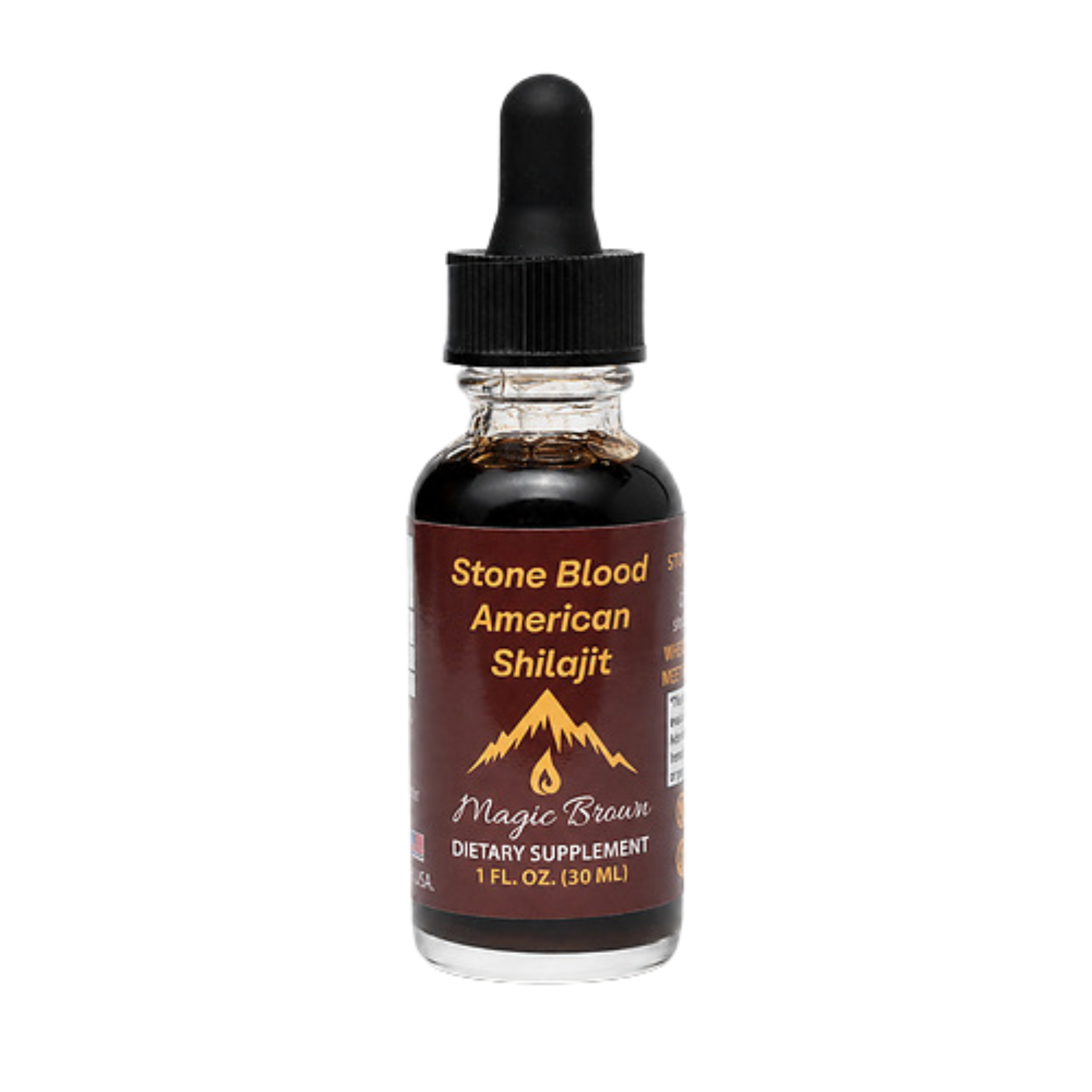
Start with the bottle you are considering. The Stoneblood Original liquid drops come in a 1 fl oz dropper bottle at $29.97, with ingredients listed as purified shilajit extract and water. The Double Strength Magic Brown drops use the same bottle size at $39.97.
How to Choose High Quality Shilajit Before You Look at the Bottle
Quality starts with the resin, not the packaging. Look for a seller that names where the shilajit was harvested and how it was refined.
Next, check documentation. Stoneblood's Quality and Safety page summarizes available testing, and results apply only to the sample and lot tested.
Finally, check the format. Liquid drops and other forms are different products with different measuring methods. A dropper bottle suits you if you want a liquid you can measure by the drop.
Bottle Material and Dropper Design: A Comparison
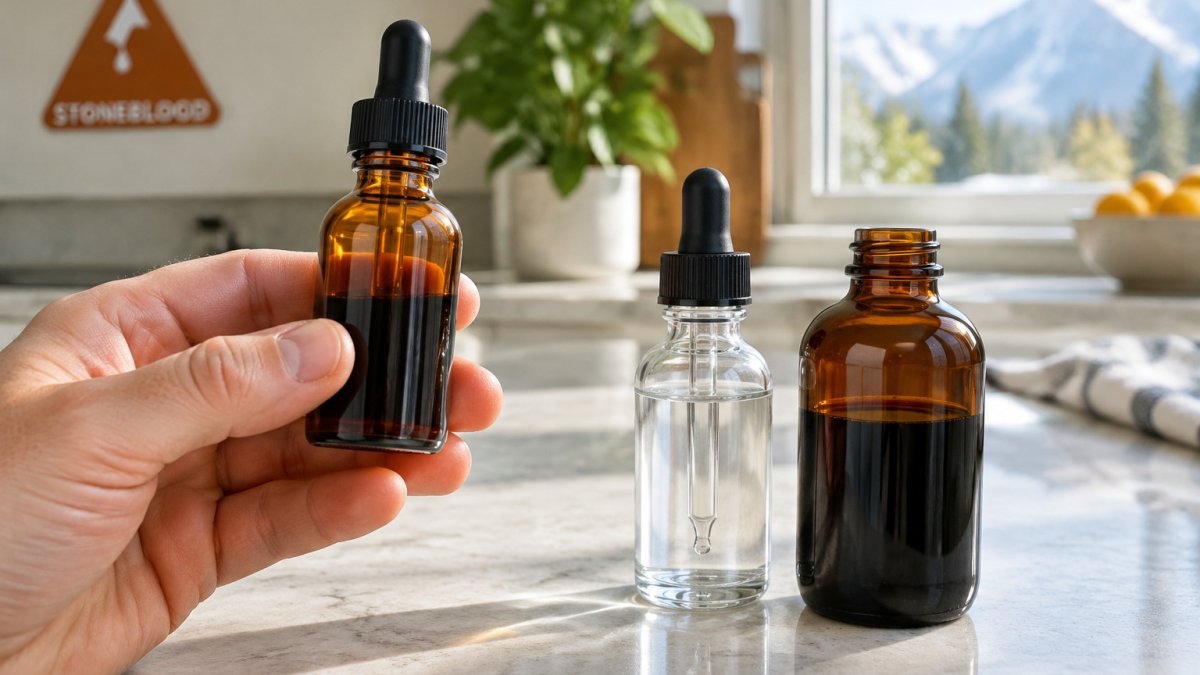
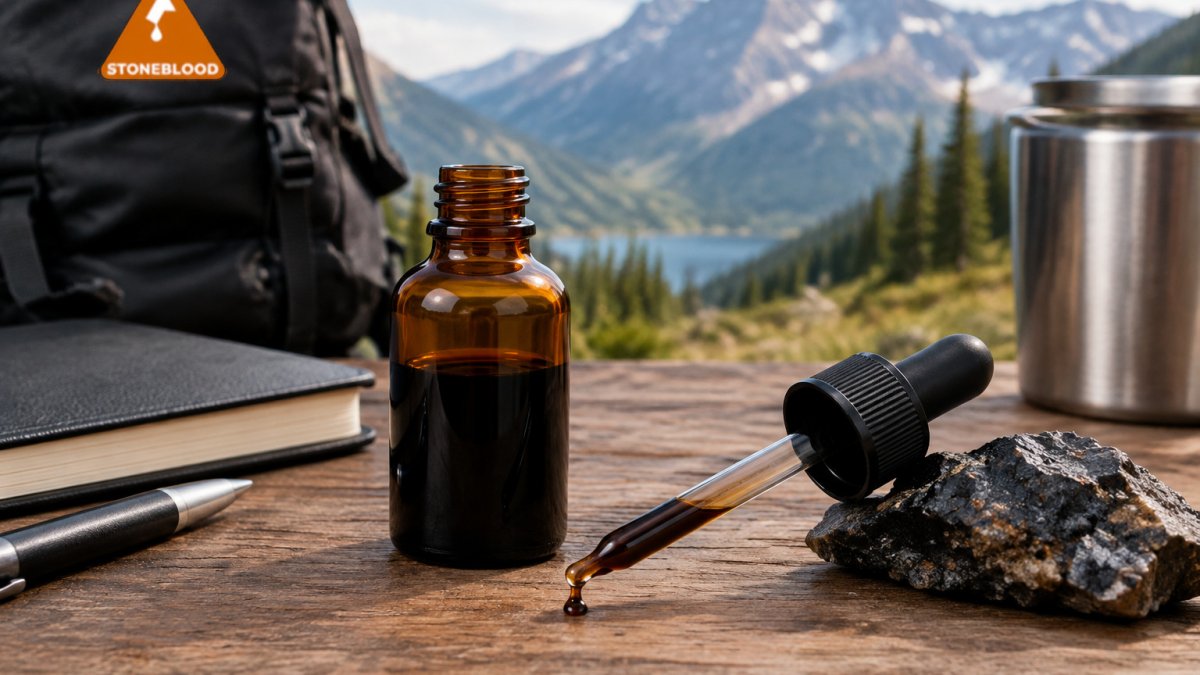
The bottle does two jobs: it protects the liquid and controls how much you dispense. Liquid shilajit is typically packaged in dropper bottles, and the details to compare are glass color, dropper design, closure, seal, and fill volume.
| Feature | What to Look For | Why It Matters |
|---|---|---|
| Glass color | Amber or dark brown | Limits light exposure during storage and daily use |
| Glass vs. plastic | Glass for the body; check plastic only on the closure and bulb | Glass is inert and does not absorb flavor; plastic can interact with acidic or alcohol-based liquids over time |
| Dropper | Rubber bulb with a visible graduation line or mL marking | Makes measuring repeatable instead of eyeballed |
| Cap | Tight, child-resistant closure that threads cleanly | Protects the seal between uses and resists leakage in a bag |
| Seal | Intact shrink band or tamper ring on arrival | Shows the bottle has not been opened before you |
| Size | 1 fl oz (30 mL) | Gives a predictable fill volume to compare against the label |
Amber and Dark Glass Versus Clear Containers
Follow the storage instructions on the label, and keep the bottle in a cabinet away from direct light and heat.
A Bottle-and-Dropper Inspection Checklist
The bottle itself is something you can inspect in about two minutes, and these checks separate a bottle you will keep using from one that ends up in a drawer.
- Seal and tamper evidence. The shrink band or tamper ring should be unbroken and seated flat against the cap. A band that spins freely, is torn, or is missing is a reason to stop and contact the seller before opening.
- Cap thread and closure. Screw the cap on and off a few times. It should thread smoothly and stop firmly without wobbling. A cap that cross-threads or backs off on its own will leak.
- Bulb and pipette. Squeeze the bulb: it should compress evenly and spring back without cracking or sticking. Hold the pipette up to a light and look for chips or cracks at the tip, a chipped tip changes drop size and can shed glass.
- Graduation markings. Many pipettes carry a printed line or mL scale. If yours does, confirm the markings are legible and aligned with the liquid column, not smeared or faded.
- Fill volume. A 1 fl oz (30 mL) bottle should look full to the shoulder, not half-empty. Fill volume is set by the label, so compare what you see against the net quantity printed on the bottle.
- Label legibility. Product name, net volume, ingredient list, directions, lot number, and storage instructions should all be readable without a magnifier.
Watch out: A dropper that drips between squeezes, or a bulb that stays collapsed after you release it, will make every serving inconsistent, treat it as a defect, not a quirk.
Dropper Accuracy and Serving Consistency
A dropper only helps if it delivers the same amount each time, and drop size is not universal. Viscosity, the angle you hold the bottle, and the condition of the tip all move it.
Stoneblood's Original liquid drops direct one dropperful, about 10 to 15 drops, once daily. The Double Strength Magic Brown drops direct 3 to 4 drops once daily.
A practical habit: for the first week, dispense into a small spoon or clean glass and count.
Packaging Compatibility and Product Protection
The trade-offs are weight and breakage; a padded pouch or the original carton solves most of that. Plastic is lighter and shatter-resistant, but check that the closure and bulb are food-grade and that the bottle is labeled for the product it holds. Whichever material you choose, follow the storage instructions on the label.
Accessibility and Everyday Usability
A bottle you struggle with is a bottle you stop using. A child-resistant cap is a safety feature but can be stiff for readers with limited hand strength; a wider body is easier to grip; readable markings matter more than a stylish label. These are fit signals, not quality signals, and worth weighing alongside the label.
Reading the Shilajit Dropper Bottle Label
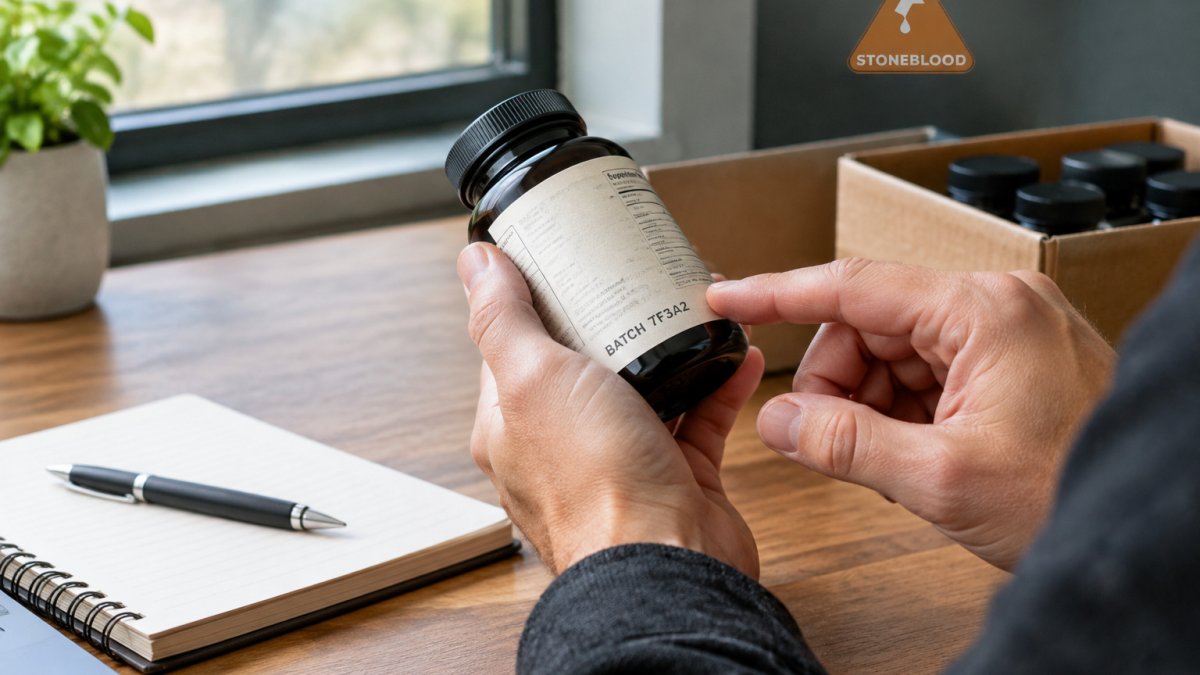
Read the label before you open the bottle, and read it as a set of numbers rather than a list of words. The fields that matter are the product name, net quantity, ingredient list, directions, lot number, and storage instructions.
The Fields That Matter and What Each One Tells You
- Product name and strength. Confirm that the bottle in your hand is the product you ordered. Stoneblood sells two liquid products, Original and Double Strength Magic Brown, and they carry different directions. The name on the label is how you know which set of directions applies.
- Net quantity. Look for the net volume, stated as 1 fl oz (30 mL) on Stoneblood bottles. This is the fill volume, not a serving count. It tells you how much liquid is in the bottle; it does not tell you how many days it will last.
- Ingredient list. Stoneblood lists purified shilajit extract and water on the Original product. Read the list on your bottle and compare it to the product page. If a carrier, sweetener, or preservative appears that you did not expect, that is a question for the seller before you open the bottle.
- Directions. These are product-specific. Original directs one dropperful, about 10 to 15 drops, once daily. Double Strength Magic Brown directs 3 to 4 drops once daily. Do not carry directions from one product over to the other.
- Lot number or batch identifier. This is the key that unlocks documentation for your specific bottle. Keep it with your receipt.
- Storage instructions. Follow what is printed, not what a blog post says. If the label is silent, ask the seller.
How to Verify Usable Servings Without Relying on Marketing Claims
Serving counts are where labels and marketing pages most often drift apart, so do the arithmetic yourself. The label gives you net volume and serving size, and the directions tell you how the serving is expressed.
Watch out: A "servings per bottle" figure that appears on a marketing page but not on the label is a claim, not a label fact, verify it against the net quantity and the directions before you rely on it.
When the Label and the Product Page Disagree
Labels are printed for a lot, and product pages are updated over time, so the two can fall out of step. If the directions on your bottle differ from the product page, do not split the difference or average the drop counts. Contact Stoneblood to confirm the product and lot before use. The same applies if the ingredient list, net volume, or product name does not match what you ordered.
Keep the Lot Number With the Bottle
The lot number is the one label field you will need later, after the bottle is open and the carton is gone. Write it on the receipt, photograph the label, or keep the bottle with the paperwork. Stoneblood invites customers to email stonebloodshilajit@gmail.com with their lot number to request documentation, and the Quality and Safety page summarizes what is available.
Checking Lot-Specific Quality Documentation
Testing claims apply to a specific sample or lot, not to every bottle ever produced. Ask for documentation tied to the lot number printed on your bottle. Stoneblood invites customers to email stonebloodshilajit@gmail.com with their lot number to request documentation.
Two resources can help you judge what to look for. The guide on how to verify supplement sourcing transparency explains the questions to ask a seller. The article on lab tested shilajit and how to verify purity covers what testing documentation should contain.
How to Store Shilajit Liquid and Protect the Bottle
Store the bottle as its label directs. Keep the cap tightly closed after each use, and wipe the dropper tip so it does not collect residue.
For more detail on keeping the liquid fresh after you open it, see how to store liquid shilajit for maximum freshness. If you notice an odd smell, a change in color or a broken seal, do not use the product and contact the seller.
Shilajit Liquid Taste and Mixing: Choosing a Bottle You Will Use
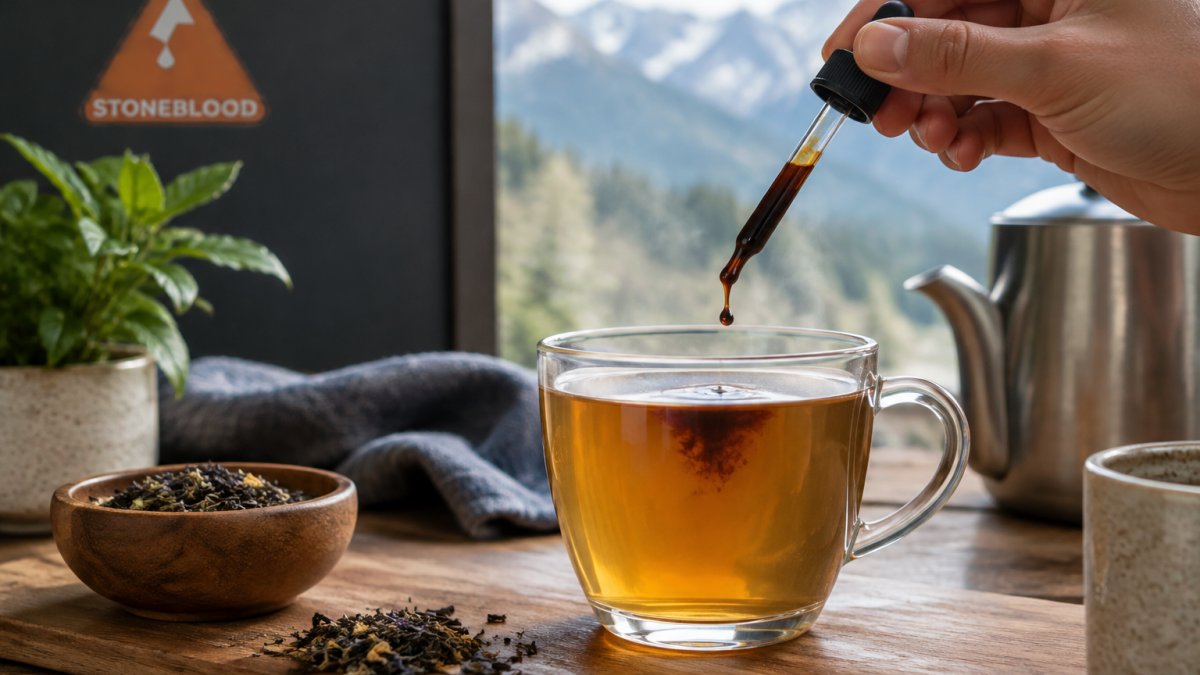
Taste is subjective, but the format affects how easy the product is to use daily. Liquid shilajit has an earthy flavor, and many people mix it into water, coffee or tea.
A bottle you enjoy using is more likely to fit your routine. If you dislike strong flavors, start with the standard-strength Original and mix the drops into a drink you already enjoy.
Booking Your Next Step: Choosing Between Stoneblood Shilajit Options
Choose the option that matches the directions you plan to follow. Compare the Original liquid drops and the Double Strength liquid drops side by side, then confirm the lot documentation before you buy.
Free US shipping applies, with orders processed within one business day. Review the shipping and return policies for delivery estimates and unopened-bottle return conditions.
These statements have not been evaluated by the Food and Drug Administration. This product is not intended to diagnose, treat, cure, or prevent any disease.
Frequently Asked Questions
How can you tell whether a shilajit dropper bottle is high quality?
Start with the bottle itself. Look for a dropper that seals tightly and a tamper-evident seal that is intact when the bottle arrives. Then read the label for the product name, the bottle size in fluid ounces or milliliters, the ingredient list, and a lot number. A bottle that hides its lot number or omits how to use it gives you less to verify. Request documentation for the lot before you buy if the details matter to you.
What should you check on a shilajit dropper bottle label?
Check the product name, the strength (standard or double), the bottle size, the ingredient list, and the lot number. The label should also show the directions for the specific product. Note that these directions differ between products, so do not apply one product's directions to another. If the directions on your bottle are unclear, contact Stoneblood Shilajit to confirm the product and lot before use, and consult a healthcare professional if you have questions about taking any supplement.
How should a shilajit dropper bottle be stored?
Store the bottle according to the label, which generally means keeping it sealed, upright and away from heat and direct sunlight. Replace the dropper cap after each use so the liquid stays protected. Keep the bottle in a cool place rather than a bathroom or a car.
How do you verify the lot details for a shilajit liquid?
Find the lot number printed on your bottle, then visit the Quality and Safety page at stonebloodshilajit.com to see the available testing and how results are summarized. To request documentation for your specific bottle, email stonebloodshilajit@gmail.com with the lot number. Keep in mind that results apply to the sample and lot that was tested, not to every bottle sold.

Share:
How to Pair Liquid Shilajit With Smoothie Flavors
How to Request Lot-Specific Quality Documentation