
Last Updated: November 1, 2026
Quick Summary
Store liquid shilajit in a cool, dark, dry cabinet, tightly capped and upright, away from sunlight and heat. Follow your bottle's label on refrigeration, and keep the dropper clean and dry so moisture never enters the bottle.
- Room-temperature storage means a stable spot in the low 60s to mid 70s Fahrenheit.
- If refrigerating, aim for the main fridge body in the high 30s to low 40s Fahrenheit.
- Let a chilled bottle sit a few minutes and wipe condensation before opening it.
- Write the open date on the label and check smell and texture weekly.
- Never let the dropper touch your tongue, palm, or counter.
Table of Contents
- Why Liquid Shilajit Needs Different Storage Than Resin
- The Core Rules: Cool, Dark, Dry and Sealed
- Should Liquid Shilajit Be Refrigerated?
- How Long Does Liquid Shilajit Last After Opening?
- How to Keep a Dropper Bottle Clean
- Signs Liquid Shilajit Has Gone Bad
- Travel and Everyday Handling Tips
- How to Store Your Stoneblood Shilajit Drops
- Frequently Asked Questions
Why Liquid Shilajit Needs Different Storage Than Resin
Liquid shilajit is a water-based extract of raw shilajit resin, and that water content changes the storage rules. Raw shilajit resin in nature is thick and tar-like, so it shrugs off air and light far better than a liquid ever can.
At Stoneblood, we refine wildcrafted North American resin into water-soluble drops in Utah, then bottle it in 1 fl oz (30 ml) dropper bottles.
Here's the short answer up front: cool, dark, dry, and sealed. Everything else is detail.
The Core Rules: Cool, Dark, Dry and Sealed
Four conditions decide how well your drops hold up: temperature, light, moisture, and air. Get all four right and you have done almost everything that matters.
Keep It Out of Direct Sunlight
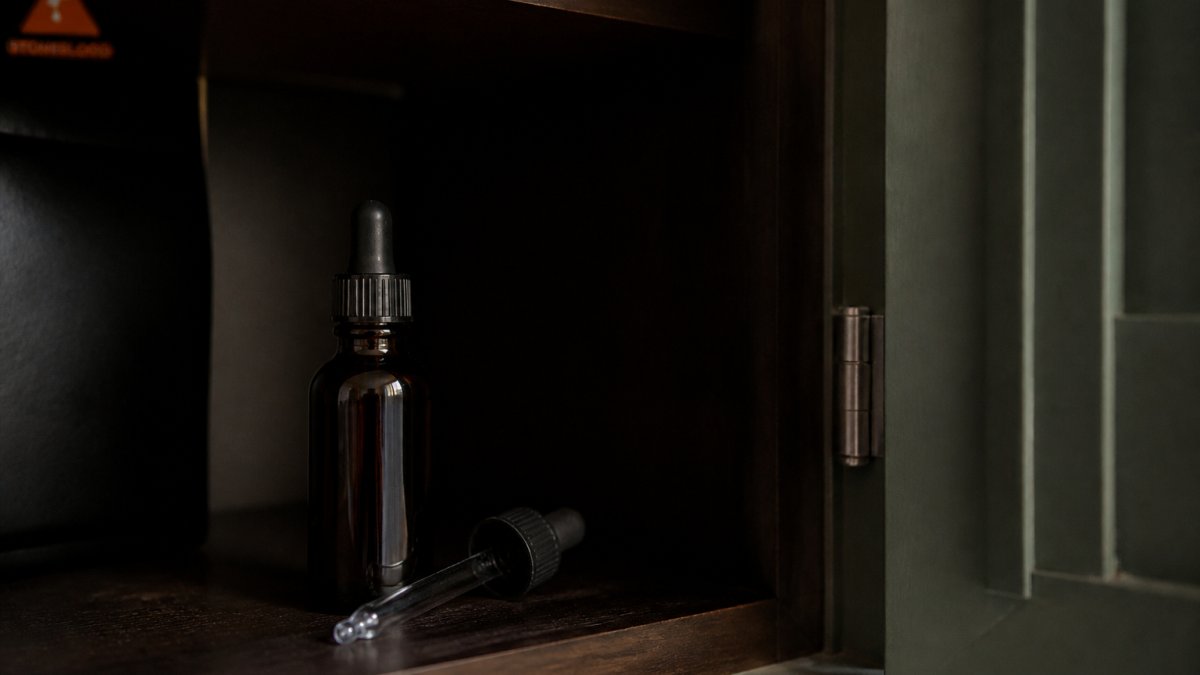
Light exposure is the easiest problem to fix and the easiest to overlook. Ultraviolet light breaks down organic compounds over time, and a bottle left on a sunny windowsill gets a steady dose of it. Put the bottle inside a cabinet, a drawer, or a closed box. Amber glass helps, but it is not a substitute for darkness.
Control Heat and Humidity
Excessive heat speeds up degradation, and high humidity invites moisture into the bottle every time you open it. Keep the bottle away from the stove, the dishwasher, the radiator, and the coffee maker. Store liquid shilajit in the coolest, driest cabinet you have, ideally away from the sink where steam gathers.
Should Liquid Shilajit Be Refrigerated?
The refrigeration question comes down to one thing: what the label on your bottle says. Follow it. Some liquid shilajit products are formulated to be refrigerated after opening, and some are made to stay at room temperature. Guessing can push a good bottle toward spoilage or toward unnecessary condensation.
What most storage guides skip is the middle ground. Here is how to think about temperature in practical terms.
A Practical Temperature Range
Room-temperature storage generally means a stable spot in the low 60s to mid 70s Fahrenheit, roughly the range most kitchen pantries and interior cabinets sit in.
If your label calls for refrigeration, aim for the main body of the fridge, typically in the high 30s to low 40s Fahrenheit. Avoid the door shelves, which run warmer and swing more every time the fridge opens, and avoid the crisper drawer if it collects condensation.
Why Condensation Is the Real Risk
When a cold bottle meets warm, humid air, water vapor condenses on the glass and the dropper. That water introduces moisture at the exact point where the dropper re-enters the liquid, and over weeks, that adds up.
If you refrigerate, take two steps:
- Let the closed bottle sit on the counter for a few minutes before opening, so condensation forms on the outside where you can wipe it away.
- Dry the bottle mouth and the dropper shaft with a clean cloth before the dropper goes back in.
If you store at room temperature, the opposite risk applies: a bottle kept near the stove or sink picks up humidity from steam. Keep it in a closed cabinet, not on an open shelf above the kettle.
The Consistency Rule
A bottle that moves between warm and cold repeatedly is worse off than one that stays put. Pick one storage location, fridge shelf or pantry cabinet, and keep the bottle there. Temperature cycling drives condensation, and condensation is the mechanism that turns a good bottle into a questionable one.
How Long Does Liquid Shilajit Last After Opening?
How long liquid shilajit lasts after opening depends on the expiration date on the package and how you handle the bottle. Start with the manufacturer's date, the only shelf life figure you can trust for your specific product, because formulations and packaging differ.
A few habits stretch the window:
- Write the open date on the label with a marker
- Keep the cap on between uses, even short ones
- Store upright so liquid does not pool in the cap threads
- Keep the dropper off the counter and out of your mouth
Freshness and potency are not the same thing, and neither is visible. The date plus careful handling is your best protection.
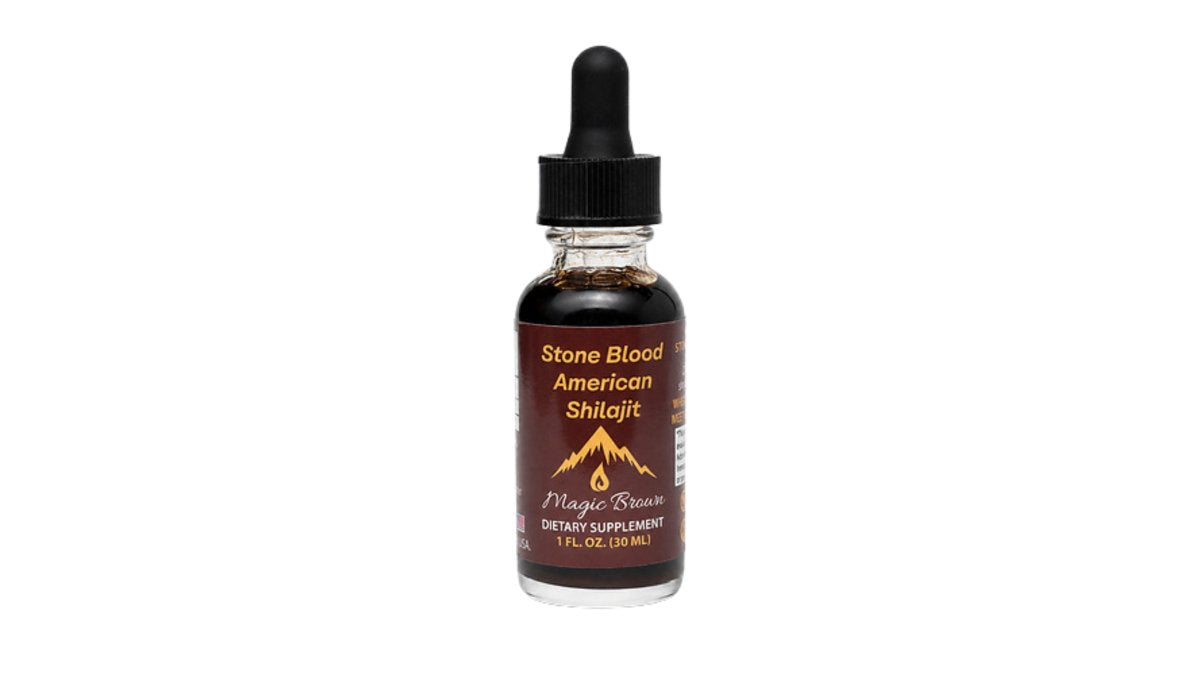
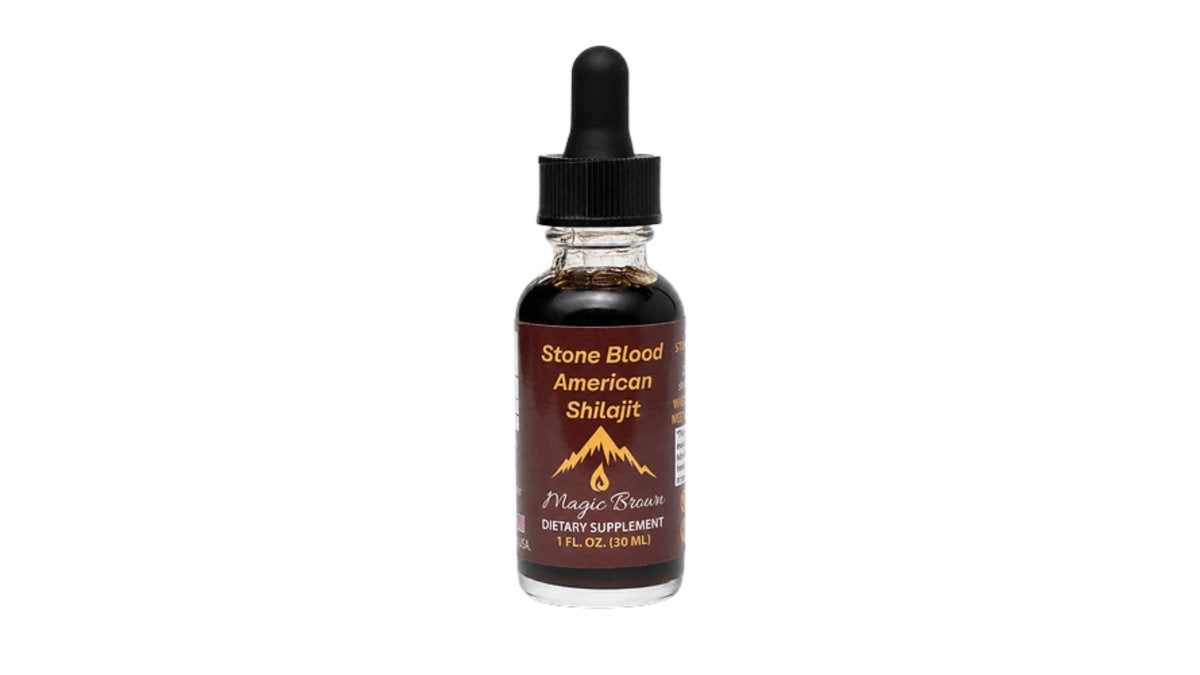
Shilajit Liquid Drops, Double Strength – Stoneblood Magic Brown, 1 fl oz →
How to Keep a Dropper Bottle Clean
Keeping a dropper bottle clean is mostly about never introducing anything new to the liquid. Contamination comes from three places: dirty hands, a dropper that touches surfaces, and moisture from a wet bottle mouth.
Follow these steps:
- Wash and dry your hands before every use.
- Hold the dropper by the bulb, never the glass shaft.
- Never let the dropper touch your tongue, your palm, or the counter.
- Cap the bottle immediately after replacing the dropper.
- Wipe the bottle mouth with a clean, dry cloth if liquid collects there.
- Store the bottle upright so residue does not run into the cap.
- Keep the dropper with its own bottle. Do not swap droppers between bottles.
Clean, dry utensils matter as much as clean hands. A wet dropper is the most common way moisture gets into a liquid shilajit bottle. If you mix drops into a drink, drip them into the cup, not back and forth between cup and bottle.
Signs Liquid Shilajit Has Gone Bad
Signs that liquid shilajit has gone bad usually show up as changes you can see or smell. The challenge is that some changes are normal and some are not, and liquid products behave differently from resin. A resin that hardens or crystallizes is often still fine; a liquid that turns cloudy or grows a film is a different story.
Establish Your Baseline First
Before you can spot a problem, you need to know what normal looks like. On the day you open a new bottle, note three things:
- Smell: liquid shilajit typically has a strong, earthy, slightly smoky aroma. That is the reference point.
- Color and clarity: most liquids are dark and fairly uniform, though some natural sediment is common.
- Consistency: a water-soluble liquid should pour and drip evenly, without stringiness or grit.
Write these down or take a photo. Comparing against a memory of a different brand is unreliable; comparing against your own bottle's first day is not.
Changes That Are Usually Harmless
- Settling sediment. Mineral-rich liquids can leave a fine layer at the bottom. Shake gently; if it redistributes evenly, it is likely fine.
- A slight darkening over months. Some color shift is normal as a liquid ages, especially if it has been opened and closed many times.
- A stronger smell after opening. The aroma can concentrate slightly as the bottle empties. If it still smells earthy rather than sour, that is usually normal.
Changes That Warrant Stopping Use
- A sour, musty, or sharp odor that was not present when the bottle was opened. Trust your nose here, an off smell is the most reliable early signal.
- Stringiness, visible particles, or a film on the surface or clinging to the dropper. Sediment that shakes back in is one thing; a film that persists is another.
- Cloudiness or uneven tone that does not clear after gentle shaking.
- Residue, crusting, or mold around the cap, neck, or dropper. This is a contamination signal, not a texture change.
Why Liquid Spoils Differently Than Resin
Raw shilajit resin is thick and low in water, so it resists microbial growth far better than a water-based liquid. Once refined into a water-soluble liquid, the water content makes it more vulnerable to contamination from a wet dropper, a dirty bottle mouth, or a cap left loose in a humid room.
When in doubt, check how to verify purity and authenticity rather than guessing, and compare what you see against the baseline you recorded on day one.
Travel and Everyday Handling Tips
Travel is where good storage habits break down. A bottle tossed in a bag gets warm, gets shaken, and gets opened in unfamiliar places.
- Keep the bottle in a sealed bag, upright, away from the car heater
- Pack it in a carry-on rather than checked luggage, where temperatures swing hard
- Do not leave it in a hot car, ever
- Bring a small cloth for wiping the bottle mouth
- Keep the dropper in its bottle, not loose in a toiletry bag
At home, the same logic applies on a smaller scale. Keep the bottle where you actually use it, but out of the steam zone. For more everyday ritual ideas, the Stoneblood journal covers ways to work drops into a daily routine.
How to Store Your Stoneblood Shilajit Drops
Store your bottle in a cool, dark, dry cabinet, tightly capped and upright. Keep it out of sunlight and away from heat sources.
If you want the exact product we are describing, shop Magic Brown double-strength liquid shilajit drops, our flagship. If you would rather understand the sourcing and wildcrafting behind it first, read about Stoneblood's origins and approach. And if you are still weighing formats, compare liquid drops with resin before you commit.

A quick reference for the whole routine:
| Task | How Often | Why It Matters |
|---|---|---|
| Check the cap is tight | Every use | Blocks air and moisture |
| Wipe the bottle mouth | When residue appears | Stops contamination at the seal |
| Check smell and texture | Weekly | Catches spoilage early |
| Confirm the expiration date | Monthly | Keeps you inside shelf life |
| Clean the storage spot | Monthly | Removes dust and damp |
Storing liquid shilajit well is a small habit, not a project. Cool, dark, dry, sealed, and clean.
These statements have not been evaluated by the Food and Drug Administration. This product is not intended to diagnose, treat, cure, or prevent any disease.
Frequently Asked Questions
Can I store liquid shilajit in the refrigerator?
The most reliable guide for refrigeration is the storage instructions on your specific product label. The most reliable guide is the storage instructions on your specific product label. If you refrigerate, keep the bottle tightly sealed and upright, let it come to room temperature before use if you prefer, and never leave it near the fridge door where temperatures swing.
Where should you store shilajit drops after opening?
After opening, store liquid shilajit in a cool, dry, dark place away from direct sunlight and heat sources such as the stove, radiator or windowsill. A closed cabinet works well. Keep the bottle tightly sealed and upright, and use the original dropper rather than introducing a wet or dirty utensil. If your label recommends refrigeration, follow that instead. Consistent conditions matter more than the exact spot you choose, because repeated temperature swings and light exposure are what degrade freshness over time.
How do you know when liquid shilajit is no longer fresh?
Look for changes from the product's normal state: an off or sour smell, visible mold, cloudiness that wasn't there before, or a texture that has thickened unexpectedly. Some variation is normal, so compare against how the drops looked and smelled when fresh. If anything seems wrong, or the bottle is past the date on the label, discard it. Following the label's storage directions and keeping the dropper clean are the best ways to keep liquid shilajit fresh for as long as possible.
Does heat or sunlight affect liquid shilajit?
Yes. Heat and direct sunlight are two of the main things to protect liquid shilajit from, which is why labels usually call for a cool, dry place away from light. Ultraviolet light and high temperatures can speed up degradation and affect freshness and potency. Store your bottle in a dark cabinet, never on a sunny counter or in a hot car, and keep it away from steam and moisture in the kitchen. A tightly sealed, dark container adds another layer of protection.

Share:
Is Double Strength Shilajit Right for You?
7 Ways to Improve Nutrient Absorption for Muscle Repair