
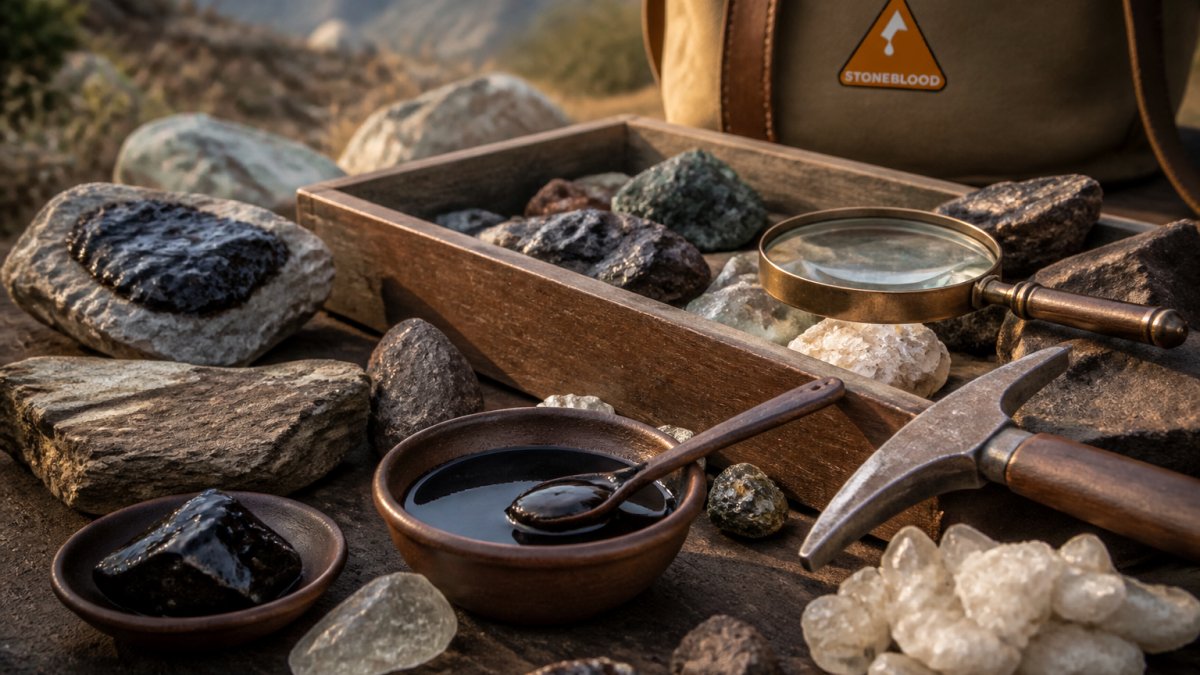
Table of Contents
- Why Wildcrafted Minerals From North America Are Worth a Closer Look
- 1. A Mineral Profile That Reflects the Land It Comes From
- 2. Fulvic Acid Helps Carry Minerals Where They Need to Go
- 3. Trace Minerals Support Everyday Energy and Focus
- 4. A Shorter Supply Chain Means More Control Over Shilajit Quality and Purity
- 5. Wildcrafted Harvesting Ties the Product to Its Ecosystem
- 6. Liquid Shilajit Drops Make a Mineral Routine Simple
- 7. A Grounded Alternative to Offshore and Mass-Produced Supplements
- Frequently Asked Questions
Last Updated: October 17, 2026
Why Wildcrafted Minerals From North America Are Worth a Closer Look
Wildcrafted minerals from North America are minerals gathered from plants and rock in their natural setting, without cultivation or synthetic processing. That distinction matters more than most supplement shoppers realize. At Stoneblood Shilajit, we hand-harvest shilajit from the Rocky Mountains of Utah, and we've learned that where a mineral comes from shapes everything about how it reaches you.
The following points about wildcrafted minerals from North America are worth understanding before you buy anything. But first, here's what most guides get wrong: they treat "wildcrafted" as a marketing label rather than a description of a supply chain. It is a supply chain.
1. A Mineral Profile That Reflects the Land It Comes From
A mineral profile is the range of trace elements a substance naturally carries. Wildcrafted minerals take theirs from the soil, water and plant life of a specific place, so the profile reflects local geology rather than a factory formula. That is the plain-language version.
Shilajit forms over long periods from compressed plant material and humus in mountain rock. As water moves through that rock, it picks up dissolved minerals and organic acids, and the resulting resin concentrates them.
Our liquid shilajit drops come from a single region in the Rocky Mountains of Utah rather than a blend of material from several continents.

Why 'Wildcrafted' Is a Supply-Chain Word, Not a Label
Most guides treat wildcrafted as a marketing adjective. It is better understood as a description of how material moves from land to bottle. Wildcrafted means gathered from a living landscape without cultivation or synthetic processing.
A useful way to read any wildcrafted mineral product is to ask three questions. Where was it gathered? How many hands did it pass through before bottling? And can the seller connect a specific bottle to a specific harvest? If the answers are vague, the word wildcrafted is doing decorative work.
The North American Mineral Landscape Beyond a Single Ingredient
The keyword that brought most readers here implies a broader category than any one product. North America holds a wide range of wildcrafted mineral sources: mineral-rich clays and humus deposits, spring and rock filtrates, and plant-based materials that concentrate trace elements from local soil. Shilajit is one of the more concentrated examples because of how it forms, but it is not the only one.
That is also why a regionally sourced product and a mass-produced one are not interchangeable even when the label lists similar minerals. The list can match while the origin, the concentration and the traceability do not.
2. Fulvic Acid Helps Carry Minerals Where They Need to Go
Fulvic acid is the piece most mineral supplements leave out. It is a naturally occurring organic acid that helps move minerals into cells, where the body can actually use them. A mineral count on a label tells you what's in the bottle. Fulvic acid tells you whether that content is likely to go anywhere.
What Is Fulvic Acid, Exactly?
Fulvic acid is a water-soluble organic acid found in humus-rich soil and ancient plant deposits, and it acts as a natural carrier that helps minerals pass through cell walls. Shilajit is one of the most concentrated natural sources of it.
In practice, this means a mineral supplement without a carrier is mostly a list of ingredients. The National Institutes of Health Office of Dietary Supplements fact sheets are a useful starting point for understanding how mineral absorption works generally.
3. Trace Minerals Support Everyday Energy and Focus
Trace minerals are the micronutrients your body needs in small amounts. The ones most often discussed in a mineral-rich daily routine are iron, magnesium, zinc, selenium and copper. Each has an established role in normal body function: iron is involved in how the body carries oxygen, magnesium participates in hundreds of enzyme reactions, zinc supports normal metabolism and tissue maintenance, and selenium and copper act as cofactors in antioxidant enzymes the body makes on its own. Those are nutrient facts, not product claims.
What a mineral supplement can honestly say is narrower. It can supply minerals the diet may not fully cover.
Separating Established Facts From Traditional Use
It helps to keep three tiers separate when you read about any mineral product.
- Established nutrient facts: the body requires these minerals, and their roles in normal function are well described in public reference material such as the National Institutes of Health Office of Dietary Supplements fact sheets.
- Traditional use: shilajit has a long history in Ayurveda as a Rasayana, a category of preparations associated with vitality and rejuvenation. That is a record of traditional use, not a modern clinical finding.
- Preliminary research: some studies have looked at fulvic acid and mineral-rich materials, but the results are early and mixed, and none of that research used Stoneblood products. It would be wrong to read those results as applying to our drops.
Keeping those tiers separate is the difference between an honest mineral article and a sales page. A mineral-rich routine belongs in the first tier. The traditional framing belongs in the second. Anything stronger belongs in the third, with the caveats attached.
What People Actually Notice
Many people who take our drops describe steadier energy and clearer focus through the afternoon. It is also the kind of report that is easy to over-read, so treat it as a common experience rather than a guarantee.
Why the Carrier Matters as Much as the Mineral
A mineral count on a label tells you what is in the bottle. Whether that content is likely to go anywhere depends on the form it is in. Fulvic acid, the water-soluble organic acid that shilajit is concentrated in, acts as a natural carrier that helps minerals pass through cell walls. That is why our liquid shilajit drops deliver fulvic acid alongside the mineral spread rather than a mineral list on its own.
Shilajit Original — Stoneblood →
4. A Shorter Supply Chain Means More Control Over Shilajit Quality and Purity
Shilajit quality and purity come down to how many hands the material passes through. Every transfer is a chance for dilution, contamination or substitution. A short chain from harvest to bottle removes most of those chances.
Our founder hand-harvests the raw resin, and it is refined and bottled in Utah rather than shipped overseas for processing. That single-person chain of custody is the part most brands cannot offer, and it is the reason we can trace a bottle back to a batch.
What Third-Party Testing Actually Confirms
Third-party testing confirms what a batch does and does not contain, independent of the company selling it. It is a check on the supplier, not a claim by them.
Our batches are tested for heavy metals and microbials, and every bottle carries a lot number. You can read how that process works on our quality and safety page, and you can request the certificate for your specific lot.
5. Wildcrafted Harvesting Ties the Product to Its Ecosystem
Wildcrafted harvesting means gathering from a living landscape rather than manufacturing in a facility. That creates a direct relationship between the health of the land and the quality of what ends up in the bottle.
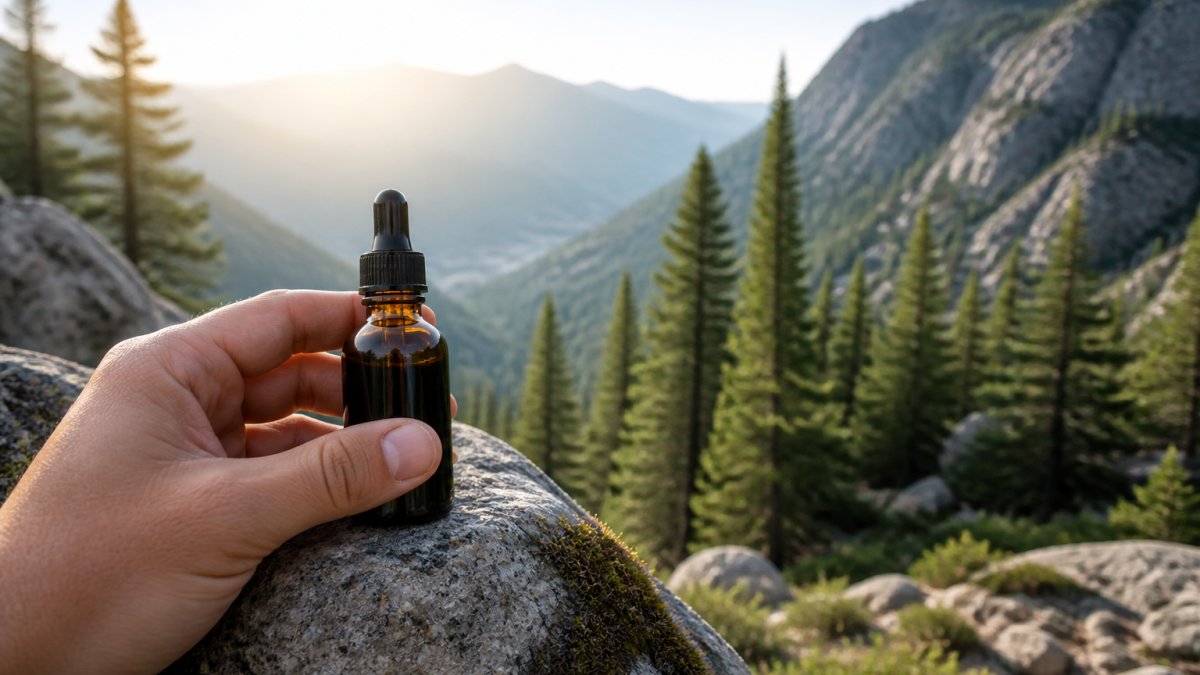
Harvesting responsibly means taking only what the landscape can regenerate and leaving the site as you found it.
6. Liquid Shilajit Drops Make a Mineral Routine Simple
Liquid shilajit drops are the most convenient form for daily use. Raw shilajit is a thick resin in nature, and resin is difficult to measure, slow to dissolve and hard to take consistently. Refining it into a water-soluble liquid solves all three problems at once.
Our drops mix cleanly into water, coffee, tea or food, and you can also take them under the tongue once you acquire the taste. One dropper, about 10 to 15 drops, is the daily serving on the label.
How to Use Shilajit Drops in a Daily Drink
- Morning coffee or tea: stir the dropper into a hot cup and drink as usual.
- Plain water: mix into a full glass; the flavor is earthy and strong.
- Under the tongue: hold briefly, then swallow, for the most direct route.
- Food: stir into oatmeal, soup or a smoothie if you prefer to skip the taste.
7. A Grounded Alternative to Offshore and Mass-Produced Supplements
Offshore and mass-produced supplements are not inherently bad, but they are harder to verify.
Choosing a wildcrafted, regionally sourced product trades convenience and low price for traceability. For current options and prices, compare Stoneblood Original and Magic Brown.
| Consideration | Wildcrafted, Regionally Sourced | Mass-Produced or Imported |
|---|---|---|
| Traceability | Single harvest, lot-coded | Often aggregated |
| Supply chain length | Short, direct | Multiple handlers |
| Mineral profile | Reflects one landscape | Blended or standardized |
| Testing transparency | Per-batch certificates | Varies widely |
| Cost | Higher | Lower |
Wildcrafted minerals only deliver their value if the sourcing behind them holds up, and verifying that takes more work than most labels make easy. Start with Magic Brown and taste what a short supply chain actually delivers.
These statements have not been evaluated by the Food and Drug Administration. This product is not intended to diagnose, treat, cure, or prevent any disease.
Frequently Asked Questions
What are the most important minerals found in North America?
North American soils and rock formations supply a broad spread of essential minerals, including calcium, magnesium, iron, potassium, and a long list of trace elements such as zinc, copper, manganese, and selenium. The exact mix depends on local geology. Wildcrafted sources concentrate whatever the land and plant matter hold, which is why provenance matters. Shilajit in particular is valued in Ayurveda for its mineral content alongside fulvic acid, and it is traditionally used as a mineral-rich supplement rather than a single-nutrient product.
What is fulvic acid in shilajit?
Fulvic acid is a naturally occurring organic compound formed as plant material breaks down over long periods. In shilajit, it is the component most often discussed because it helps make minerals more available to cells. Stoneblood refines its wildcrafted material into a water-soluble liquid so the fulvic acid and minerals can be mixed into a drink. You can read more about the sourcing and testing behind it on the quality and safety page.
How can you assess the quality of shilajit?
Look for a clear chain of custody, a named harvest region, lot coding, and third-party testing for heavy metals and microbials. Ask whether the finished product, not just the raw material, was tested. Stoneblood bottles its liquid shilajit drops in a cGMP-certified facility and tests batches for heavy metals and microbials. Certificates of Analysis are issued per lot, and you can request the results for your bottle by email.
How do liquid shilajit drops compare with raw shilajit resin?
Raw shilajit is a thick, tar-like resin in nature. Liquid drops are that material refined in distilled water so it becomes water-soluble and easy to measure. Drops mix cleanly into water, coffee, tea, or food and avoid the sticky handling of resin. The trade-off is that a liquid needs proper preservation and testing. Stoneblood's drops come in a 1 fl oz dropper bottle and are lot-coded for traceability.
What is a simple way to use shilajit drops in a drink?
Follow the label: take 1 dropper (about 10 to 15 drops) daily in water, coffee, tea, or food, or under the tongue. A common approach is to stir the dropper into a morning coffee or a glass of water. The earthy flavor is part of the product, so many people prefer it in a warm drink rather than plain water. Do not exceed the label directions, and consult a healthcare professional before starting any supplement.

Share:
What Is North American Liquid Shilajit? A Practical Guide
How to Identify High Quality Shilajit Resin: 7 Checks