Last Updated: November 25, 2026
Quick Summary
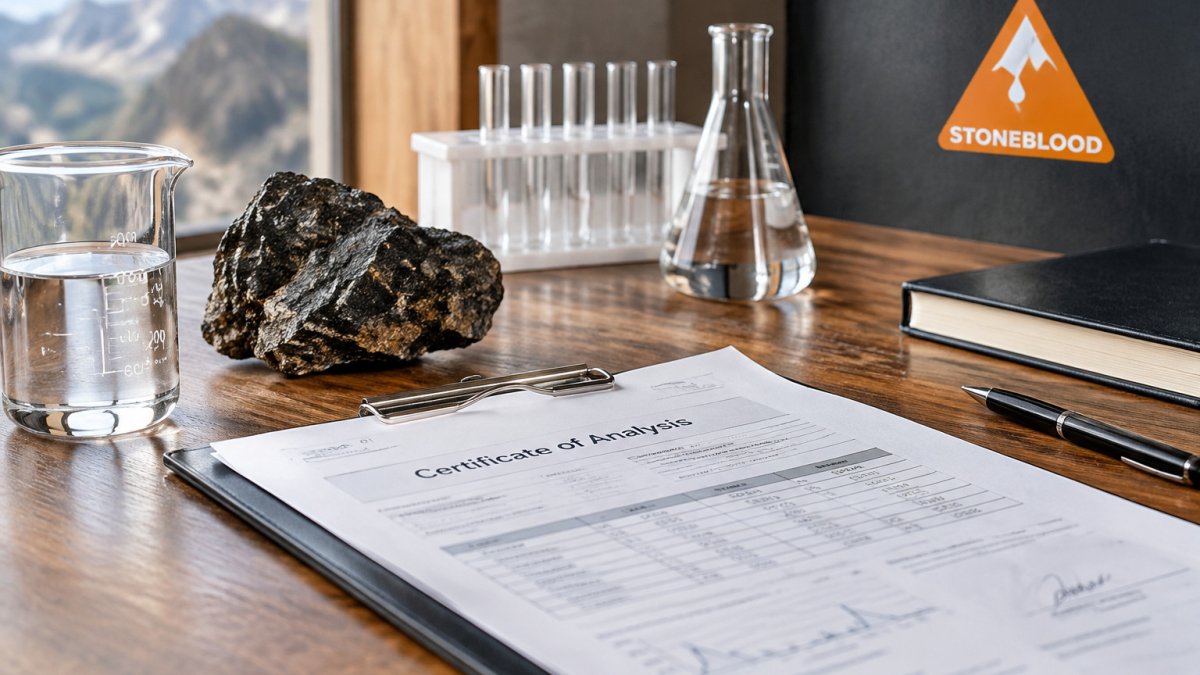
A shilajit certificate of analysis, or COA, is a lab report showing what was tested in a specific batch. To check one, match the lot number on the report to the code on your bottle, confirm the laboratory and test methods are named, and read each result with its units and detection limit.
- Match the lot or batch number on the report to the code printed on your bottle.
- Confirm the testing laboratory is named and check whether it holds ISO/IEC 17025 accreditation.
- Check that every result lists a test method, units and a reference limit.
- Treat an "ND" result as below the detection limit, so look for the reported limit beside it.
- Ask the brand for the report matching your bottle's lot before you buy or use the product.
Table of Contents
- What a Shilajit Certificate of Analysis Is
- Matching the Report to Your Bottle: Shilajit Lot Number Verification
- Checking the Testing Laboratory and Its Accreditation
- Reading the Shilajit Lab Test Report Field by Field
- Heavy Metal Results and What Shilajit Third-Party Tested Means
- Gaps to Watch For: Contaminants Beyond Heavy Metals and Missing Methods
- Your Next Step: Requesting the Report for Your Bottle's Lot
- Frequently Asked Questions
What a Shilajit Certificate of Analysis Is
A shilajit certificate of analysis, often called a COA, is a lab report that shows what was tested in a specific batch of product. It lists the test methods, the laboratory that ran them, and the results for each item tested. Reading one is a practical way to check what a bottle actually contains.
A report for one batch says nothing certain about another. Before you spend money on any shilajit, ask whether a current report exists and whether it covers the lot on your label.
Many shoppers find COAs confusing because they are full of units and abbreviations. The sections below walk through each part, so you can tell a clear report from a vague one.
Matching the Report to Your Bottle: Shilajit Lot Number Verification
The most important check is lot matching. Find the lot or batch code printed on your bottle, then confirm the report lists the same code. If the numbers differ, the report does not describe your product.
Here is a simple way to check:
- Find the lot or batch number on the bottle label or packaging.
- Compare it with the lot listed on the report.
- Confirm the product name on the report matches your bottle.
- Check that the report date is recent enough to be meaningful to you.
If you cannot match the lot, contact the brand before you use the product. Our request a lot-specific report guide explains how to ask for the right documentation. Learning how to read a supplement batch number also makes this step much easier.
Checking the Testing Laboratory and Its Accreditation
A report is only as trustworthy as the lab behind it. Look for the laboratory name, its address, and any accreditation it holds. Accreditation to ISO/IEC 17025 means a lab has been assessed for technical competence in its testing methods.
Be cautious if the lab name is missing, or if the report looks like a template with blank fields. You can search the lab's name independently and check whether it appears to operate as a real testing business. Our FAQ page covers common questions about sourcing and testing.
Not every report will name its accreditation body. That does not prove a problem, but it is a reason to ask the seller for more detail.
Reading the Shilajit Lab Test Report Field by Field
Most COAs follow a similar layout. Going through it in order helps you spot what is present and what is missing. The table below shows the fields you should expect and what each one tells you.
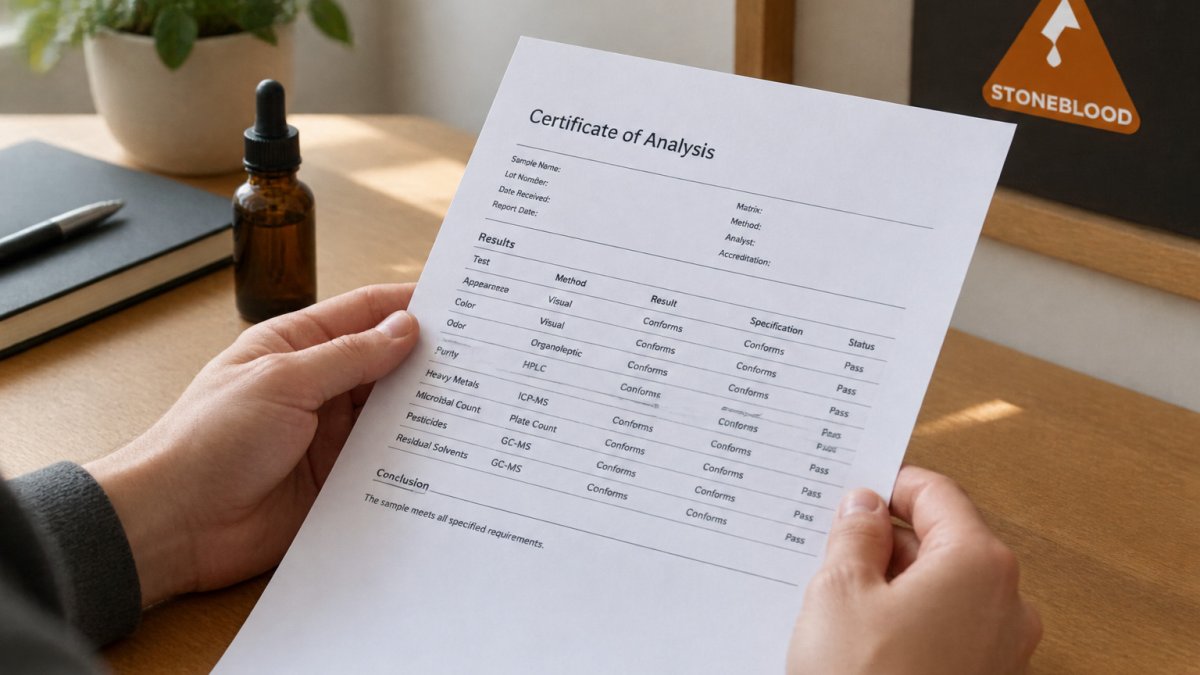
| Field | What it tells you | What to check |
|---|---|---|
| Product identity | The name, form, and any listed ingredient or source description | Does it match the bottle in your hand? |
| Lot or batch number | The specific production run tested | Does it match the code on your label? |
| Sample date and report date | How current the results are | Is the report recent enough to describe your bottle? |
| Test method | The procedure used for each result | Is a method listed for every result, not just some? |
| Results | The measured value for each item | Are numbers present, or only pass/fail statements? |
| Units | Such as parts per million (ppm) or parts per billion (ppb) | Are units stated for every result? |
| Limits or reference values | What the result was compared against | Is the limit named, and does it match the units? |
| Pass or fail statement | The lab's conclusion for each test | Does the conclusion follow from the result and limit? |
Use the label checklist alongside the report to compare product details with the lab data.
Units, Detection Limits and Non-Detect Results
A result of "ND" or "not detected" does not always mean zero. It means the amount was below the lab's detection limit or limit of quantification for that method. Look for the reported limit next to the result, since it tells you how sensitive the test was. A report that says "ND" without a limit is telling you less than it appears to.
Units matter too. A value in ppb is a thousand times smaller than the same number in ppm, so always check which unit the report uses before comparing results between two reports. If one report lists lead at 0.5 ppm and another lists 50 ppb, those are the same concentration, but the numbers look very different.
Watch out: a report that mixes units across rows, or omits units entirely, is easy to misread and should prompt a request for clarification from the seller.
How to Authenticate the Report Independently
A COA is more useful when you can confirm it came from the lab that is named on it. Practical steps include:
- Note the report number or sample ID, if one is listed.
- Search the laboratory's name and confirm it operates as a testing business.
- Check whether the lab states its accreditation scope, such as ISO/IEC 17025, and whether the tests on your report fall within that scope.
- Contact the lab using contact details you find independently, not details printed only on the report, and ask whether the report number matches a sample they tested.
- Compare the sample description on the report with the product you bought, including form and lot.
A common pattern is that reports are easy to verify when the lab is named and the report number is unique. Reports with no lab name, no report number, or generic template fields are harder to confirm and deserve more scrutiny.
Heavy Metal Results and What Shilajit Third-Party Tested Means
"Third-party tested" means an independent lab, not the brand itself, performed the analysis. Check whether a report addresses heavy metals and, if it does, that each result has a method listed.
Some practical points to keep in mind:
- A third-party label alone does not prove the result. Read the actual numbers.
- Results from one batch do not guarantee another batch.
- Ask the brand how its testing is scheduled across lots.
Stoneblood's quality and safety page explains the testing we describe. For any specific bottle, the lot-matched report is the document that counts.
Gaps to Watch For: Contaminants Beyond Heavy Metals and Missing Methods
Heavy metals are only one category. A complete report may also address microbial testing, pesticide residues, mycotoxins, or residual solvents, depending on the product. If a report covers only one category, you do not know the status of the others.
Here is when each additional category matters and what a meaningful panel should include:
- Microbial testing: Relevant for any product that contains water or is prone to spoilage. A meaningful panel typically includes total aerobic count, yeast and mold, and tests for specific organisms such as E. coli and Salmonella. For a liquid product, this category is especially worth confirming.
- Pesticide residues: Relevant when raw material is sourced from regions where agricultural chemicals may be used near collection sites. A meaningful panel lists the specific compounds tested and the limits applied.
- Mycotoxins: Relevant when raw material is stored in conditions that could allow mold growth. A meaningful panel names the mycotoxins tested, such as aflatoxins, and the limits used.
- Residual solvents: Relevant when a product is processed with solvents. A meaningful panel lists the solvents tested and the limits applied.
A report that covers only heavy metals is not necessarily a bad report, but it leaves the other categories unaddressed. Ask the seller whether additional testing exists for your lot.
Watch out: a report that lists a category without naming the specific compounds or organisms tested is hard to evaluate, because you cannot tell how broad the panel actually was.
Missing Methods and Sample Provenance
Two gaps are especially common and worth checking closely:
- No test method listed for a result. Without a method, you cannot tell whether the test was appropriate for the product or how sensitive it was.
- No detection limit beside an "ND" entry. Without a limit, you cannot tell how much of a substance could be present below the reporting threshold.
Sample provenance matters too. A report on raw material tells you about the input, not the finished product. A report on the finished, bottled product is more directly relevant to what you use. Ask which one the report describes.
Our guide on verifying supplier transparency explains how to spot these gaps in more detail. Stoneblood's quality and safety page explains the testing we describe, and you can request documentation for your bottle's lot.
Your Next Step: Requesting the Report for Your Bottle's Lot
Before you buy or use a shilajit, check your bottle's lot number and ask the brand for the report matching that lot. A good request includes the product name, the lot number on the label, and the report you want to see.
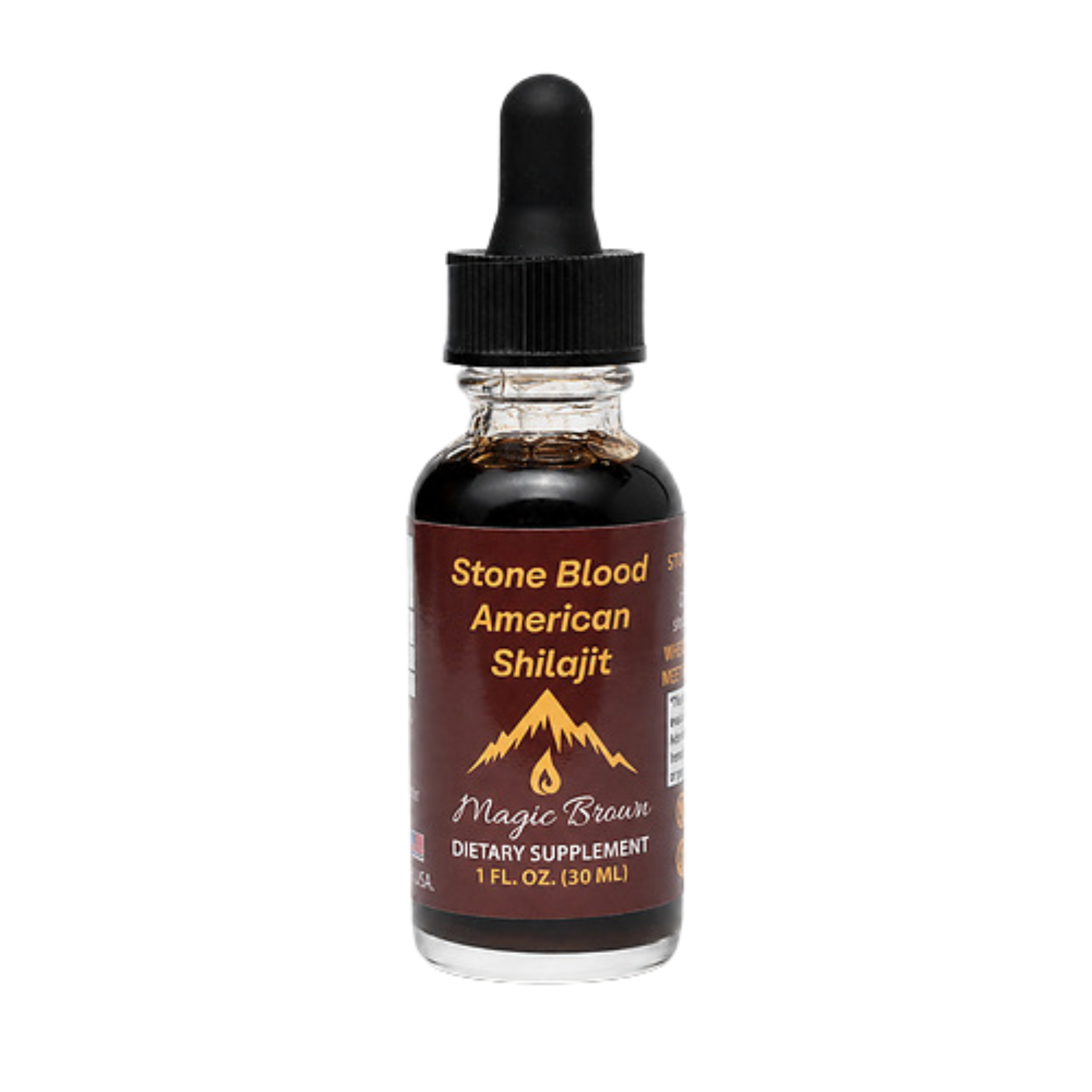
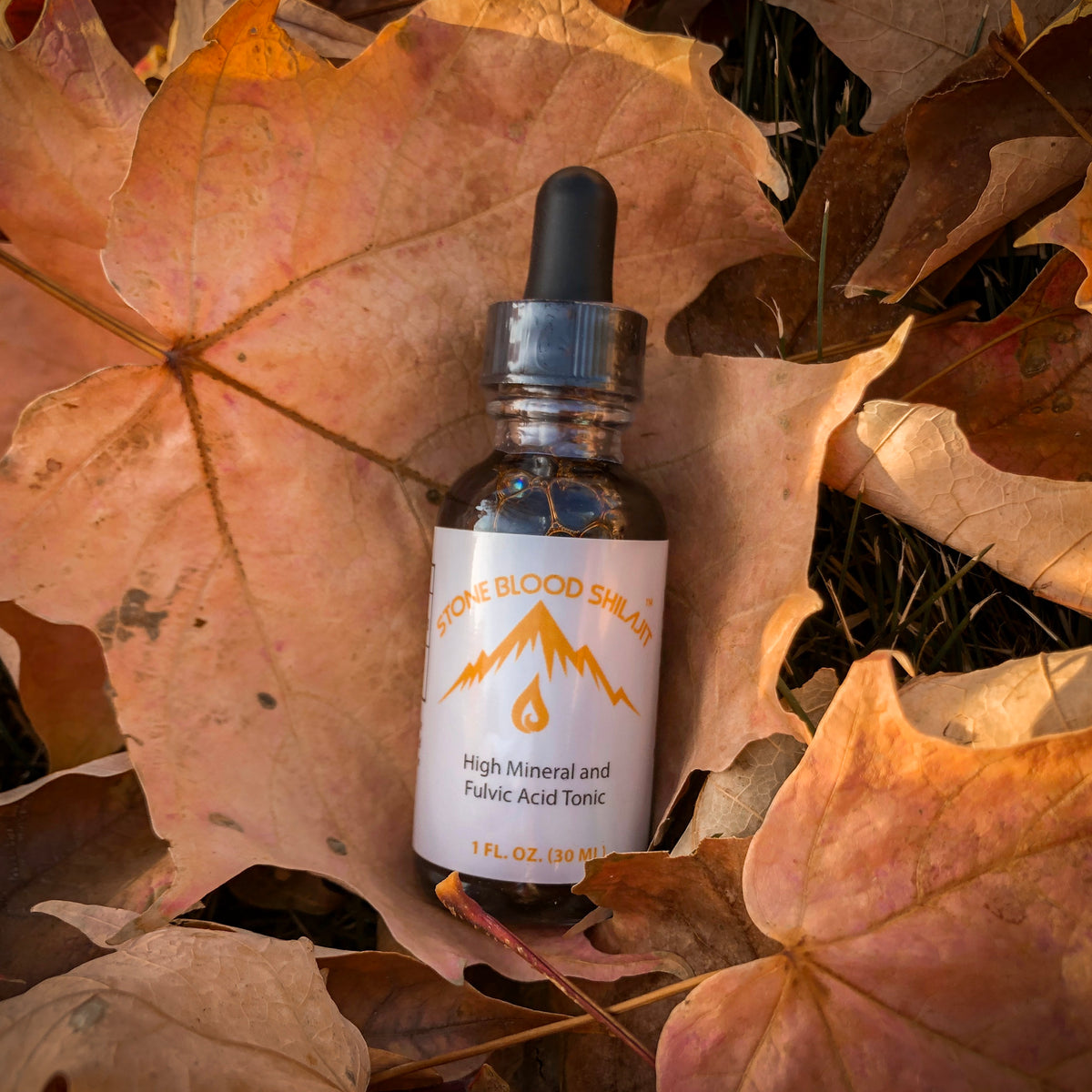
Stoneblood Shilajit offers two confirmed liquid products: Magic Brown Liquid Shilajit Drops (Double Strength) and Shilajit Original Liquid Drops. Always follow the directions on your specific bottle, and contact Stoneblood to confirm the product and lot if anything differs.
These statements have not been evaluated by the Food and Drug Administration. This product is not intended to diagnose, treat, cure, or prevent any disease. Consult a healthcare professional before starting any supplement, especially if you are pregnant, nursing, taking medication or managing a health condition.
Frequently Asked Questions
How do I request a shilajit certificate of analysis for my bottle?
Start with the lot number printed on your bottle, then contact the brand's customer service and ask for the batch-specific report for that lot. Include the product name, the lot number and the date of purchase in your request. Check that the report names the product, the lot, the testing laboratory and a report date. If the brand cannot match a report to your lot number, treat that as a gap and ask for clarification before you rely on the results. Keep a copy of the request and any reply for your records.
What should a shilajit certificate of analysis include?
A useful certificate of analysis names the product, lists a lot or batch number, identifies the testing laboratory, and gives a report date. It should list each test performed, the method used, the result, the unit of measurement and the limit it was compared against. Look for detection limits and an explanation of any non-detect results. If a report lacks these basics, it is harder to confirm that the results describe the bottle you hold.
What is the difference between a product label and a certificate of analysis?
A product label tells you what the manufacturer claims is in the bottle and how to use it. A certificate of analysis is a laboratory document that reports measured results for a specific sample or lot. The label describes intent, while the report shows test data. Compare the two: the lot number on your bottle should match the lot number on the report, and the report should describe the tests that support the label's statements.
How recent should a shilajit certificate of analysis be?
Look for a report date and confirm that it refers to the lot in your bottle, not to a different batch. A report from an older lot does not describe a newer production run. Check the lot number first, then the date. If the report is older than your product or the lot does not match, ask the brand for the report that covers your specific lot before you rely on the results.


Share:
Fulvic Acid and Immune Support: What the Evidence Shows
Heavy Metal Testing Standards for Supplements Explained