
Last Updated: November 26, 2026
Quick Summary
Heavy metal testing for dietary supplements is not governed by one federal number. The FDA uses action levels for certain foods, guidance for certain products, and a case-by-case adulteration standard, while state and international rules add their own limits. Buyers should ask which metals were tested, which method was used, and which lot the results cover.
- No single federal heavy metal limit applies to every dietary supplement.
- California Proposition 65 warning thresholds for lead are far lower than most federal action levels.
- Third-party tested can mean anything from one lab sample to an ongoing certification program.
- ICP-MS is a common method for measuring trace metals in supplements.
- Request a Certificate of Analysis showing the lot number that matches your bottle.
Table of Contents
- How Dietary Supplements Are Regulated in the United States
- Heavy Metal Testing Standards for Dietary Supplements
- FDA Heavy Metal Limits for Supplements: What Applies and What Does Not
- Third-Party Testing for Supplements and What It Does and Does Not Prove
- How ICP-MS Testing for Heavy Metals Works
- How to Read a Supplement Certificate of Analysis
- Requesting Lot-Specific Testing Documentation for Your Bottle
- Frequently Asked Questions
How Dietary Supplements Are Regulated in the United States
Dietary supplements in the United States fall under a different regulatory framework than prescription drugs. Under the Dietary Supplement Health and Education Act of 1994, manufacturers are responsible for making sure their products are safe before they reach the market (the FDA). The Food and Drug Administration (FDA) steps in after a product is sold, FDA overview of dietary supplement regulation.
This matters for heavy metal testing. Because supplements do not go through pre-market approval, the testing a brand chooses to do becomes a key part of how buyers judge quality. Readers should understand this before they look at any label or lab report.
- Manufacturers are responsible for product safety and accurate labeling
- The FDA monitors the market and can act against unsafe products
- Buyers rely heavily on the transparency a brand provides
Heavy Metal Testing Standards for Dietary Supplements
Heavy metal testing checks a product for toxic elements such as lead, arsenic, cadmium and mercury. These metals can enter a supplement through soil, water, processing equipment or packaging. Testing is how a brand confirms what is actually in the product.
A few points shape how any testing program works:
- Sampling determines whether results represent the whole lot
- Analytical methods determine how low a metal can be detected
- Reporting determines whether a buyer can read the results at all
Many brands describe their testing as "third-party tested," but the scope of that testing varies widely. Ask which metals were tested, which method was used and which lot the results cover.
FDA Heavy Metal Limits for Supplements: What Applies and What Does Not
There is no single federal number that applies to every dietary supplement. That is the first thing to understand, and it is where most online summaries go wrong. The FDA sets contaminant limits in three different ways, and each one applies to a different slice of the market.
Action levels for specific foods and ingredients. The FDA publishes action levels for lead, arsenic, cadmium and mercury in certain foods, for example, lead in candy, arsenic in rice and juice, and cadmium in certain seafood. These are not supplement limits, but they matter to supplement makers because many supplements use the same agricultural ingredients.
Guidance for specific product categories. The FDA has issued guidance documents on lead in certain products, including some cosmetic and ingested items. These are guidance, not binding regulation, but they signal what the agency considers a reasonable level. A brand that cites a guidance number should be able to show you the document and explain why it applies to its product.
The adulteration standard. For supplements without a specific limit, the FDA can still act if a product is adulterated, meaning it contains a poisonous or deleterious substance that may render it injurious to health. This is a case-by-case judgment, not a published threshold. It is why a brand cannot simply say "no limit exists, so anything goes."
State rules add another layer. California's Proposition 65 requires a warning above certain lead exposure levels, and that warning threshold is far lower than most federal action levels. A product sold nationally may carry a Prop 65 warning even when it meets every federal standard. New York and a few other states have their own testing and labeling requirements for supplements. A brand selling into those states has to meet the stricter of the applicable rules.
International standards are a separate matter. The European Union, Canada and Codex Alimentarius each publish their own contaminant limits, and those numbers are often different from any U.S. threshold. A result that passes an EU limit does not automatically satisfy a U.S. requirement, and the reverse is also true. When you see a limit quoted online, check which jurisdiction it comes from before you apply it to a product sold here.
FDA guidance on contaminants in food and supplements is the place to check the current status of any federal action level or guidance document.
Watch out: a brand that quotes a single "heavy metal limit" without naming the jurisdiction, the product category and the date is giving you a number that may not apply to the bottle in your hand.
The article lays out how different limits apply, so here is a quick summary of the three federal routes and the state and international rules it mentions.
| Limit source | What it covers | Binding or guidance |
|---|---|---|
| FDA action levels | Lead, arsenic, cadmium, mercury in certain foods | Published action levels, not supplement limits |
| FDA guidance documents | Lead in certain cosmetic and ingested products | Guidance, not binding regulation |
| Adulteration standard | Products with poisonous or deleterious substances | Case-by-case judgment, no published threshold |
| California Proposition 65 | Lead exposure above a warning level | Warning threshold far lower than federal action levels |
| EU, Canada, Codex | Contaminant limits set in each jurisdiction | Often different from U.S. thresholds |
Third-Party Testing for Supplements and What It Does and Does Not Prove
"Third-party tested" is one of the most elastic phrases in the supplement aisle. It can mean a brand sent one sample to an outside lab once, or it can mean an ongoing certification program with unannounced audits. Those are not the same thing, and the label rarely tells you which one you have.
It helps to separate three arrangements that all get called third-party testing:
A one-time or per-lot lab panel. The brand contracts an independent laboratory to run a metals panel on a sample. The lab reports results, and the brand decides what to do with them. This is the most common arrangement. It can be useful, but the scope depends entirely on what the brand asked for, which metals, which method, which lot, and whether the report is shared with buyers.
A voluntary certification program. Organizations such as NSF International, USP and ConsumerLab run programs that combine laboratory testing with facility audits, ongoing sampling and a mark the brand can display. These programs publish their own standards, and the mark usually means the product met a defined specification at the time of testing. The mark does not mean the product is safe for every person, and it does not cover metals the program did not test for.
A retailer specification. Some retailers require brands to submit testing before the product can be listed. This is a private commercial requirement, not a government standard, and it varies by retailer. A product that meets a retailer's spec has cleared that retailer's bar, not a public one.
What a third-party test can confirm:
- Which metals were measured in the specific sample tested
- The reported concentration for each metal
- The analytical method and the reporting limit used
- Whether the result fell above or below a stated specification
What a third-party test cannot confirm:
- That every bottle in the market matches the tested sample
- That metals outside the panel are absent
- That the product is safe for every person at every serving
- That the brand's manufacturing practices are consistent across lots
The practical question is not "is it third-party tested?" but "what exactly was tested, by whom, on which lot, against which specification, and can I see the report?" A brand that can answer all five is giving you something a certification mark alone cannot.
Watch out: a certificate that lists a result but no specification, no lot number and no method is a lab readout, not proof of compliance with anything.
How ICP-MS Testing for Heavy Metals Works
Inductively coupled plasma mass spectrometry (ICP-MS) is one of the most common methods for measuring trace metals. The sample is turned into a liquid, then ionized in a very hot plasma. The instrument separates the ions by mass and counts them, which lets the lab measure very small amounts of each metal.

ICP-MS is sensitive, so it can detect metals at low levels. That sensitivity is useful, but it also means the lab's sample preparation and quality controls matter a great deal. A good report will name the method and show the quality checks behind the numbers.
How to Read a Supplement Certificate of Analysis
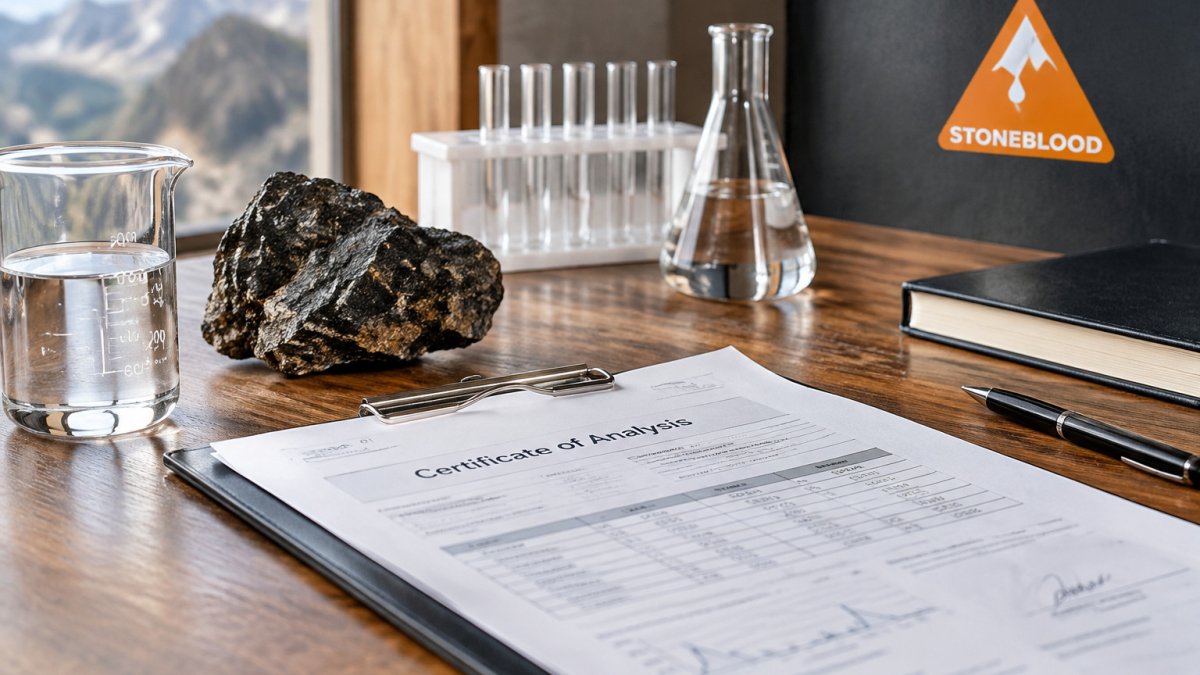
A Certificate of Analysis (CoA) is the lab report that lists test results for a product sample. Reading one takes only a few steps:
- Find the lot number and confirm it matches your bottle
- Check the date of the test and the lab's name
- Locate the metals panel and note which metals were tested
- Compare each result to the reporting limit or any stated standard
- Look for the method (such as ICP-MS) and any stated quality controls
Missing lot numbers, undated reports and vague wording like "passes" without a listed value are reasons to ask more questions before relying on the document.
Requesting Lot-Specific Testing Documentation for Your Bottle
The most useful documentation is tied to the specific lot in your bottle. Results from a different batch or a general summary cannot tell you what your bottle contains. For Stoneblood Shilajit, you can find the quality and safety information on the Quality & Safety page and see the product details for the Original formula here. Results apply to the sample and lot tested.
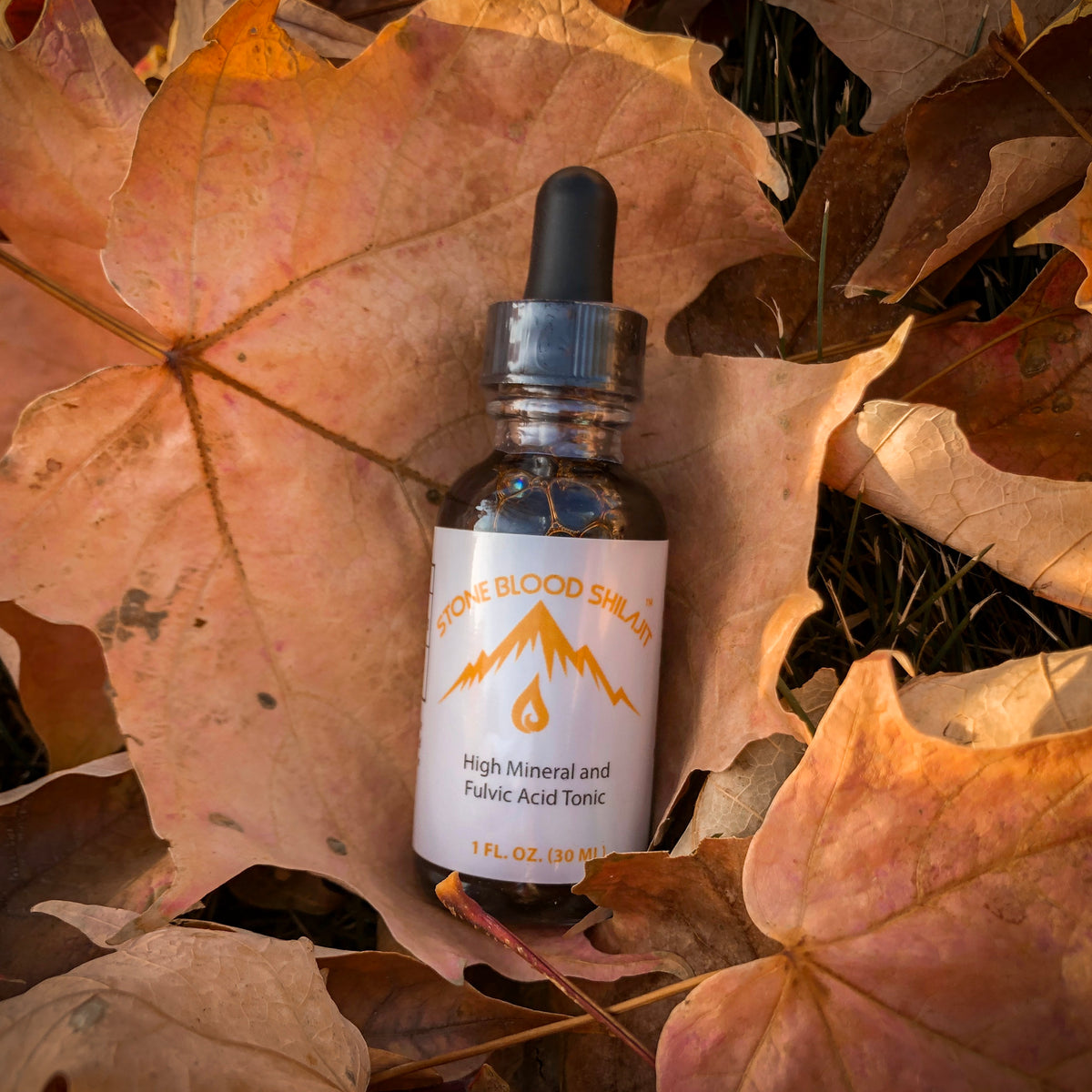
To request documentation for your bottle, email stonebloodshilajit@gmail.com with its lot number. Bottling, sealing and packaging are performed by Blue Mountain Labs in Lindon, Utah.
For more on checking sourcing claims, read how to verify supplement sourcing transparency. Related guidance on checking FDA registration claims is also available in this guide to FDA supplement registration.
Always confirm the product name on your bottle before following any directions, and contact Stoneblood to verify the lot if the label does not match.
These statements have not been evaluated by the Food and Drug Administration. This product is not intended to diagnose, treat, cure, or prevent any disease. Consult a healthcare professional before starting any supplement, especially if you are pregnant, nursing, taking medication or managing a health condition.
Frequently Asked Questions
Are dietary supplements regulated by the FDA?
Yes, but differently than drugs. Under the Dietary Supplement Health and Education Act of 1994, manufacturers are responsible for making sure their products are safe and that label claims are truthful before they are sold. The FDA does not approve supplements before they reach the market. It can act after a product is sold, including taking action against adulterated products and reviewing safety reports. Because the rules place primary responsibility on manufacturers, buyers should look for documentation that backs up a brand's quality claims.
Are there federal limits for heavy metals in dietary supplements?
Federal rules set specific limits for heavy metals in some foods, but supplement-specific numeric limits for every metal are limited. Under current FDA framing, a supplement can be considered adulterated if it contains contaminants at levels that make it unsafe, and manufacturers are expected to control contaminants through their quality systems. Buyers who want to compare products should ask the brand which limits its testing is measured against and request the results for the specific lot they are buying.
What should a supplement certificate of analysis include?
A certificate of analysis, or CoA, should identify the product and lot number, the testing laboratory, the test date, the analytes measured, the method used and the reported results with units. Look for clear reporting of lead, arsenic, cadmium and mercury, along with the detection or reporting limits. A CoA applies only to the sample and lot tested, so confirm that the lot number on the CoA matches the lot number printed on your bottle.
Does third-party testing guarantee that a supplement is free of contaminants?
No. Third-party testing shows what a laboratory found in the sample it tested, at the time it was tested. It does not guarantee that every bottle from a batch is identical or that no contaminant is present at any level. Results depend on how the sample was collected, which metals were included in the panel and the detection limits of the method. Readers should treat third-party results as one useful piece of evidence and request lot-specific documentation to see what was actually measured.


Share:
Shilajit Certificate of Analysis: What to Check