

Last Updated: November 24, 2026
Quick Summary
Fulvic acid is one organic compound found in humic substances and in shilajit, a resin formed in mountain rock. Direct human evidence on fulvic acid and immune outcomes is limited, so claims should be weighed against the specific product and its documentation. Reading the label and requesting lot-specific testing are practical first steps.
- Fulvic acid is one of several organic components found in shilajit resin.
- Laboratory and animal studies cannot establish results for a finished product in people.
- Direct human evidence on fulvic acid and immune outcomes remains limited.
- Check the exact product name, strength and ingredient listing on your label.
- Ask for a lot-specific testing report for your bottle before relying on quality claims.
Table of Contents
- What Fulvic Acid Is and Where It Comes From
- Fulvic Acid Research: What Human Studies Show About Immune Function
- How Immune Claims Are Made, and What They Do Not Prove
- Fulvic Acid in Shilajit: How the Two Are Related
- How to Read a Fulvic Acid Supplement Label
- Storage, Mixing and Practical Use of Liquid Shilajit Drops
- Who Should Speak With a Healthcare Professional First
- Frequently Asked Questions
What Fulvic Acid Is and Where It Comes From
Fulvic acid is one of the organic compounds found in humic substances, the decomposed plant and organic material that accumulates in soil, peat and ancient mineral deposits. At Stoneblood Shilajit, we work with shilajit, a resin that forms over long periods in high mountain rock, and fulvic acid is the term most often used to describe one of its main organic components. Understanding the term is the first step toward reading supplement claims accurately.
Fulvic acid is a small, water-soluble molecule. That solubility is also why the compound shows up in liquid products. The science is still developing, and much of what is written about it goes further than the published evidence allows.
Shilajit has a long history in traditional Ayurvedic practice, where it is known as a resin harvested from mountain rock. That history is cultural context, not proof of effect. When you see fulvic acid listed on a label, the practical question is how much is present in the specific product and whether the manufacturer documents it for that lot.
Fulvic Acid Research: What Human Studies Show About Immune Function
Much of what is written about fulvic acid and immune support combines three very different kinds of evidence under one word: "research." Separating them is the single most useful thing a reader can do, because each type answers a different question and only one of them speaks directly to what happens in people.
Laboratory and cell studies. These are the most common source of fulvic acid headlines. Researchers expose cultured cells to a fulvic or humic preparation and observe changes in signaling molecules or oxidative markers. Such work can suggest a mechanism worth testing, but a lab dish has no digestion, no liver processing, and no immune system in the round. A finding there is a hypothesis, not an outcome.
Animal studies. Rodent work adds a living system, which is a meaningful step up, but animals differ from humans in absorption, metabolism, and immune architecture. A result in mice fed one preparation does not transfer to a person taking a different liquid product at a different amount.
Human studies. This is the category that matters for immune claims, and it is the thinnest. Published human trials on fulvic acid specifically measuring immune outcomes are limited in number and scope. A trial on one preparation does not establish anything about a different bottle.
A practical way to read any study reference is to ask four questions in order: Who was studied (cells, animals, or people)? What form and amount was tested, and does it match the product in front of you? How long did the study run? And what was actually measured, a laboratory marker, or a clinical outcome such as how often participants got sick? Most marketing collapses these four answers into a single confident sentence. When the details are missing, the honest reading is that the claim is not yet supported by evidence you can see.
For fulvic acid and immune function, the fair summary is that direct human evidence on immune outcomes remains limited. That is not a reason to dismiss the compound, it is a reason to hold claims loosely and to weigh them against the quality of the specific product and its documentation.
How Immune Claims Are Made, and What They Do Not Prove
Supplement marketing often moves from a cell-level finding to a consumer promise in one step. A result showing that a compound affects an immune signaling molecule in a lab dish is then described as "supporting immune health" on a product page. The gap between those two statements is where most confusion starts.
Words such as "supports," "may help," and "traditionally used" do not make an unsupported claim acceptable, and they do not turn a laboratory result into a human outcome.
Read immune claims as a question rather than an answer: what was measured, in whom, at what dose, and by whom? If those details are absent, the claim is not yet supported by the evidence you can see.
Fulvic Acid in Shilajit: How the Two Are Related
Fulvic acid is one of several organic components found in shilajit, so the two terms are related but not interchangeable. Shilajit is the whole resin; fulvic acid is one fraction within it. A finished liquid supplement may vary in how much of that fraction it contains, which is why the product's own documentation matters more than the general term.
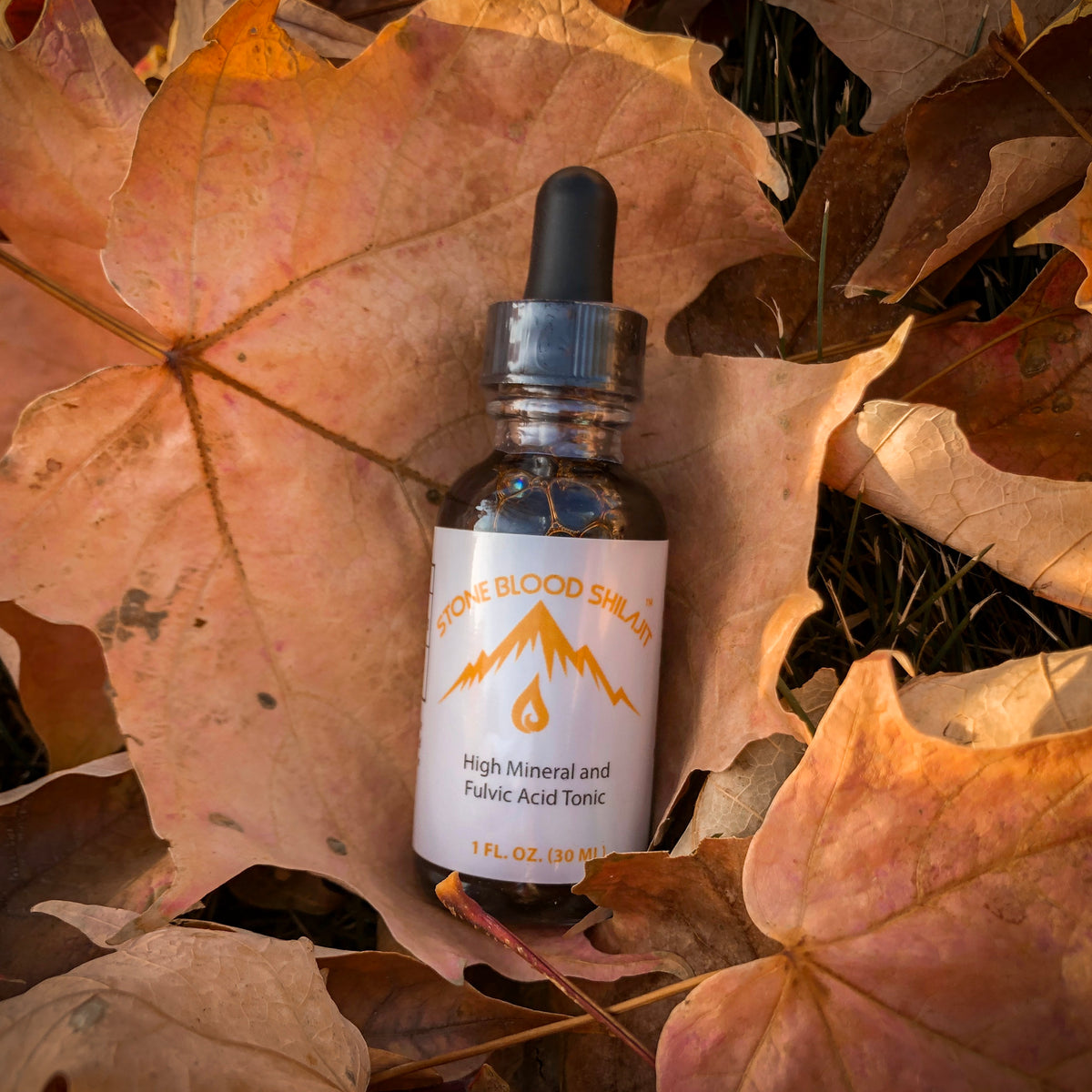
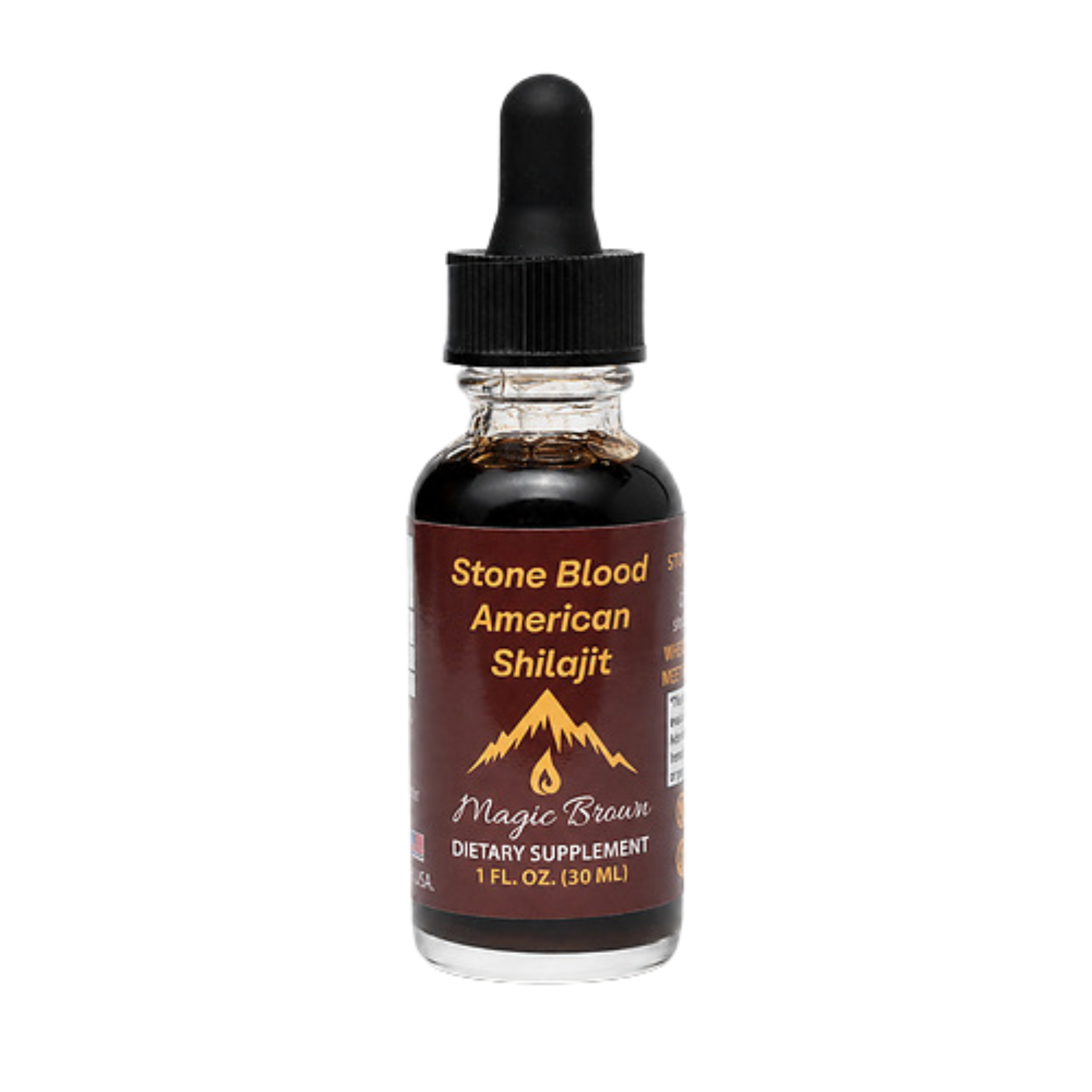
Our Stoneblood Original and Magic Brown are both liquid shilajit drops made from resin wildcrafted in Utah and refined in distilled Rocky Mountain spring water. Each product's ingredient listing is purified shilajit extract and water. Because strength differs between the two, they should not be treated as interchangeable. For the standard-strength option, see Shilajit Original Liquid Drops; for the double-strength option, see Magic Brown Liquid Shilajit Drops (Double Strength).
Readers who want to understand the compound itself can start with an explanation of fulvic acid and its composition before comparing finished products.
How to Read a Fulvic Acid Supplement Label
A label is a starting point, not proof.
1. Identify the product and its strength. Confirm the exact product name and whether it is a standard or double-strength version, because directions differ between them.
2. Read the ingredient listing literally. For a liquid shilajit drop, look for purified shilajit extract and water, with no unexplained additives, fillers, or flavoring agents that are not disclosed.
3. Check the volume and format. Our bottles are 1 fl oz (30 mL) dropper bottles (Metric Household | NIST). Format matters because a liquid, a resin, and a capsule are different preparations, and research on one does not transfer to another.
4. Look for origin and processing details. The label or product page should state where the resin was sourced and how it was refined. Vague origin claims ("Himalayan," "pure," "ancient") without specifics are marketing, not information.
5. Demand lot-specific testing documentation. This is the step most shoppers skip. A quality claim, purity, contaminant screening, identity confirmation, should be tied to a report for the specific sample or lot, not a generic certificate.
6. Match the claim to the evidence type. If a label or product page promises an immune benefit, ask what kind of study stands behind it: laboratory, animal, or human, and on which preparation.
7. Check the directions against the product. Directions should be specific to the product you bought. If your bottle's directions differ from what is published, contact the manufacturer to confirm the product and lot before use.
Watch out: A label that lists a mineral count, a "guaranteed purity" figure, or an "FDA approved" badge without a lot-specific report behind it is making a claim it has not documented. FDA does not approve dietary supplements (the FDA).
For documentation on your bottle, the Quality and Safety page explains what testing is available, and you can email stonebloodshilajit@gmail.com with your lot number to request it. Readers who want a practical checklist can review seven checks for a liquid shilajit label, and a broader guide on spotting authentic shilajit drops covers how to compare bottles side by side.
The checklist below summarises the main points a reader should check on any fulvic acid or shilajit label.
| Check | What to look for | Why it matters |
|---|---|---|
| Product and strength | Exact name; standard or double strength | Directions differ between versions |
| Ingredient listing | Purified shilajit extract and water | Undisclosed additives are unclear |
| Volume and format | 1 fl oz (30 mL) dropper bottle | Liquid, resin and capsule are different preparations |
| Origin and processing | Specific sourcing and refining details | Vague origin claims are marketing only |
| Lot-specific testing | Report for your bottle's lot number | Results apply to the sample tested |
| Claim vs. evidence | Laboratory, animal or human study named | Claims without a matching study are unsupported |
| Directions | Specific to the product you bought | Mismatched directions should be confirmed with the manufacturer |
Storage, Mixing and Practical Use of Liquid Shilajit Drops
Liquid drops are convenient because they measure easily and mix into water, coffee or tea without residue. Store the bottle according to its label, keeping the cap closed and the dropper clean to avoid contamination.
For Magic Brown, the current directions are 3 to 4 drops once daily, mixed into water, food, coffee or tea. For Stoneblood Original, the directions are one dropper, about 10 to 15 drops, daily. Always follow the directions for the specific product you bought. If your bottle's directions differ from what is written here, contact Stoneblood to confirm the product and lot before use.
The earthy flavor mixes into water, coffee or tea. These are practical handling notes, not claims about how the product works in your body.
Who Should Speak With a Healthcare Professional First
Supplements are not a substitute for medical care, and they are not a replacement for prescribed medication. Speak with a qualified healthcare professional before starting any supplement if you are pregnant, nursing, taking medication, or managing a health condition. Spacing a supplement away from a medicine does not establish that the combination is safe, so individual questions belong with your clinician or pharmacist.
These statements have not been evaluated by the Food and Drug Administration (the FDA). This product is not intended to diagnose, treat, cure, or prevent any disease. Consult a healthcare professional before starting any supplement, especially if you are pregnant, nursing, taking medication or managing a health condition.
Frequently Asked Questions
What is fulvic acid?
Fulvic acid is a complex organic compound formed as plant matter breaks down over long periods. It is found in soil, peat and some natural resins, including shilajit. Research on its effects in people is limited and mostly preliminary. Shilajit is a resin that contains fulvic acid along with other compounds, so the two are related but not the same. If you are considering a supplement, read the label to see the exact form and amount listed for the specific product you choose.
Does fulvic acid support immune health?
Human evidence specific to immune outcomes is limited, and most published work is small or preliminary. No study establishes that fulvic acid prevents or treats illness. Treat immune claims as unproven, and consult a healthcare professional if you are concerned about your immune health.
Is fulvic acid the same as shilajit?
No. Shilajit is a natural resin formed from decomposed plant material over long periods, and fulvic acid is one of its main naturally occurring components. A product labeled shilajit contains fulvic acid along with other compounds, while a product labeled fulvic acid may be a more isolated extract. The composition of any product depends on its source and processing, so check the label and product documentation for the specific lot you are considering.
What should I look for on a fulvic acid product label?
Start with the product name, the form (liquid, powder or capsule), the serving size and the ingredient list. Check whether the ingredients are listed in full and whether any additives are included. Look for a lot number and whether the company offers testing documentation for that lot. Be cautious of claims that promise to diagnose, treat or prevent disease, since those are not supported by available evidence. Keep the label for reference, and follow the directions printed on it for that exact product.
What questions should I ask a healthcare professional before using a supplement?
Ask whether the supplement is appropriate for your health history, age and any conditions you manage. Share a complete list of medications and other supplements you take, since interactions can occur. Ask whether there are reasons to avoid the product, such as pregnancy or breastfeeding. Ask what signs would suggest you should stop and seek care. Bring the product label with you so the professional can review the exact ingredients and directions.


Share:
How to Verify FDA Supplement Registration Claims
Shilajit Certificate of Analysis: What to Check