Table of Contents
- What High Quality Shilajit Resin Actually Looks Like
- The Warm-Water Dissolution Test
- The Flame Test, Aroma and Taste: What They Prove
- Reading a Shilajit Certificate of Analysis
- Shilajit sourcing and origin: Traceability Over Marketing
- Contaminants and the Limits of a Shilajit purity test
- Fake Shilajit Resin: The Counterfeit Patterns to Spot
- Conclusion
- Frequently Asked Questions
Last Updated: October 18, 2026
What High Quality Shilajit Resin Actually Looks Like
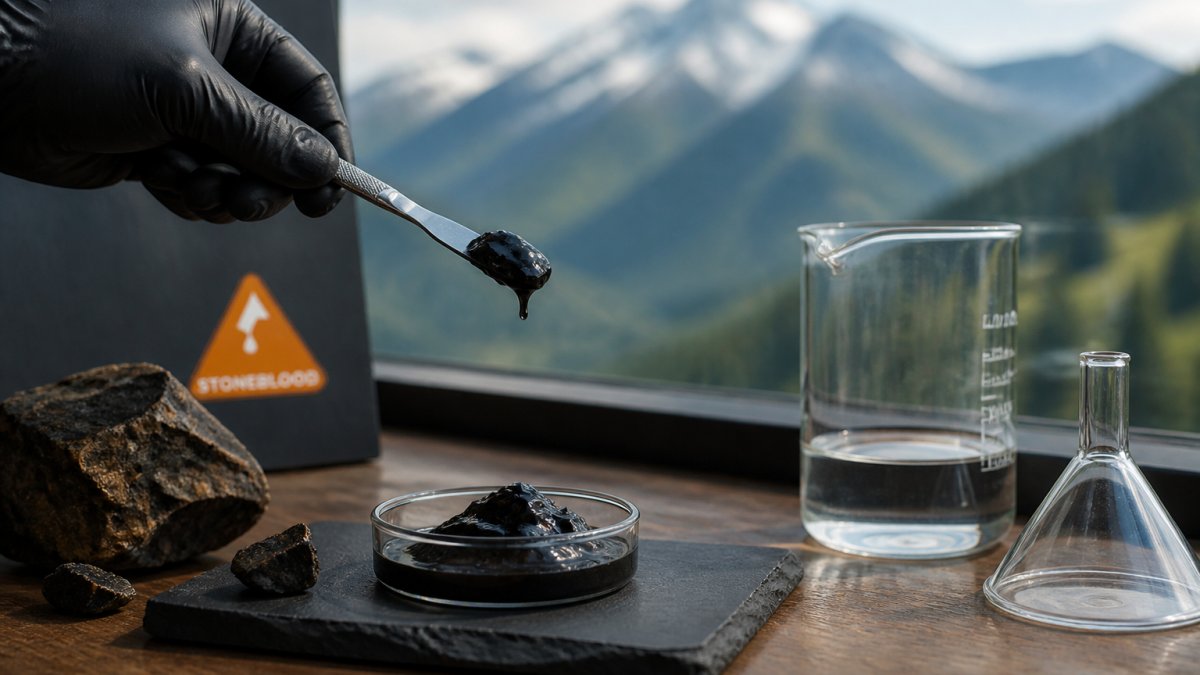
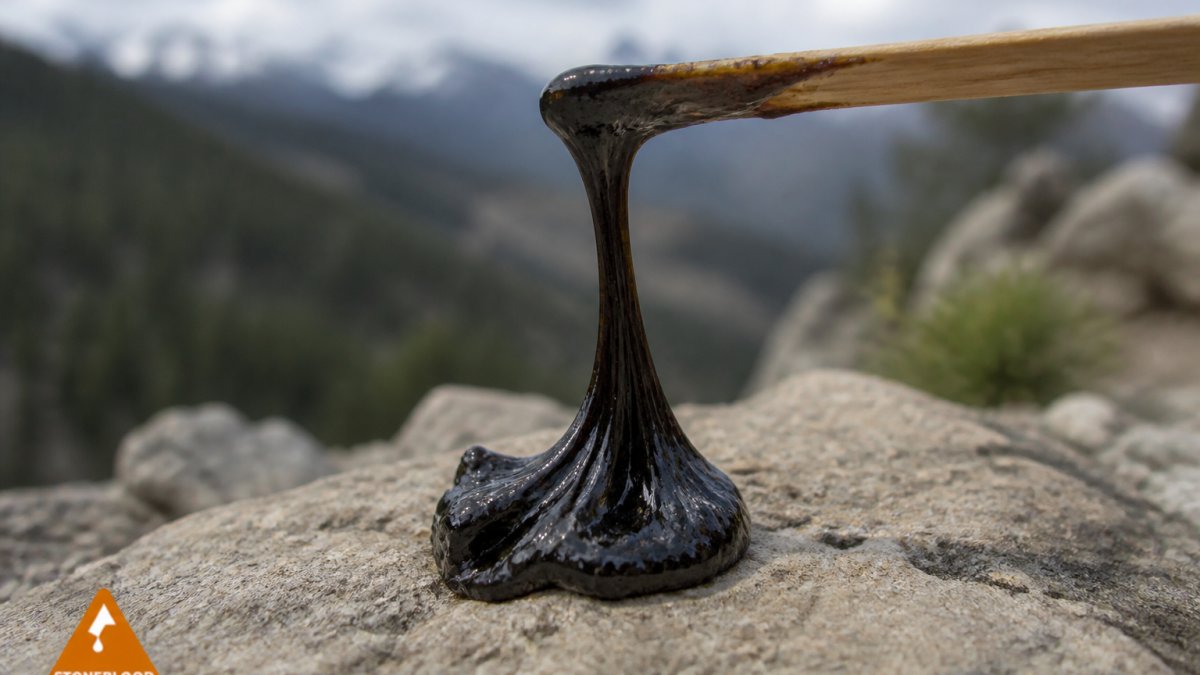
High quality shilajit resin is a dark, glossy, mineral-rich substance with a smooth, tar-like consistency that softens between your fingers and stretches before it breaks. Appearance alone can't confirm purity, but it filters out the worst fakes fast.
Raw shilajit is a resin in nature, seeping from rock in mountain ranges. Ours is wildcrafted in the Rocky Mountains and refined into water-soluble liquid drops, so the checks below apply to resin you buy elsewhere.

Color, Gloss and Surface Texture
Authentic shilajit resin usually ranges from deep brown to near-black. It should look glossy, not dusty. A dull, matte surface or a uniform powder coating hints at over-processed material or additives.
Watch for these signals:
- Glossy sheen on a fresh break
- Uneven color with lighter amber edges
- No visible grit or sand when you look closely
Elasticity, Weight and the Stretch Test
Real resin is sticky and slightly elastic. Press a small piece between warm fingers. Pure shilajit softens, stretches a little, then pulls apart. If it crumbles instantly, it's likely dried out or cut with filler.
Weight matters too. A resin that feels unusually light for its size may have been whipped with air or bulked with inert material.
The Warm-Water Dissolution Test
The warm-water test is the simplest at-home check: dissolve a pea-sized piece in a glass of warm water and watch what happens. Pure shilajit resin breaks down into a reddish-brown or golden solution with little left behind. Heavy sediment, floating debris, or a solution that stays cloudy points to impurities.
Run it step by step:
- Warm a glass of water, not boiling.
- Add a small piece of resin.
- Stir gently and wait a few minutes.
- Check the color and any residue.
A clean dissolve is a good sign. A gritty glass bottom is not.
The Flame Test, Aroma and Taste: What They Prove
The flame test, aroma and taste give useful clues, but none of them prove purity. A small piece held near a flame should bubble and soften rather than burn like plastic. Authentic shilajit gives off an earthy, slightly smoky aroma, never a chemical or perfume smell.
Taste is bitter, mineral-heavy and faintly salty. A sweet or bland taste suggests dilution.
Where At-Home Tests Stop Being Useful
Here's the honest part most guides skip: no home test can confirm purity or rule out contaminants. Color, stretch, flame and taste are screening tools, not proof. A convincing fake can pass every one of them. Only laboratory analysis tells you what's actually in the jar. Rigorous verification remains the only reliable safeguard against adulteration, a principle that applies equally when spotting fake supplements across the broader market of natural health products.
That's the limit. Use home checks to reject obvious junk, then rely on testing for the rest.
Reading a Shilajit Certificate of Analysis
A shilajit certificate of analysis is a lab report listing what was tested and the results, issued for a specific batch. It is the single most reliable quality document a seller can share, but only if you know how to read it. A COA that looks official can still be vague, outdated, or unrelated to the jar in your hand. Here is how to tell the difference.
Match the Report to the Batch
Start with the identifiers. A credible COA names the specific lot or batch number, and that number should match the one printed on your container. A report for a different batch tells you nothing about what you bought. Also check the test date: a report from several years ago may not reflect current production. Ask for the COA that corresponds to your lot, not a generic sample posted on a website.
What a Real COA Should List
A credible report names the laboratory, the batch, the test methods and the results. Look for:
- Heavy metals screening (lead, arsenic, cadmium, mercury)
- Microbial testing (Salmonella, E. coli, mold, yeast)
- Identity and purity markers
- Lab accreditation, such as ISO/IEC 17025
- A date that matches the batch
How to Evaluate the Numbers, Not Just the Presence
A checklist of test categories is a start, but the numbers matter. For each contaminant, the report should show a result and a limit of detection or limit of quantification, the smallest amount the method can reliably measure. A result reported as "not detected" is only meaningful if the detection limit is low enough to be reassuring. If a lab can only detect lead above a high threshold, a passing result says little.
Look for the test method used. Heavy metals are commonly measured by ICP-MS (inductively coupled plasma mass spectrometry), a sensitive and widely accepted technique. Microbial tests should name the organisms screened and the method. Identity testing for shilajit is less standardized, so a report that states what marker compounds or spectral methods were used is more credible than one that simply asserts "pure."
Shilajit Original — Stoneblood →
Red Flags in a Certificate of Analysis
- No batch number or a batch number that does not match your container
- No laboratory name or an unverifiable lab
- Results without units or detection limits
- A single passing test presented as proof of ongoing quality
- A report that is several years old relative to the product
If a seller can't produce a batch-specific report, treat the quality claim as marketing. For how we handle testing, see our quality and safety page.
Shilajit sourcing and origin: Traceability Over Marketing
Shilajit sourcing and origin claims are easy to make and hard to verify. "Himalayan" and "pure" appear on countless labels with little behind them. Traceability is what separates a real claim from a slogan.
Ask three questions:
- Where was the resin harvested?
- Who handled it between rock and bottle?
- Can the seller show a chain of custody?
Fewer hands in the chain means fewer chances for adulteration. At Stoneblood, one harvester gathers our material, and every batch is lot-coded and traceable.
Contaminants and the Limits of a Shilajit purity test
A shilajit purity test is only as good as the lab behind it and the batch it covers. The real risks in a poorly sourced product are not visible: heavy metals, microbial contamination and unknown additives can all be present in a resin that looks, smells and dissolves exactly like a clean one. That is why appearance and at-home checks cannot substitute for laboratory analysis.
Why Contaminants Are Invisible
Heavy metals such as lead, arsenic, cadmium and mercury do not change the color, gloss or stretch of a resin. Microbial contamination, bacteria, mold or yeast, does not necessarily alter taste or aroma. Adulterants used to bulk up a product can be chosen precisely because they mimic the look and behavior of real resin. A convincing fake can pass the stretch test, the warm-water test and the flame test. None of those checks measure what is actually in the material.
The Main Contaminant Categories
- Heavy metals, a concern when raw material is sourced from uncertain ground or handled without testing
- Microbial contamination, a risk when processing and drying are not controlled
- Adulterants and fillers, added to increase weight or volume, sometimes with ingredients that are hard to detect by eye
What Batch-Level Testing Adds
This is why batch-level testing matters more than a one-time certificate framed on a website. Look for testing done per lot, by an accredited lab, with results you can request. A single passing test on one batch says little about the next. The practical standard is a report that covers heavy metals and microbials for the specific lot you are buying, with detection limits low enough to be meaningful.
The Limits of At-Home Checks
Home tests are screening tools, not proof. They can help you reject obvious junk, a resin that crumbles, smells chemical, or leaves heavy grit in warm water is worth avoiding. But they cannot confirm purity or rule out contaminants. Use them to narrow the field, then rely on batch-specific laboratory testing for the rest.
Fake Shilajit Resin: The Counterfeit Patterns to Spot
Counterfeit shilajit follows a few predictable patterns. Once you know them, the fakes stand out. Common red flags:
- Prices far below the market for the claimed origin
- No lot number and no way to request a COA
- Perfectly uniform color across every jar
- Vague origin stories with no sourcing detail
- Reviews that repeat the same phrasing word for word
A seller who avoids questions about testing or origin is telling you something. Real suppliers welcome the scrutiny.
Conclusion
Sorting real shilajit from fakes takes more than a look and a sniff. Use the appearance, stretch and warm-water checks to filter the obvious junk, then insist on a batch-specific certificate of analysis before you trust anything. If you want a product built around that standard, our Magic Brown liquid shilajit drops are wildcrafted, refined in Utah, and bottled from third-party-tested batches with a lot number on every bottle. If you'd rather start with our original formula, Shilajit Original Liquid Drops follow the same sourcing and testing standard. Start with one dropper daily and see how it fits your routine.

These statements have not been evaluated by the Food and Drug Administration. This product is not intended to diagnose, treat, cure, or prevent any disease. Consult a healthcare professional before starting any supplement, especially if you are pregnant, nursing, taking medication or managing a health condition.
Frequently Asked Questions
How can I tell if shilajit resin is good quality?
Start with the physical basics: a dark brown to black surface, a glossy finish, and a thick, tar-like texture that stretches rather than crumbles. Then move past appearance. Ask for a shilajit certificate of analysis from an accredited lab, confirm the lot number matches your bottle, and check where the resin was harvested and refined. Appearance alone cannot confirm purity, because colorants and fillers can be added. A quality-focused brand will answer sourcing and testing questions with specifics, not slogans.
Can appearance or taste alone confirm shilajit quality?
No. Visual and taste checks are useful screening tools, not proof. A warm-water dissolution test can show whether a resin leaves grit or an oily film, and an earthy aroma is consistent with genuine resin. But none of these at-home checks detect heavy metals, microbial contamination or dilution. Treat them as a first filter and rely on a shilajit purity test from an accredited laboratory, paired with clear sourcing and origin information, for the final call.
What should a shilajit certificate of analysis include?
A useful certificate of analysis names the testing laboratory and its accreditation, identifies the lot or batch tested, and lists the methods used. Look for heavy metals screening, microbial testing, and a clear statement of what was tested. It should be dated and traceable to the bottle in your hand. If a seller shares only a generic PDF with no lot number, ask for the batch-specific report. Certificates issued per lot are the standard to expect.
How do I check where shilajit comes from before buying?
Ask for the harvest region and the location where the resin was refined, then check whether the answer stays consistent across the product page, the label and the seller's replies. Vague claims like mountain-sourced or wild-crafted without a region are a warning sign. Traceability matters more than a famous mountain name: a short, documented chain of custody from harvest to bottling tells you more than a photo of a peak.
These statements have not been evaluated by the Food and Drug Administration. This product is not intended to diagnose, treat, cure, or prevent any disease. Consult a healthcare professional before starting any supplement, especially if you are pregnant, nursing, taking medication or managing a health condition.

Share:
7 Benefits of Wildcrafted Minerals From North America
Improved Focus and Creativity for Sports Nutrition