Quick Summary
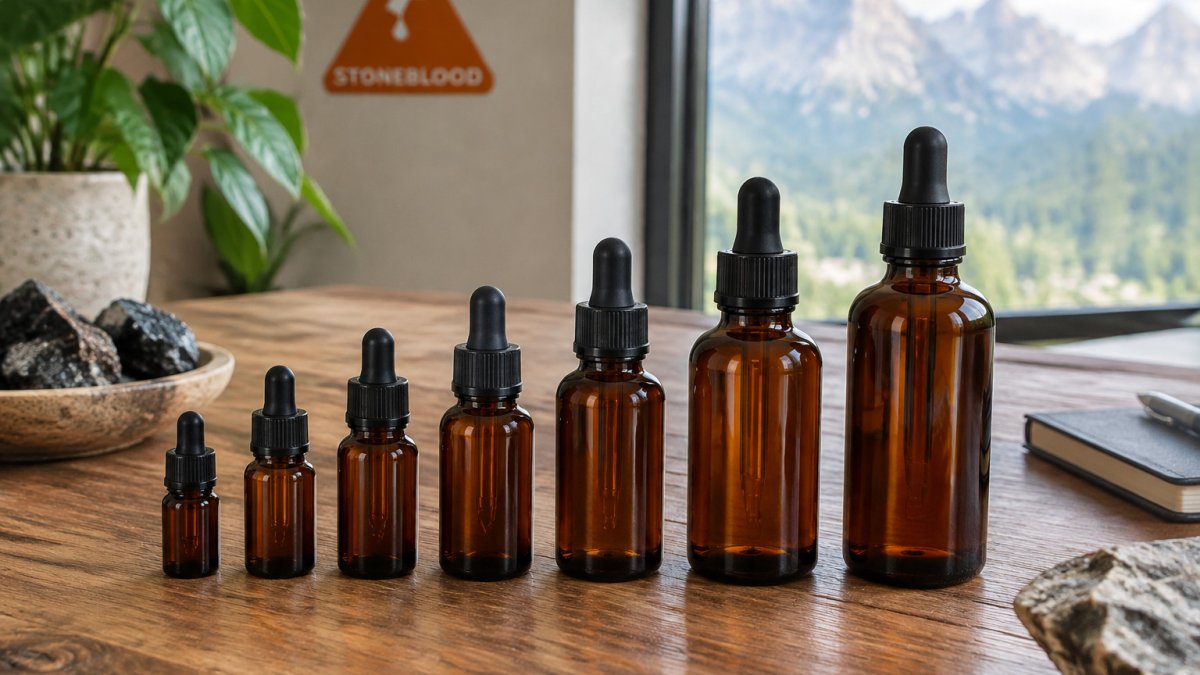
A shilajit drops bottle size is measured in fluid ounces, and Stoneblood's standard liquid bottles are 1 fl oz (30 ml) dropper bottles. Each label serving is one dropper, about 10 to 15 drops, taken once daily. Check the bottle label for the exact fill amount before you buy.
- Stoneblood Original and Magic Brown bottles are both 1 fl oz (30 ml) dropper bottles.
- The label directions call for one dropper, about 10 to 15 drops, once daily.
- A larger bottle usually lowers the price per serving, but only if you finish it before it goes stale.
- Keep your bottle tightly capped and stored in a cool, dry place to protect freshness.
- Confirm the bottle size is 1 fl oz (30 ml) and the form is liquid drops before ordering.
Table of Contents
- What Liquid Shilajit Is and Why Bottle Size Matters
- Shilajit Drops Bottle Size: What 1 fl oz Actually Holds
- Liquid Shilajit Serving Information: Calculating Servings Per Bottle
- Liquid Shilajit vs Resin: Which Form Fits Your Routine
- Bottle Size, Storage and Freshness
- Comparing Cost Per Serving Across Stoneblood Options
- Checking Label Details Before You Buy
- Choosing Your Bottle and Placing Your First Order
- Frequently Asked Questions
7 Shilajit Drop Bottle Sizes Compared: Which Fits You
Last Updated: November 4, 2026
What Liquid Shilajit Is and Why Bottle Size Matters
Liquid shilajit drops are a convenient way to add shilajit to your daily routine, and the shilajit drops bottle size you choose sets how long one purchase lasts. Shilajit is a resin found in mountain rock, and it has a long history of traditional use in Ayurveda. At Stoneblood Shilajit, we refine wildcrafted North American shilajit into a water-soluble liquid, so it mixes easily into water, coffee, tea or food.
Shilajit drops bottle size matters because it changes how often you reorder and how much each serving costs. A small bottle may be easy to try. A larger bottle usually lowers the price per serving, but only if you use it before it goes stale. Knowing what a bottle holds helps you choose the size that fits your routine.
Shilajit is a resin in its raw form, and choosing a shilajit drops bottle size starts with understanding how the liquid is measured. Ours is refined so it can be taken as a liquid, which makes dosing simple with a dropper.
Shilajit Drops Bottle Size: What 1 fl oz Actually Holds
Our Stoneblood Original and Magic Brown bottles are 1 fl oz (30 ml) dropper bottles. For a simple guide to taking the drops day to day, see How to Take StoneBlood. The label directions are one dropper, about 10 to 15 drops, once daily in water, coffee, tea or food, or under the tongue.
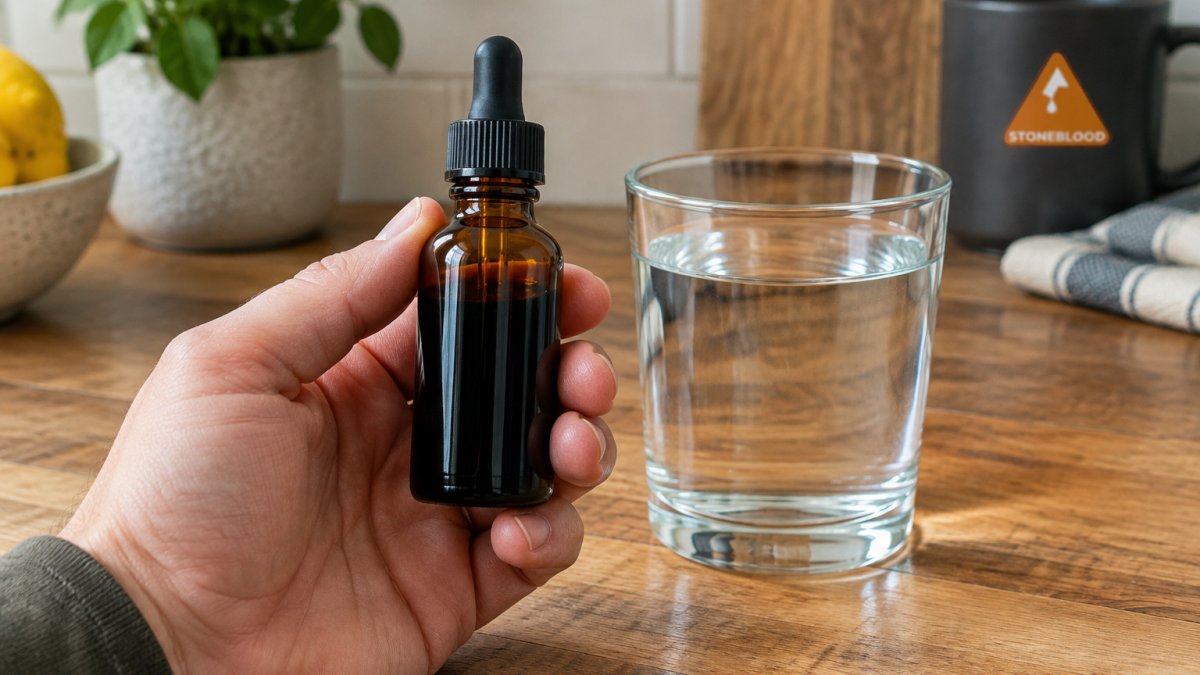
A 1 fl oz shilajit drops bottle size holds roughly 30 ml of liquid. Because each dropper is about 10 to 15 drops, the bottle gives you a steady daily routine for a set number of days. Read the label on your bottle for the exact fill amount.
If you want to see the bottle you would be buying, the Stoneblood Original 1 fl oz liquid drops are the standard-strength option. For a stronger liquid, our double-strength Magic Brown bottle uses the same 1 fl oz size.


Many people find that a 1 fl oz bottle fits neatly into a purse or desk drawer, which makes travel easy. Just keep it upright and sealed between uses.
Liquid Shilajit Serving Information: Calculating Servings Per Bottle
Serving math is where most shilajit drops bottle size guides get vague, so here is the arithmetic laid out plainly. The label directions on Stoneblood liquid shilajit are one dropper, about 10 to 15 drops, once daily. That dropper is the serving. Everything else is division.
A 1 fl oz bottle is 30 ml (Approximate Conversions from U.S. Customary Measures to Metric | NIST). A standard glass dropper of the kind used in a 1 fl oz dropper bottle delivers roughly 1 ml per full squeeze, and 1 ml of a water-based liquid is generally counted as about 20 drops.
Here is the same math as a table, using the label range only:
| What you are measuring | Amount |
|---|---|
| Bottle volume | 30 ml (1 fl oz) |
| Approximate drops per ml | About 20 |
| Label serving | 1 dropper, about 10 to 15 drops |
| Serving size in ml | Roughly 0.5 to 0.75 ml |
| Servings per 30 ml bottle | Roughly 40 to 60, depending on drop count |
Those serving counts are estimates, not promises. Dropper tips vary, liquids vary in surface tension, and how hard you squeeze changes drop size. The reliable number is always the one you count yourself: fill the dropper, count the drops into a small glass, and note how many drops your bottle actually delivers. Then divide 30 by that fraction of a milliliter.
A common pattern is that people overestimate how fast they will finish a bottle. At one label serving a day, a 1 fl oz bottle is a multi-week supply, not a week's worth. That matters for the next section, because it changes how long the liquid sits in the bottle between uses.
Watch out: do not convert drops to milligrams by assuming a fixed mg-per-drop figure. Liquid shilajit is a water-soluble extract, not a standardized milligram dose, and any guide that hands you a clean mg-per-drop number is guessing. Follow the label directions and count your own drops.
If you want to see the exact bottle the math applies to, the Magic Brown double-strength liquid shilajit uses the same 1 fl oz dropper bottle as the standard-strength Shilajit Original liquid drops.
Liquid Shilajit vs Resin: Which Form Fits Your Routine
Shilajit is a resin in nature, but resin is hard to measure and mix. Capsules and powders are other common forms. Liquid drops offer a few practical advantages:
- Easy dosing: A dropper gives you a consistent starting point each day.
- Simple mixing: Drops blend into water, coffee, tea or food.
- Taste flexibility: You can add a few drops to your favorite drink.
- Portability: A small dropper bottle fits in most bags.
Capsules may suit people who prefer a set pill each day. Powders may suit people who like to stir shilajit into a recipe. Liquid drops are often the easiest choice for people who want a flexible, everyday routine.
Bottle Size, Storage and Freshness
Bottle size affects how long a product stays in your routine. A smaller bottle may suit someone who wants to try shilajit before committing. A larger bottle may suit someone who already uses it daily.
Keep your bottle tightly capped and stored in a cool, dry place. Exposure to air and heat can affect a liquid over time, so a bottle you use slowly may need more care than one you finish quickly. Check the label for storage directions and any date information.
Shilajit Liquid Drops – Stoneblood Original, 1 fl oz →
Think about how fast you will use the bottle. Buying a larger size only saves money if you finish it before the quality drops off.
Comparing Cost Per Serving Across Stoneblood Options
Cost per serving is the number that actually tells you whether a bigger shilajit drops bottle size is a better deal, and it is easy to calculate once you have the serving count from the previous section. You can compare the double-strength Magic Brown bottle and its price directly against the other options. Using the label range of roughly 40 to 60 servings per 1 fl oz bottle, here is how the current options compare:
| Option | Size | Price | Estimated servings | Cost per serving (range) |
|---|---|---|---|---|
| Stoneblood Original | 1 fl oz (30 ml) | $29.97 | About 40 to 60 | About $0.50 to $0.75 |
| Magic Brown (Double Strength) | 1 fl oz (30 ml) | $39.97 | About 40 to 60 | About $0.67 to $1.00 |
| Shilajit Original 3-Bottle Pack | 3 x 1 fl oz | Bundle price on the product page | About 120 to 180 | Lowest per serving of the three |
The ranges are wide on purpose. If your dropper delivers closer to 10 drops per serving, you land near the low end of the serving count and the high end of cost per serving; if it delivers closer to 15, the reverse. The 3-bottle pack wins on cost per serving in every case, but only if you actually finish all three bottles before the liquid degrades.
That is the trade-off the price table alone hides. A 1 fl oz bottle is small enough that air exposure between uses is limited, because you are opening and closing a small headspace. A larger bottle, or a bundle you open one at a time, keeps the unopened units sealed, which is the real advantage of the 3-pack: you are not buying one big bottle, you are buying three small ones. If you were comparing a single 120 ml bottle against four 30 ml bottles at the same total volume, the four small bottles would generally hold up better over time, because each one is exposed to air only while it is in use. That is the oxidation argument for smaller bottles, and it is why a bundle of 1 fl oz units is a smarter way to buy volume than one large container.
A 1 fl oz bottle is small, which makes it easy to pack in a bag.
Pros of the single bottle:
- Lowest upfront cost
- Small headspace, so less air exposure per bottle
- TSA-compliant for carry-on without decanting
Cons of the single bottle:
- Highest cost per serving of the three options
- More frequent reorders
Pros of the 3-bottle pack:
- Lowest cost per serving
- Each unit stays sealed until you open it, so oxidation risk is spread across three small bottles rather than one large one
- Fewer reorders
Cons of the 3-bottle pack:
- Highest upfront spend
- Only a saving if you finish all three before the liquid degrades
To run your own comparison, divide the price by the serving count you measured for your bottle. Use the 3-bottle pack price from the product page for the bundle figure, and remember that the bundle's real advantage is three sealed 1 fl oz units, not one large container.
Checking Label Details Before You Buy
Before you order, check a few details on the product page:
- Confirm the bottle size is 1 fl oz (30 ml)
- Confirm the form is liquid shilajit drops
- Read the ingredient list, which should show purified shilajit extract and water
- Check the label directions for daily use
- Look for the disclaimer on the label
For testing details and lot information, visit our Quality and Safety page. Results apply to the sample and lot tested. To request documentation for your bottle, email stonebloodshilajit@gmail.com with its lot number.
Watch out: Always confirm you are buying liquid drops, not a different form, before you order, so the bottle matches the dropper directions you plan to follow.
Choosing Your Bottle and Placing Your First Order
Choose a shilajit drops bottle size based on how you plan to use it. If you are still deciding, How to Choose Single Bottle or Shilajit Three-Bottle Pack walks through the trade-offs. If you want to try shilajit first, a single 1 fl oz bottle is a simple start. If you already know you want a steady daily routine, the 3-bottle pack may offer better value per bottle.
Start with the Shilajit Original 3-Bottle Pack if you plan ongoing use, or begin with a single bottle to see how you like the taste. Orders ship free within the US, and orders are processed within one business day. See our shipping and return policies for delivery estimates and return conditions.
Frequently Asked Questions
How many milliliters are in a 1 fl oz dropper bottle?
A 1 fl oz dropper bottle holds about 30 milliliters of liquid. Stoneblood Shilajit drops come in this 1 fl oz (30 ml) size, so you can use the bottle's labeled volume to estimate how long it will last. Compare the total volume with the label directions, and count the drops your own dropper delivers before you buy.
How do you use liquid shilajit drops?
The label directions call for 1 dropper, about 10 to 15 drops, daily. You can add the drops to water, coffee, tea or food, or take them under the tongue. Taking the drops in a drink is a common way to make the flavor easier to get used to. For any question about how much to take or whether shilajit fits your situation, consult a healthcare professional.
Does bottle size tell you how concentrated liquid shilajit is?
No. Bottle size only tells you the volume inside the container, not the strength of the liquid. Two bottles of the same volume can differ in concentration, so compare product labels and the product listing rather than assuming a larger bottle is stronger or better value. Check the ingredient list and the stated volume to understand what you are buying.
These statements have not been evaluated by the Food and Drug Administration. This product is not intended to diagnose, treat, cure, or prevent any disease. Consult a healthcare professional before starting any supplement, especially if you are pregnant, nursing, taking medication or managing a health condition.

Share:
Shilajit Drops as a Wellness Gift: A Practical Buying Guide
The Science Behind Cellular Repair and Muscle Recovery