
Last Updated: November 5, 2026
Quick Summary
Shilajit drops are a liquid form of shilajit, a resin that forms in high mountain rock and has long been used in Ayurvedic practice. Stoneblood refines its wildcrafted resin from Utah into a water-soluble dropper bottle that mixes into water, coffee, tea or food. For martial arts training, the label calls for one dropper daily, alongside sleep, nutrition and conditioning.
- The label directions call for one dropper, about 10 to 15 drops, once daily.
- Shilajit drops can be taken in water, coffee, tea or food, or under the tongue.
- Pick one consistent daily slot and keep it for two to four weeks.
- Track energy, recovery and sleep in a training log to judge the effect over time.
- Shilajit does not replace conditioning, sleep, nutrition or proper recovery.
Table of Contents
- What Shilajit Drops Are and Where They Come From
- Why Martial Artists Look at Shilajit for Training
- How to Use Shilajit Drops in a Daily Training Routine
- Liquid Shilajit Quality: What to Check Before You Buy
- Evidence, Expectations and Limits for Training Use
- Building Your Own Daily Shilajit Routine
- Frequently Asked Questions
What Shilajit Drops Are and Where They Come From
Shilajit is a dark, sticky resin that forms slowly in high mountain rock over many years.
Raw shilajit is a resin in nature, thick and hard to measure. Ours is refined into a water-soluble liquid, so it mixes easily into water, coffee, tea or food.
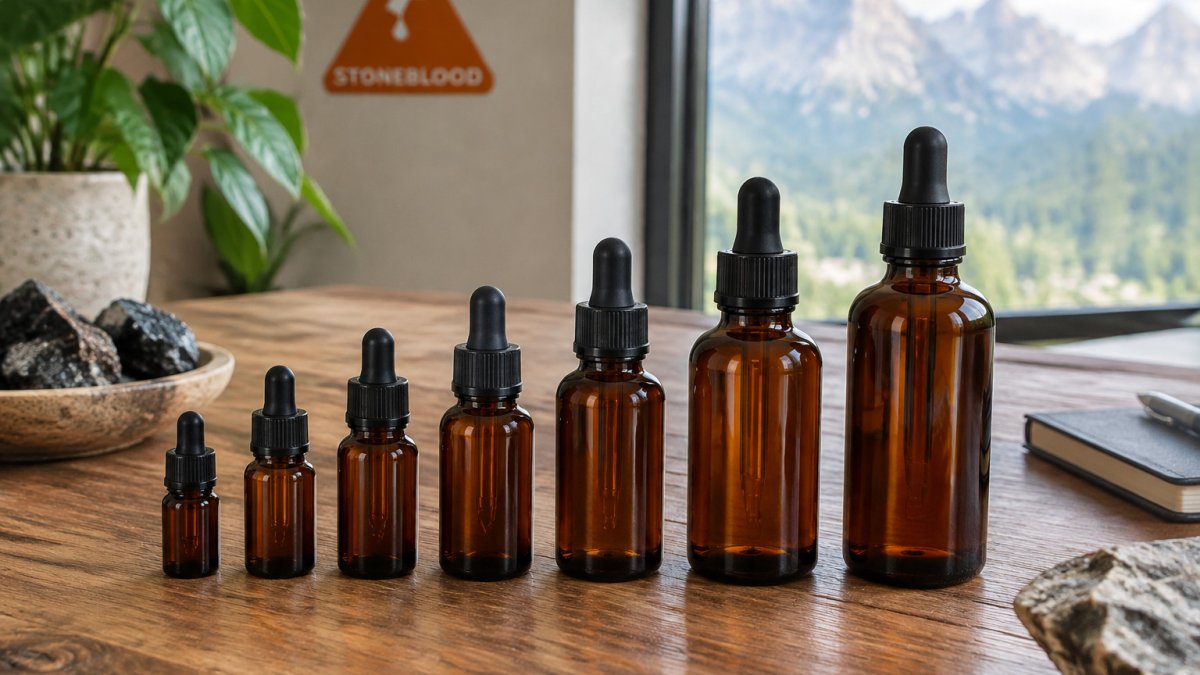
Our standard-strength option is Shilajit Liquid Drops - Stoneblood Original, 1 fl oz. Each 1 fl oz (30 ml) bottle is wildcrafted and refined in Utah.

Why Martial Artists Look at Shilajit for Training
Martial artists care about endurance, recovery and steady energy across long sessions.
It is worth being clear about what shilajit is not. It is not a substitute for conditioning, sleep, nutrition or proper recovery.
Traditional use is the main reason shilajit draws attention. Practitioners of Ayurveda have used it for generations, and many athletes simply want to know what the tradition says.
How to Use Shilajit Drops in a Daily Training Routine
The harder question for a martial artist is how a single daily habit fits around a training week that looks different every day. This section walks through that, using only the label directions as the guide.
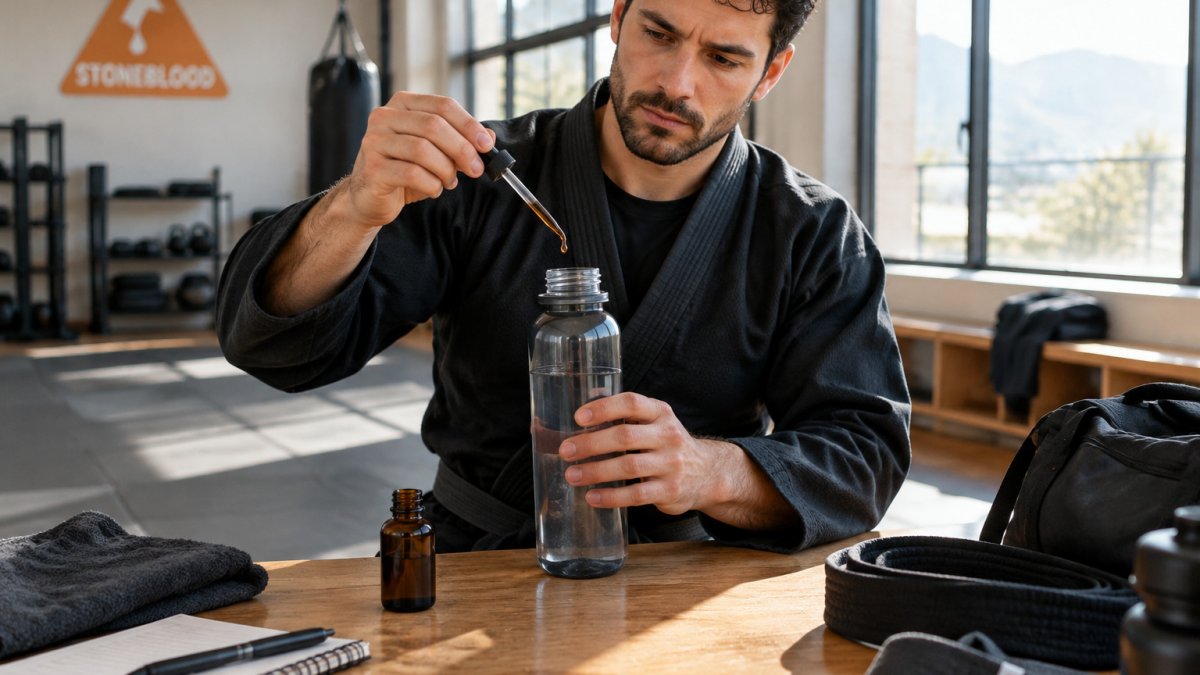
The label directions are simple and do not change based on what you did in the gym:
- Measure 1 dropper, about 10 to 15 drops, once daily
- Mix it into water, coffee, tea or food
- Or take it under the tongue if you prefer
The label directions apply every day.
Fitting One Daily Dropper Around a Training Week
Because the label calls for one dropper daily, the practical question is when in your day it fits best, not how much. A few common patterns:
- Morning drink before an early session. If you train before work, mix the drops into water or coffee as part of your normal pre-training routine. The habit anchors to something you already do.
- Afternoon tea on rest days. On days without training, an afternoon drink keeps the daily habit from breaking. Consistency across the week matters more than matching the drops to a session.
- Under the tongue on the way out the door. For people who dislike the earthy taste or forget drinks, the sublingual option removes a step.
Pick one slot and keep it. One way to build the habit is to attach the dropper to the same cue every day, such as the first glass of water or the pre-training coffee.
Training Days vs Rest Days
A martial arts week is not uniform. Training loads vary from week to week. The label directions do not change with that load, and it is worth saying plainly: do not add extra droppers on hard days.
What you can do is use rest days to check in. On a lighter day, note how the previous training block felt, sleep, soreness, appetite, mood, so you have something to compare against over weeks rather than judging from a single session.
Introducing It Gradually and Tracking What You Notice
If you are new to liquid shilajit, start with the label directions and give it a few weeks before drawing conclusions. A simple tracking approach:

- Pick your daily slot and stick to it for two to four weeks.
- Keep a short note after training, energy, recovery, sleep quality, in a phone note or training log.
- Review the notes at the end of the block rather than day to day.
- Change one variable at a time. If you also change your sleep or diet in the same week, you will not know what did what.
A supplement is one small input next to sleep, nutrition, conditioning and coaching. If your training log shows no change over a month, that is useful information.
Sparring Weeks and Competition Prep
During a hard sparring week or a competition camp, the temptation is to add supplements to "keep up." Resist that.
If you compete under a governing body, check that organization's current rules on supplements before adding anything to your routine. Rules vary by sport and by sanctioning body, and it is your responsibility to confirm what is permitted in your division.
Taking Drops in Water
Water is the easiest option. Add the drops to a glass or a reusable bottle and stir or shake before drinking. Because the liquid is water-soluble, it blends in without leaving residue.
Adding Drops to Coffee, Tea or Food
Coffee and tea give the earthy flavor a warm, familiar base. Add the drops after the drink has cooled slightly, then stir well.
You can also stir the drops into oatmeal, yogurt or a smoothie.
Stick to the label directions.
Shilajit Liquid Drops – Stoneblood Original, 1 fl oz →
The label directions stay the same every day, so the table below sums up the practical options for fitting one dropper into a training week.
| Option | Best for | Key difference |
|---|---|---|
| Morning drink before an early session | Early trainers | Anchors to a habit you already have |
| Afternoon tea on rest days | Keeping the habit unbroken | Consistency matters more than session timing |
| Under the tongue | People who dislike the taste or forget drinks | Removes a preparation step |
| Water, coffee, tea or food | Flexible daily use | Stir well after the drink has cooled slightly |
Liquid Shilajit Quality: What to Check Before You Buy
Quality matters more than marketing claims. Look at the basics before you buy any liquid shilajit:
- Clear labeling of the form, size and ingredients
- A dropper bottle that protects the contents
- Information about where the resin was sourced
Our Magic Brown double-strength liquid shilajit is our double-strength option for readers who want a stronger concentration. For quality details, see our quality and safety information.
You can also request documentation for your bottle by emailing stonebloodshilajit@gmail.com with its lot number. Results apply only to the sample and lot tested.
Evidence, Expectations and Limits for Training Use
Most shilajit content aimed at athletes either skips the research entirely or waves at it vaguely. This section takes the opposite approach: it explains how to read the evidence yourself, what the limits of that evidence are, and how to tell a marketing claim from a study finding. None of the research described here used Stoneblood products, and nothing below should be read as a result that applies to our drops.
What the Research Actually Looks Like
Published work on shilajit in athletic and active populations tends to share a few features:
- Small sample sizes. Many studies enroll a few dozen participants or fewer, which limits how confidently results can be generalized.
- Short durations. A common pattern is a study lasting several weeks, not a full training camp or competitive season.
- Different forms and preparations. Studies use various shilajit preparations, and the form, concentration and processing differ from product to product, including ours.
None of this makes the research worthless. It means the findings are preliminary, and a careful reader treats them as a starting point rather than a settled answer.
How to Read a Shilajit Study Without Being Misled
When you see a study cited in support of a shilajit product, ask a few plain questions:
- Who was studied? Trained martial artists, recreational gym-goers and sedentary adults are different populations, and results do not automatically transfer.
- What was measured? A lab measure like time to exhaustion is different from a subjective energy rating.
- How long did it last? A four-week study says little about a six-month training block.
- Was there a control group? Without one, it is hard to separate the supplement from expectation and routine.
- Who funded it? Industry-funded research is not automatically wrong, but it is worth knowing.
- Did the product match the one being sold? Often it does not. A study on one preparation does not describe another.
If a claim cannot survive those six questions, treat it as marketing rather than evidence.
Separating Marketing Claims from Study Findings
A few patterns are worth recognizing:
- Percentage claims without context. "Up to X% improvement" often comes from a small subgroup or a single measure. Ask what was measured and in whom.
- Mechanism presented as outcome. A proposed mechanism, how a compound might work in theory, is not the same as a demonstrated result in athletes.
- Borrowed authority. A study on a different preparation, population or outcome is sometimes cited as if it applies to the product in front of you.
A calm rule of thumb: the stronger the promise, the more specific the evidence should be. If a page promises fast strength gains or a performance jump and cannot point to a controlled study in a similar population, slow down.
Setting Realistic Expectations for a Training Block
Martial arts progress is built over months through practice, coaching, sleep, nutrition and managed training load. A daily supplement sits at the edge of that picture, not the center. Soft structure/function language is the honest frame here: shilajit has a long traditional use in Ayurveda, and some people find it a useful part of an everyday routine, but it is not a substitute for conditioning or recovery basics.
A practical way to set expectations:
- Judge over weeks, not days. A single hard session tells you about that session, not the supplement.
- Compare like with like. If your training load changed, your sleep changed or your diet changed, you cannot attribute a difference to one input.
- Keep the rest of your routine steady during a trial period so you have a clean comparison.
When to Talk to a Professional
If you are managing a health condition, taking medication, pregnant or nursing, or unsure whether a supplement fits your situation, talk to a healthcare professional before starting. That is the same guidance on the label, and it applies with extra weight during a hard training camp when sleep and recovery are already stretched.
For quality and testing details on our liquid shilajit, see our quality and safety information.
Building Your Own Daily Shilajit Routine
A simple routine works best. Here is one way to set it up:
- Pick one daily time, such as your morning drink or pre-training coffee
- Measure one dropper of liquid shilajit, about 10 to 15 drops
- Mix it into water, coffee, tea or food
- Track how you feel over two to four weeks, noting energy and recovery
- Adjust the timing or drink to suit your routine
If you want a higher concentration, our Magic Brown double-strength drops are an option. For a standard daily dose, Shilajit Original liquid drops are also available, and the 3-Bottle Pack gives you a longer supply.
These statements have not been evaluated by the Food and Drug Administration. This product is not intended to diagnose, treat, cure, or prevent any disease.
Frequently Asked Questions
Is shilajit good for workouts?
Shilajit has a long traditional use in Ayurveda, and some people who train add it to their routine as part of a general wellness habit. Research on shilajit and exercise is limited, and the studies that exist did not use Stoneblood products, so their results do not describe our drops. Treat shilajit as one part of a balanced routine that includes sleep, nutrition and recovery, and talk with a healthcare professional before starting it if you have a health condition or take medication.
How do I take shilajit drops?
The label directions for Stoneblood Shilajit are one dropper, about 10 to 15 drops, taken daily. You can mix the drops into water, coffee, tea or food, or take them under the tongue if you prefer. Start by mixing into a drink you already enjoy until you know how the earthy flavor suits you. Follow the label directions.
What is the difference between liquid shilajit and raw shilajit resin?
Raw shilajit is a resin in its natural form, which is thick and hard to measure. Stoneblood Shilajit is refined into a water-soluble liquid sold in a 1 fl oz (30 ml) dropper bottle, so it mixes easily into drinks. The liquid format is a convenience choice, and it does not change the basic nature of the shilajit itself.
How can I check the quality of shilajit drops?
Look for a clear sourcing statement that names where the resin was harvested, an ingredient list that shows the product contains purified shilajit and water, and a quality page that explains available testing and lot details. Ask the brand for documentation tied to your lot number if you want more information. Our quality details are on the Quality and Safety page at /pages/quality-safety.


Share:
The Science Behind Cellular Repair and Muscle Recovery