Last Updated: November 17, 2026
Quick Summary
The documented record does not name a single person or date for when shilajit in Utah first appeared, so no verified introduction story exists. What can be verified is the regulatory framework governing shilajit sold in Utah today, including FDA rules and FTC advertising standards. Lot-level documentation from the seller is the most reliable way to check a product's history.
- No verifiable record names a single individual or date for shilajit's arrival in Utah.
- The FDA does not approve dietary supplements before they reach the market.
- The FTC requires product claims to be truthful, not misleading, and substantiated.
- Traditional shilajit is described in Ayurvedic texts as a rock exudate from high-altitude regions.
- Ask for the lot number on your bottle and request testing records tied to that lot.
Table of Contents
- Shilajit in Utah: What the Records Show and Where They Stop
- Traditional Shilajit History: Ayurveda, the Himalayas, and the Meaning of the Word
- North American Shilajit Sourcing: Why the Rocky Mountain West Enters the Picture
- Shilajit Collection and Preparation: From Rock Exudate to Liquid Drops
- Separating Documented History from Marketing Claims
- Lot-Specific Quality Documentation: What to Request for Your Bottle
- Checking Your Own Bottle's Origin Before You Buy the Next One
- Frequently Asked Questions
Shilajit in Utah: What the Records Show and Where They Stop
Shilajit is a mineral-rich, tar-like exudate that has been part of traditional medicine systems for centuries, and Stoneblood Shilajit is a North American product refined in Utah. Readers searching for the history of shilajit in Utah often expect a clean timeline with names and dates. The documented record is thinner than that, and it is worth being clear about where the evidence ends before going further.
Most of what is written about shilajit describes its formation in the Himalayas and its place in Ayurveda. Far less has been documented about when the substance first appeared in Utah, who introduced it, or how it moved from a regional curiosity into a commercial product. We have not found a verifiable record that names a single individual or date for its arrival in the state, and we will not invent one.
What can be documented is the framework that governs any shilajit sold in Utah today. Three layers matter, and each one leaves a paper trail a reader can actually check.
Federal layer. The Food and Drug Administration regulates dietary supplements under the Federal Food, Drug, and Cosmetic Act, as amended by the Dietary Supplement Health and Education Act of 1994 (the FDA). The FDA does not approve dietary supplements before they reach the market, which is why lot-level documentation from the seller carries so much weight.
Federal trade layer. The Federal Trade Commission polices advertising claims for supplements (the FTC). A historical claim such as "used for centuries" is generally treated as context, but a claim that a specific product delivers a specific outcome must be truthful, not misleading, and substantiated. That distinction is useful when you are reading a product page: history is allowed to be broad, but product claims are not.
State layer. A Utah buyer's protection runs through accurate labeling and honest advertising rather than through a pre-market approval step.
The traceable history lives instead in product labels, lot numbers, and the documentation a seller can produce on request.
What the record does support is a general pattern: shilajit reached Western markets through the twentieth century, and North American sourcing became a point of interest as buyers began asking where their supplements came from. Treat any specific "first introduction" claim you see online with caution unless it cites a primary source.
Watch out: a page that presents a confident Utah origin story without a named document, a date, or an archive reference is telling you a marketing story, not a historical one.
Traditional Shilajit History: Ayurveda, the Himalayas, and the Meaning of the Word
The name shilajit is generally traced to Sanskrit roots that are often translated as "conqueror of mountains" or "rock exudate." Ancient texts within the Ayurvedic tradition describe it as a substance that seeps from rock formations, particularly in high-altitude regions of the Himalayas, where plant matter decomposes over long periods under pressure and heat.
Its traditional use is historical context, not is historical context,. Ayurvedic writings discuss shilajit as part of a wider system of preparations, and modern readers should distinguish that cultural record from clinical evidence. Historical use tells us how a substance was valued, not what it does in a given product today.
The formation story matters for the history of shilajit in Utah because it explains why the substance was originally associated with mountain regions. That association later shaped how North American sourcing was described and questioned.
North American Shilajit Sourcing: Why the Rocky Mountain West Enters the Picture
Shilajit deposits are commonly linked to mountainous terrain. That geographic parallel is one reason North American shilajit has drawn attention, but a shared landscape does not on its own establish a documented history of harvesting in Utah.
For readers evaluating sourcing, the practical question is not whether a region looks similar to the Himalayas. It is whether the producer can document where a specific lot came from, how it was collected, and how it was processed. You can read more about the broader North American context in our complete guide to North American shilajit.
Shilajit Collection and Preparation: From Rock Exudate to Liquid Drops
Traditional collection involves gathering the resin from rock surfaces, then purifying it to remove debris. Producers differ in how carefully they handle this stage, and the handling affects what ends up in the bottle.
The traditional sequence is fairly consistent across written accounts, even though the details vary by region and producer. It generally runs in four stages:
- Collection. Resin is gathered from rock crevices and seepage points, usually by hand and often seasonally, since heat softens the exudate and makes it easier to collect.
- Cleaning. The raw material is separated from grit, plant fragments, and other debris. This is the step where shortcuts show up, because thorough cleaning is slow work.
- Purification. Traditional preparations often involve dissolving the resin in water, heating it gently, and filtering it, sometimes repeatedly, to leave a cleaner concentrate behind. Some accounts describe a final step of drying or thickening.
- Formatting. The purified material is then packaged as-is or dissolved into a carrier to make a liquid.
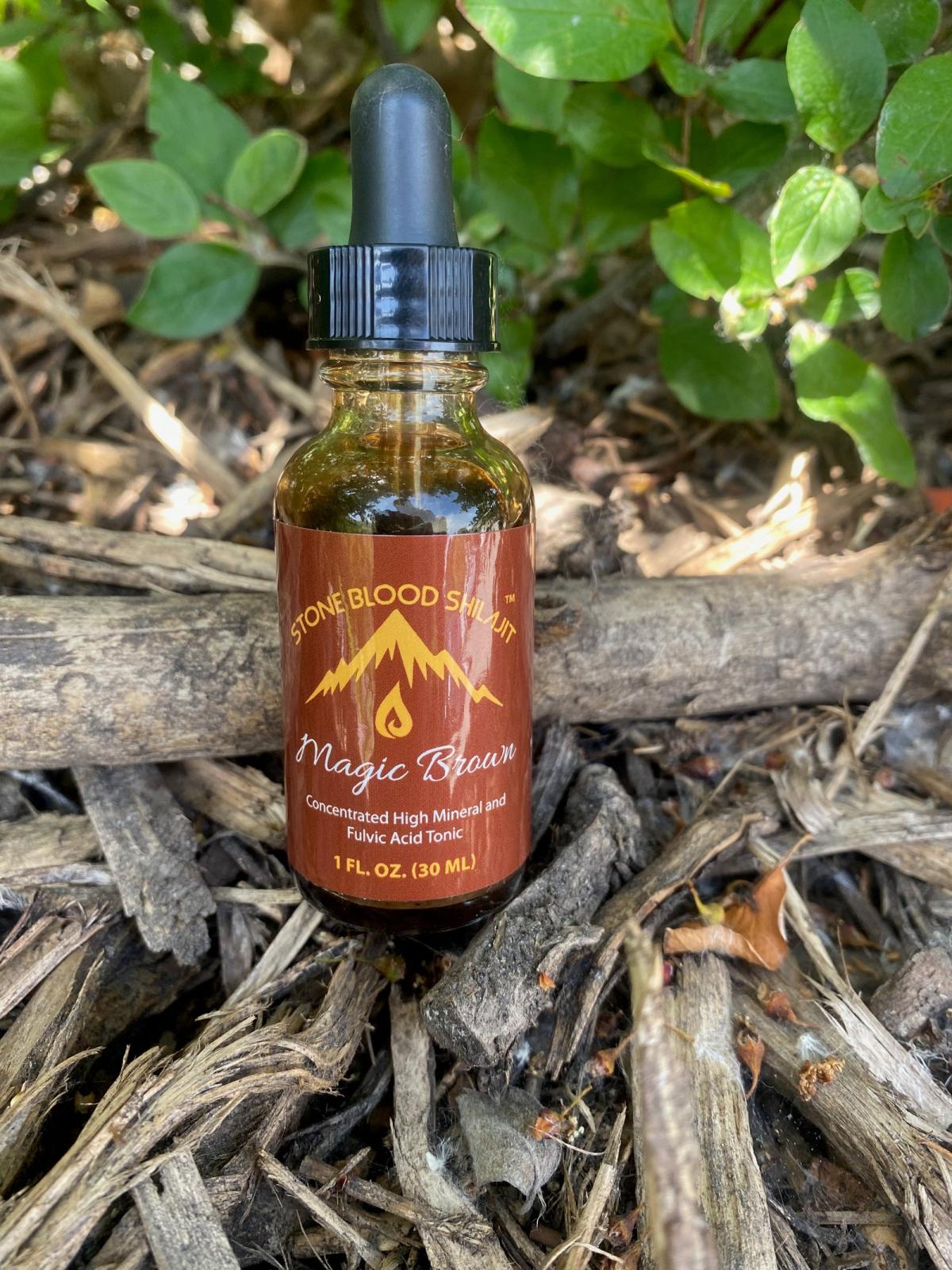
That fourth stage is where formats diverge, and it is the stage most relevant to what you actually buy. Stoneblood Shilajit's products are liquid drops in 30 mL bottles rather than resin, powder, capsules or gummies. If you want to see how raw shilajit becomes a liquid drop in more detail, our liquid shilajit drops guide walks through the format. For readers who want to start with a specific product, the Magic Brown Liquid Shilajit Drops (Double Strength) and the Shilajit Original Liquid Drops are the two liquid formats Stoneblood currently offers, and each product page lists its own directions.
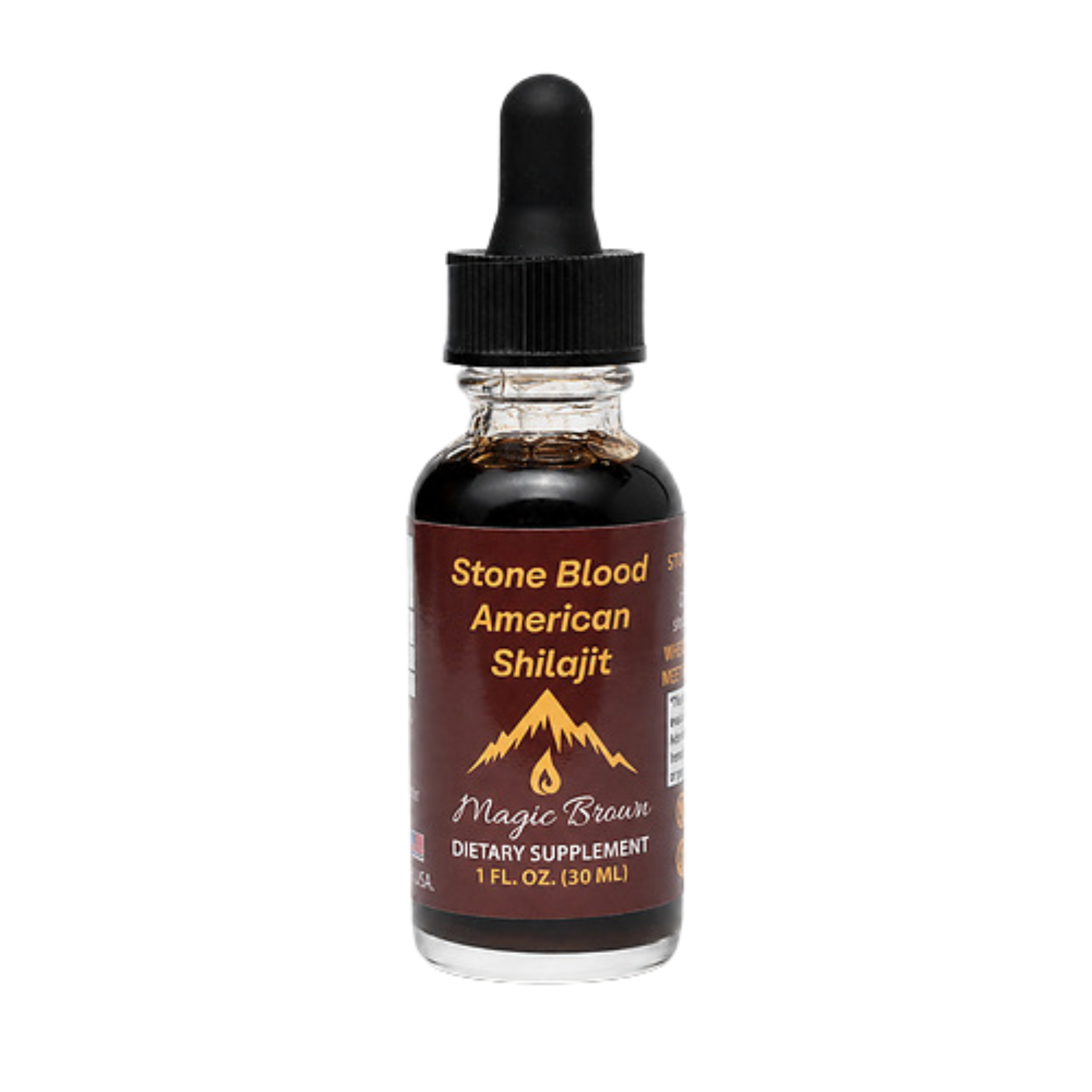
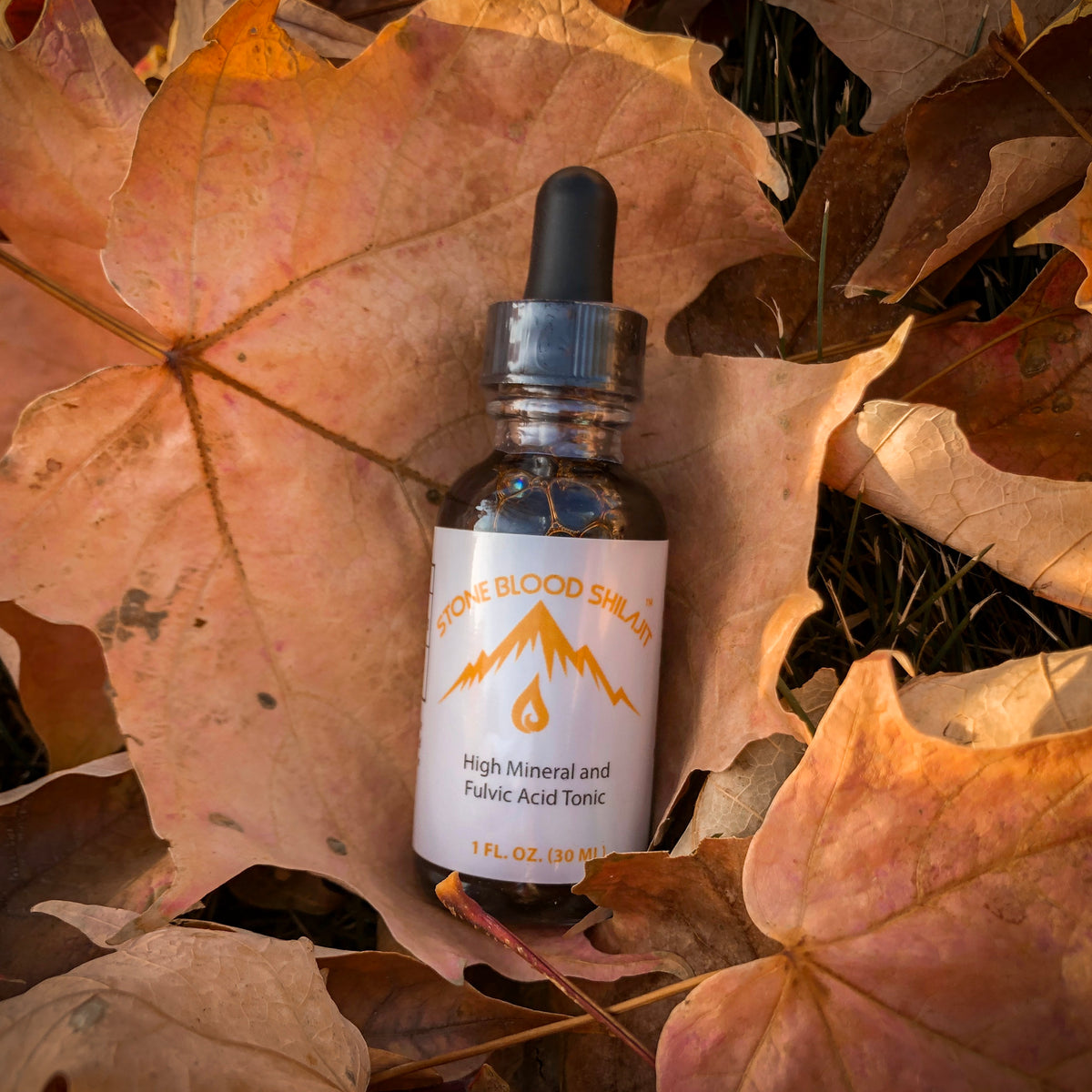
Hands holding a 30 mL amber dropper bottle beside a rocky outcrop illustrate the finished format:
What the Liquid Extraction Process Involves
Liquid formats are generally prepared by dissolving or suspending purified resin in a carrier, and the specific method varies by producer. We do not have verified process parameters to publish for Stoneblood's products, so readers should ask the company directly how its liquid is prepared for a given lot.
A liquid format does change a few practical things, and those differences are worth knowing before you compare products. Drops are easy to measure and easy to take straight or mixed into a drink, and a sealed 30 mL bottle is simple to store according to its label. The trade-off is that a liquid gives you less visual information than a chunk of resin does, so the label and the lot documentation have to carry more of the weight. That is the reason the next two sections focus on documentation rather than on appearance.
Watch out: a producer that cannot tell you how its liquid was prepared, or what carrier it used, is asking you to accept the process on faith.
The traditional preparation sequence generally runs through four stages, summarised below.
| Stage | What happens | Key point |
|---|---|---|
| Collection | Resin gathered from rock crevices | Usually by hand, often seasonally |
| Cleaning | Raw material separated from debris | Shortcuts show up at this step |
| Purification | Resin dissolved, heated gently, filtered | Sometimes repeated; may end in drying |
| Formatting | Packaged as-is or dissolved in a carrier | Where formats diverge |
Separating Documented History from Marketing Claims
Marketing copy often makes sweeping statements about ancient origins, unique minerals, or guaranteed purity. The history of shilajit in Utah is an area where that kind of copy outruns the evidence. Ask three questions of any historical claim: Is there a named source? Is the date verifiable? Does the claim describe the product in your hands or only the substance in general?
Watch out: a claim that a product is "the original" or "the first of its kind" is a marketing statement, not a historical finding, unless it is supported by documentation you can inspect.
Lot-Specific Quality Documentation: What to Request for Your Bottle
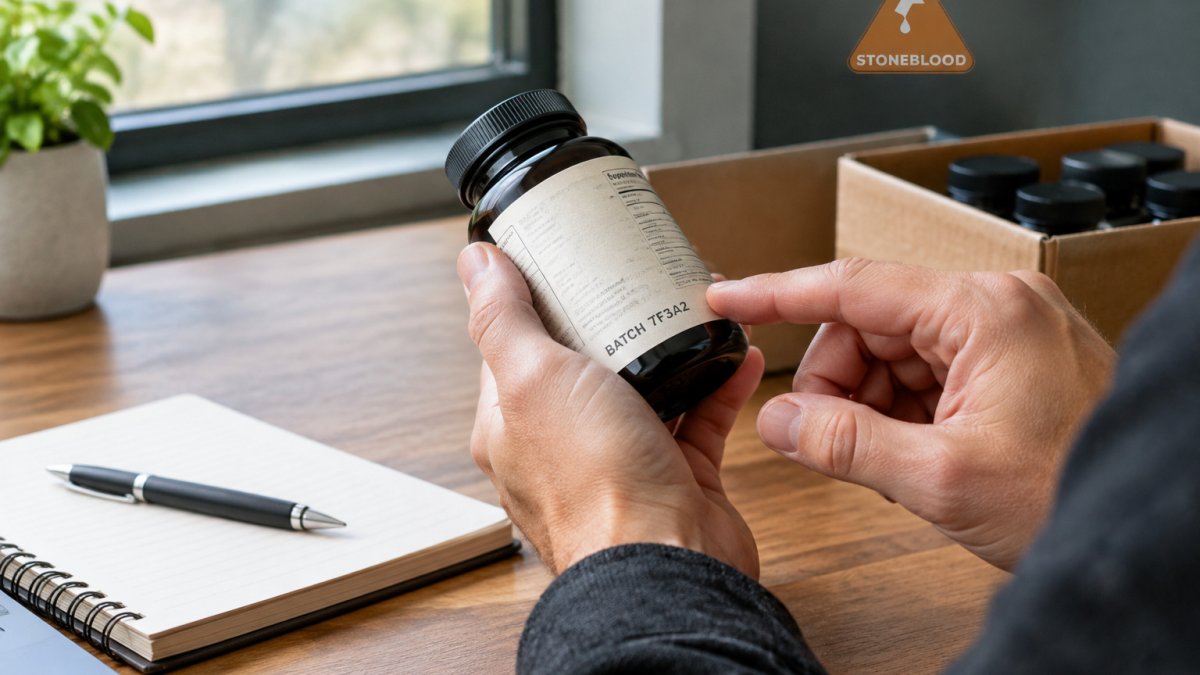
Quality claims should match documentation for the specific sample or lot, not a general promise. Ask for the lot number printed on your bottle, then request the testing records tied to that lot. Our guide on verifying supplement sourcing transparency explains how to evaluate what you receive, and lab tested shilajit and purity verification covers what testing to ask about.
You can review our approach to quality and safety on the quality and safety page. Be cautious with any supplier that offers only general assurances. Any testing, certification, or contaminant-free claim should be backed by documents for that specific lot.
Checking Your Own Bottle's Origin Before You Buy the Next One
Start with the label. Check the product name, the bottle size, the lot number, and any origin statement. Then compare those details with what the company's documentation says for that lot. If the directions on your bottle differ from what is published, contact Stoneblood to confirm the product and lot before use.
Our seven checks for a liquid shilajit label cover what each line should show. Keep the label and lot number with your records so you can match them against documentation later.
These statements have not been evaluated by the Food and Drug Administration (the FDA). This product is not intended to diagnose, treat, cure, or prevent any disease. Consult a healthcare professional before starting any supplement, especially if you are pregnant, nursing, taking medication or managing a health condition.
Frequently Asked Questions
What is the history of shilajit in Utah?
Documented history of shilajit in Utah is limited. Most sources describe shilajit's long roots in the Himalayas and Ayurvedic tradition, and its later spread to Western markets. Stoneblood Shilajit offers North American shilajit in liquid drops. For a specific bottle, ask the company for the sourcing and lot information printed on or linked from that product, rather than relying on general regional claims.
What lot-specific quality documents can consumers request?
Consumers can ask for documentation tied to the exact sample or lot they purchased, such as the batch identifier, the test results that apply to that lot, and any manufacturing records the company is willing to share. Stoneblood's quality information is available at /pages/quality-safety. Ask whether a report covers the bottle you hold, since documentation from one lot does not automatically apply to another.
Where does shilajit come from in the Rocky Mountains?
Shilajit is a mineral-rich exudate that forms in mountain rock over long periods, and traditional sources are most often described in the Himalayas. The exact collection sites for any product should be confirmed with the manufacturer, and claims about origin or mineral content should be checked against the lot documentation for that bottle.
Which Stoneblood product should I check first?
Stoneblood offers Double Strength (Magic Brown) at /products/stoneblood-american-shilajit-magic-brown, with current directions of 3 to 4 drops once daily, and the Original at /products/stoneblood-shilajit, with its own separate directions. Always confirm the product and lot before use, and if the label directions differ from what you read here, contact Stoneblood to verify them.

Share:
How to Request Lot-Specific Quality Documentation
How Do You Read a Supplement Batch Number?