
Last Updated: October 24, 2026
Quick Summary
Shilajit resin dissolves in warm, not boiling, water when you stir a pea-sized piece firmly for 30 to 60 seconds. Add the water first, then the resin, and stir again as it softens. Cold water leaves sticky flecks, so drink it warm.
- Warm 8 to 10 ounces of water until comfortable to sip, never boiling.
- Press the resin against the glass side with a spoon while stirring.
- A second stir after a minute helps the resin soften and disperse.
- Fully dissolved resin looks smooth and even, with only faint cloudiness.
- If residue remains, add warm water and stir another full minute.
Table of Contents
- Does Shilajit Resin Dissolve in Water?
- Why Water Temperature Decides Whether It Dissolves
- How to Mix Shilajit Resin in Water, Step by Step
- What to Do When Shilajit Resin Won't Dissolve
- Shilajit in Tea: What Works and What Doesn't
- Liquid Shilajit Drops in Water: A Simpler Route
- Which Mixing Liquid to Choose: Water, Milk, or Tea
- Checking Purity Before You Mix
- Try Magic Brown Liquid Shilajit Drops
- Frequently Asked Questions
Does Shilajit Resin Dissolve in Water?
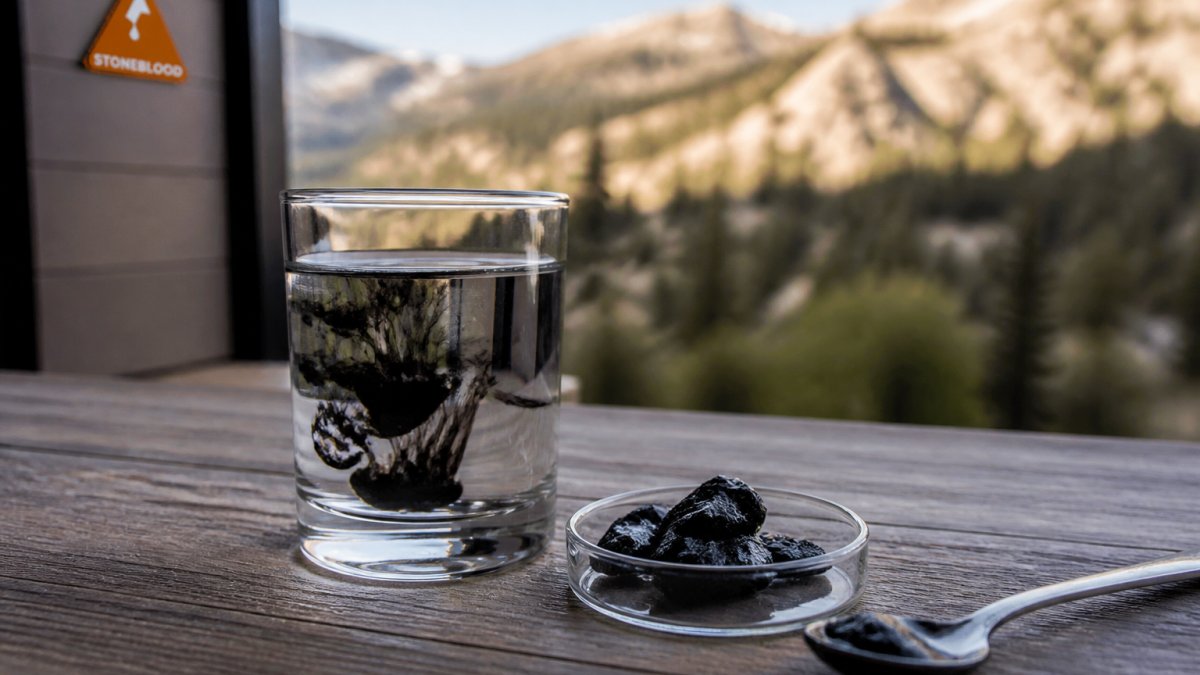
Yes, shilajit resin dissolves in water, but only when the water is warm and the resin is worked in properly.
Raw shilajit is a dense, tar-like resin that oozes from rock in mountain ranges, and it is not water-soluble straight out of the jar.
Below is the full method, from water temperature to stirring, plus what to do when the resin refuses to cooperate.
National Center for Complementary and Integrative Health, dietary supplement overview
Why Water Temperature Decides Whether It Dissolves
Shilajit resin is dense and sticky, so it needs warmth to loosen up. Warm water softens it and lets it break apart; cold water keeps it firm, leaving a sticky blob at the bottom of the glass.
Temperature matters more than any other variable. The range that works:
- Warm, not hot: comfortable to sip, roughly the temperature of a warm cup of tea
- Not boiling: boiling water can make the resin clump and stick to the glass
- Not cold: cold water slows the process to a crawl
A common mistake is dumping resin into water straight off the boil. Let the kettle rest for a minute or two first: you want warmth that loosens the resin, not heat that ruins the texture.
How to Mix Shilajit Resin in Water, Step by Step
Here is the method we recommend, start to finish.
- Measure a small piece. A pea-sized amount is the usual starting point. Some jars come with a small spoon, so check the package instructions first.
- Warm 8 to 10 ounces of water. Comfortable to drink, not boiling.
- Add the resin to the warm water. Drop it in and let it sit for a moment.
- Stir firmly for 30 to 60 seconds. Use a spoon and press the resin against the side of the glass as you stir.
- Wait a minute, then stir again. The resin softens as it sits, so a second pass helps.
- Check for flecks. If you still see dark specks, keep stirring or add a splash more warm water.
- Drink while warm. Resin settles as the liquid cools, so stir once more before your last sip.
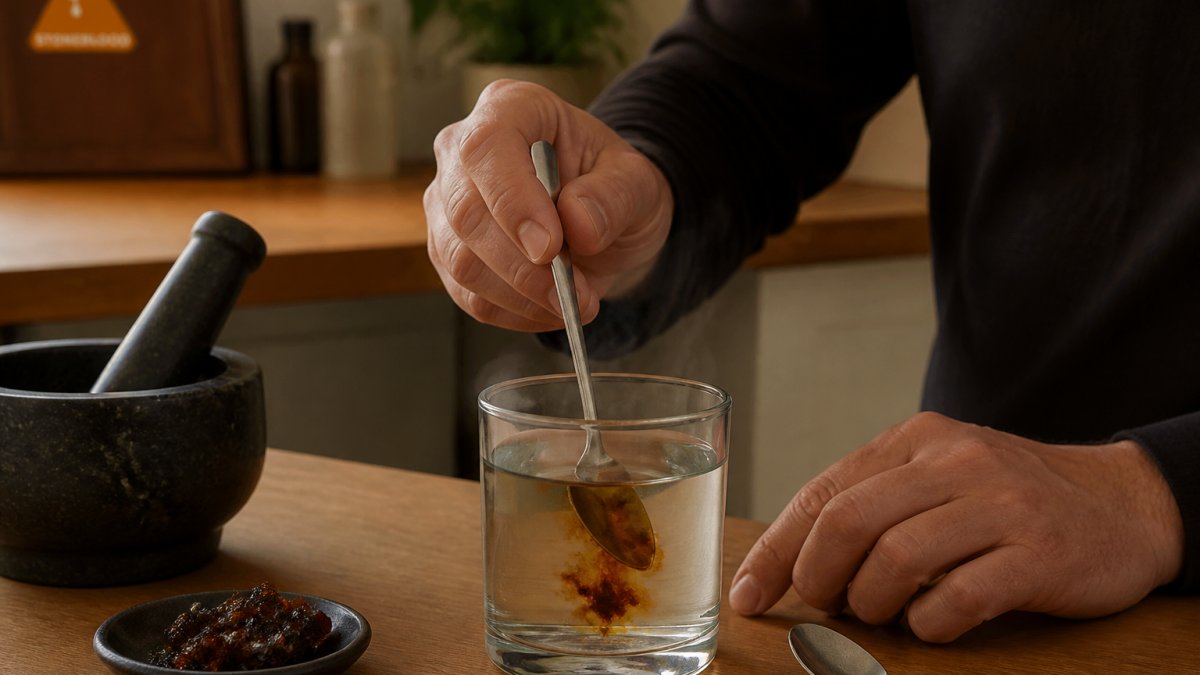
Watch out: dropping resin into a dry glass and pouring water over it is the most common mistake. Add the water first, then the resin.
If you would rather skip the dissolving step entirely, our simple daily-use instructions show how the liquid drops go straight into any drink.
How to Tell It Has Fully Dissolved
Fully dissolved resin leaves a smooth, even liquid with no visible specks. Hold the glass up to the light and look for dark flecks near the bottom or clinging to the sides. A faint cloudiness is normal.
If you see residue, the water was likely too cool or you stopped stirring too soon. Add a little warm water and stir again.
What to Do When Shilajit Resin Won't Dissolve
Resin that refuses to dissolve usually points to one of three problems: water too cold, a piece too large, or not enough stirring.
Try this sequence:
- Add a splash of warm water and stir for another full minute
- Break the piece into smaller fragments with the back of your spoon
- Let it sit in the warm water for two or three minutes before stirring again
A stubborn batch sometimes needs mechanical help: press the resin against the side of the glass with the spoon as you stir. Resin texture also varies from jar to jar, denser, drier resin takes longer, which is normal, not a sign of a bad product.
Shilajit in Tea: What Works and What Doesn't
Tea is one of the easiest liquids to mix resin into, and herbal tea works especially nicely because it is naturally caffeine-free.
A few practical notes:
- Brew first, then add resin. Let the tea cool for a minute so it is warm, not scalding.
- Skip the tea bag squeeze. Resin can cling to the bag, so remove it before you stir in the resin.
- Stir before every sip. Tea cools quickly, and resin settles as it does.
Black tea, green tea and most herbal blends all work; just avoid pouring resin into a cup still steaming hard from the kettle. If the taste is too strong, use a smaller piece or mix it into something with more body, like a smoothie.
Liquid Shilajit Drops in Water: A Simpler Route
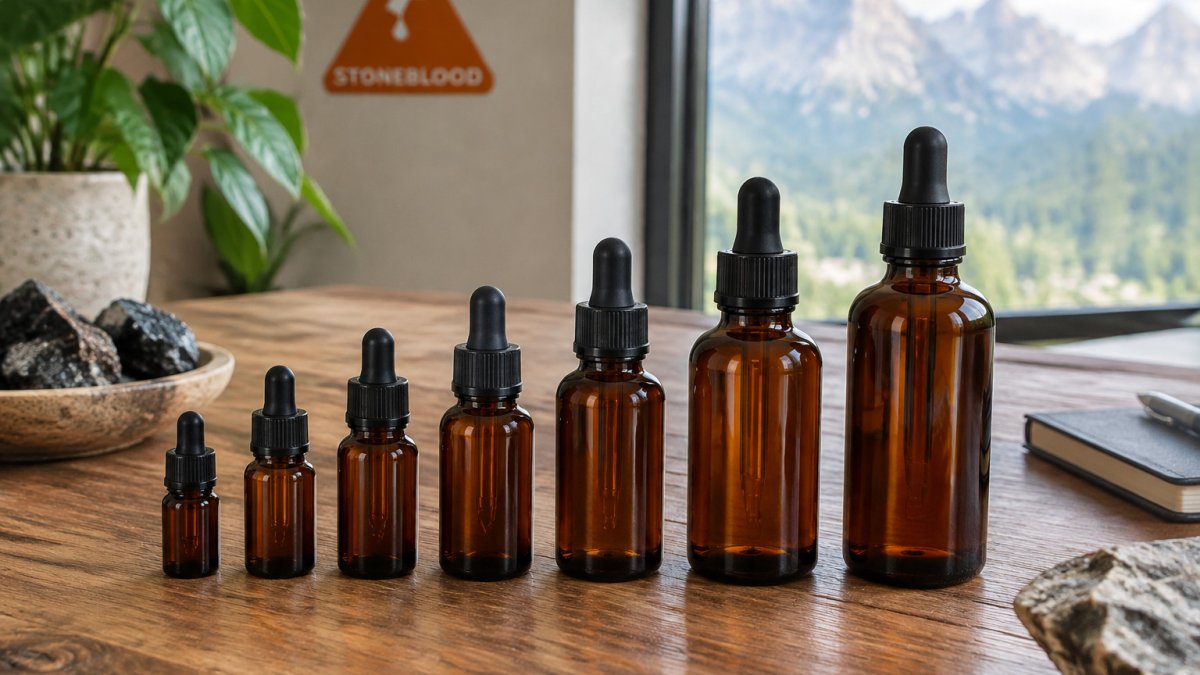
Dissolving resin takes time, and some days you just want to get on with your morning. That is the case for liquid shilajit drops: no measuring, no stirring, no residue.
Our drops are made from wildcrafted North American shilajit, refined in distilled Rocky Mountain spring water until the resin becomes fully water-soluble.
The trade-off is real: resin gives you the traditional raw form, while drops give you convenience and a consistent amount every time. Our comparison of liquid shilajit drops versus resin covers convenience, taste, and daily use side by side.
Shilajit Original — Stoneblood →
Which Mixing Liquid to Choose: Water, Milk, or Tea
Water, milk, and tea all work. The right choice comes down to taste, how well each one carries the resin, and what is actually known about whether the liquid changes absorption.
| Liquid | Dissolves Well | Taste | Best For |
|---|---|---|---|
| Warm water | Yes, with stirring | Earthy, strong | Fastest, simplest option |
| Milk | Yes, warm milk works best | Mellow, creamy | Masking the resin flavor |
| Herbal tea | Yes | Warm, aromatic | A daily ritual |
| Coffee | Yes | Bitter meets earthy | Morning routine |
| Smoothie or oatmeal | Blends in | Well hidden | People who dislike the taste |
Warm water is the cleanest test of quality: if the resin dissolves smoothly, you know it is fresh. Milk softens the flavor and adds body, while tea and coffee make the whole thing feel like a routine.
What is actually known about absorption
Honest guidance matters more than confident claims here. Research on shilajit generally describes the composition of the resin, fulvic acid and related humic compounds, plus trace minerals, and traditional Ayurvedic use; it does not compare mixing liquids head to head.
What dissolving does affect is more practical than pharmacological:
- Even distribution. Fully dissolved resin spreads evenly through the drink, so you are not getting a strong first sip and a watery last one.
- Less waste at the bottom. Resin stuck to the glass never reaches you; a clean dissolve means the full serving goes down.
- Consistency. The same preparation each day gives you a repeatable routine.
Practical differences that do matter
- Fat content. Milk carries resin into a richer, creamier drink. Some people find the flavor easier to take; that is a preference, not an absorption claim.
- Temperature control. Tea and coffee cool faster than plain warm water, so stir before your last sip. Milk holds heat longer but scalds more easily, warm it, do not boil it.
- Caffeine. Coffee and black or green tea contain caffeine. If you are sensitive to it, herbal tea or warm water in the evening is the gentler choice.
If you would rather skip the dissolving step entirely, our simple daily-use instructions show how liquid drops go straight into any drink, water, coffee, tea, or food, with no stirring and no residue.
Checking Purity Before You Mix
Purity matters more than technique. A resin cut with fillers, bulked with sand, or carrying grit from careless harvesting will never dissolve cleanly, no matter how carefully you stir. Residue at the bottom of the glass is sometimes a technique problem and sometimes a product problem.
Why raw resin carries more risk than a refined liquid
Raw shilajit is harvested from rock crevices, then dried and hand-shaped. That supply chain is short but loosely regulated, and the two concerns most often raised about raw resin are heavy metals and microbial load, because it is collected in the open and handled by hand before it reaches a jar.
A resin cut with fillers, starch, or inert powder behaves differently in warm water. Instead of melting into a smooth, even liquid, it leaves a sandy or chalky layer, or the liquid turns uniformly cloudy and stays that way.
A verification sequence, not just a look-and-sniff test
Sensory checks are a starting point, not proof. Run them in this order:
- Read the label for source and testing. A serious product names where the resin was harvested and states that it has been tested by a third-party laboratory. If the label is silent on both, treat that as a gap.
- Ask for the certificate of analysis. A certificate of analysis, or COA, is the lab report behind a testing claim. A legitimate seller can provide one on request. Look for the laboratory's name, the date, and the specific tests run.
- Check what was tested, not just that testing happened. Heavy metals and microbial panels are the core checks for a raw botanical resin. A COA that lists only a fulvic acid percentage is answering a different question.
- Do the warm-water test. A small piece in warm, not boiling, water should soften and disperse with stirring. Persistent grit that will not break down under the spoon is a warning sign.
- Smell and handle it. Resin should smell earthy, not sharply of smoke or chemicals. It should soften between warm fingers rather than crumble dryly or stay rock-hard.
What this means for a refined liquid
Refining raw resin into a water-soluble liquid adds steps, filtering, purification, and dilution in clean water, that remove much of the grit and undissolved material you would otherwise be stirring through.
For a deeper walkthrough of the sensory side, our guide on how to identify high quality shilajit resin lays out seven checks in detail, and how to verify shilajit purity covers the testing steps behind them.
This is where sourcing matters. You can read more about our testing on our quality and safety page.
U.S. Food and Drug Administration, dietary supplement information
Try Magic Brown Liquid Shilajit Drops
The dissolving step is where most people lose patience with shilajit resin. If you would rather skip it, our flagship product solves that problem directly.
Magic Brown is our double-strength liquid shilajit, wildcrafted in North America and refined into water-soluble drops in Utah.

For current options and prices, compare Stoneblood Original and Magic Brown.

Dissolving shilajit resin is a small skill that rewards a little practice. If you want to skip the glass and the spoon entirely, view Magic Brown liquid shilajit drops and get a consistent dropper every morning.
These statements have not been evaluated by the Food and Drug Administration. This product is not intended to diagnose, treat, cure, or prevent any disease.
Frequently Asked Questions
What temperature of water works best for dissolving shilajit resin?
Warm water, roughly the temperature of a hot drink you can sip comfortably, works best. Heat softens the resin so it breaks apart and mixes into the liquid. Avoid boiling water: it does not dissolve the resin any faster and makes the texture sticky and harder to work with. Let boiled water cool for a few minutes first, then stir in your pea-sized amount and wait for it to fully dissolve before drinking.
Can you mix shilajit resin with tea or coffee?
Yes. Shilajit in tea is one of the most common ways to take it, and coffee works the same way. Brew the tea or coffee first, let it cool slightly so it is warm rather than scalding, then stir in the resin and wait until no dark specks remain. Herbal tea, black tea and green tea all work. The earthy, mineral flavor of the resin pairs best with stronger brews that can carry it.
How can you tell whether shilajit resin has dissolved completely?
Look at the bottom and sides of the glass. Fully dissolved resin leaves a smooth, even amber-to-dark-brown liquid with no grit, lumps or sticky film clinging to the glass. Hold the glass up to the light and check for small dark particles. If you see any, stir again for another 30 seconds and give it a little more time. A cloudy but uniform liquid is normal.
What should you do if shilajit resin does not dissolve easily?
First, check your water temperature. If it cooled too much, add a splash of warmer water and stir. Second, break the resin into a smaller piece before adding it, since a large lump takes far longer to soften. Third, use a spoon to press the resin against the side of the glass as you stir. If it still resists, the resin may be old or heavily cut with filler, which is one reason sourcing matters.


Share:
How Omega-3 Fatty Acids Reduce Exercise-Induced Inflammation
How to Take Shilajit Long-Term Safely