
7 Best Natural Energy Boosters for Focus in 2026

Table of Contents
- Quick Comparison: 7 Natural Energy Boosters at a Glance
- How We Evaluated These Natural Energy Boosters
- 1. Shilajit: The Mineral-Rich Resin Behind the Benefits of Shilajit for Focus
- 2. Adaptogens: Rhodiola and Ashwagandha for Cortisol Regulation
- 3. B-Vitamins and Iron: Energy Metabolism and Oxygen Transport
- 4. Caffeine Management: Timing, Dosing, and the Adenosine Trap
- 5. Hydration and Electrolyte Balance for Alertness
- 6. Complex Carbohydrates and Blood Sugar Regulation
- 7. Sleep Hygiene and Circadian Rhythm Optimization
- Frequently Asked Questions
Last Updated: September 18, 2026
Quick Comparison: 7 Natural Energy Boosters at a Glance
The best natural energy boosters for focus are not stimulants that spike and crash, but compounds and habits that support steady cellular energy, balanced blood sugar, and healthy stress response. This guide from Stoneblood Shilajit ranks seven options by how reliably they support attention through a full workday, not just the first hour.
Below, we break down each one, what it does, and how to actually use it.
| Booster | Primary Mechanism | Best For | Typical Timing |
|---|---|---|---|
| Shilajit | Fulvic acid, trace minerals, mitochondrial support | Sustained energy and mental clarity | Morning, daily |
| Rhodiola and Ashwagandha | Cortisol regulation, stress adaptation | Stress-driven fatigue | Morning or midday |
| B-Vitamins and Iron | Energy metabolism, oxygen transport | Nutrient gaps, low iron status | With meals |
| Caffeine management | Adenosine receptor timing | Alertness without crashes | Before noon |
| Hydration and electrolytes | Cellular transport, nerve signaling | Afternoon slump, brain fog | Throughout the day |
| Complex carbohydrates | Blood sugar regulation | Steady focus between meals | Meals and snacks |
| Sleep and light habits | Circadian rhythm, dopamine | Morning alertness | Evening and morning |
That table is the short version.
How We Evaluated These Natural Energy Boosters
We judged each option on four criteria: how well the mechanism is understood, how quickly users tend to notice a difference, whether the effect lasts past the first hour, and how safely it fits into a daily routine. Options that only deliver a short spike ranked lower than those supporting cellular energy and focus across the day.
1. Shilajit: The Mineral-Rich Resin Behind the Benefits of Shilajit for Focus
Shilajit is a mineral-rich resin that oozes from mountain rock, formed over millions of years from compressed plant material and humus. In Ayurveda it is classified as a Rasayana, a traditional category associated with vitality and longevity.
What Fulvic Acid and 85+ Trace Minerals Do for Cognitive Function
Fulvic acid is a naturally occurring compound that binds minerals and helps move them across cell membranes. Without that transport step, mineral intake from food or a standard multivitamin may not reach the places the body needs it.
How to Take Stoneblood Shilajit for Sustained Energy
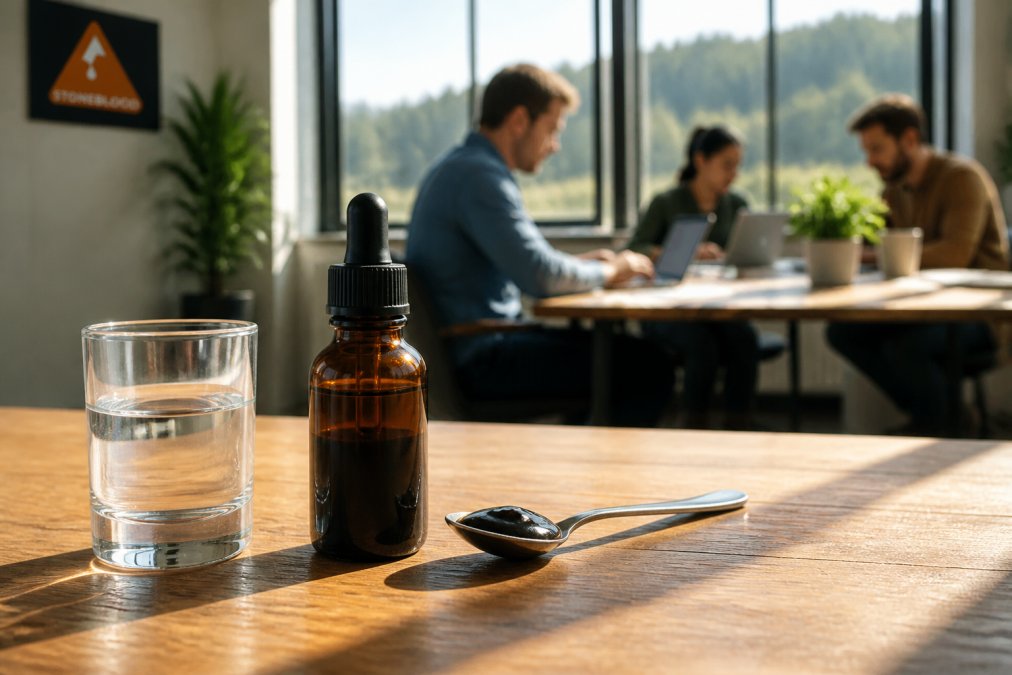
Stoneblood Shilajit is wildcrafted in the Rocky Mountains of Utah and refined in distilled spring water, which makes it water-soluble and easy to mix. The standard serving is one dropper full, about 10 to 15 drops, taken daily.
2. Adaptogens: Rhodiola and Ashwagandha for Cortisol Regulation
Rhodiola and ashwagandha are adaptogens, a class of herbs traditionally used to help the body manage stress. Because cortisol regulation sits upstream of energy and focus, these two often help most when fatigue is stress-driven rather than sleep-driven.
Rhodiola rosea: The Stimulating Adaptogen
Rhodiola's primary actives are rosavins and salidroside, which appear to modulate the stress response by influencing how the body handles cortisol and by supporting monoamine activity in the brain. The practical effect most users describe is a lift in mental stamina under deadline pressure, less of the flat, foggy feeling that builds when stress runs long.
Ashwagandha: The Calming Adaptogen
Ashwagandha's signature compounds are withanolides, which are studied for their effect on cortisol output and on the GABA system. Where rhodiola lifts, ashwagandha tends to settle, many users report better sleep quality and a calmer baseline rather than a stimulant-like push.
The Catch: Adaptogens Work Slowly
A common mistake is expecting a same-day effect and abandoning the routine after three days. Adaptogens act on stress-hormone systems that adjust over weeks, not hours. Give either one four to six weeks of consistent use before judging it.
3. B-Vitamins and Iron: Energy Metabolism and Oxygen Transport
B-vitamins and iron support two separate links in the same chain. B-vitamins act as cofactors in energy metabolism, the process that converts food into usable cellular energy. Iron is central to oxygen transport, carrying oxygen through the blood to tissues, including the brain.
4. Caffeine Management: Timing, Dosing, and the Adenosine Trap
Caffeine works by blocking adenosine, the compound that builds up through the day and makes you feel sleepy. The trap is that caffeine does not remove adenosine, it only hides it. When the caffeine wears off, the accumulated adenosine lands all at once.
Shilajit Double Strength — Stoneblood →
5. Hydration and Electrolyte Balance for Alertness
Hydration status affects cognitive performance directly. Even mild dehydration tends to show up as reduced alertness and slower thinking before you ever feel thirsty.
6. Complex Carbohydrates and Blood Sugar Regulation
Complex carbohydrates digest slowly, which keeps blood sugar steadier than simple sugars do. Steady blood sugar means steadier focus; a spike and drop means a spike and drop in attention to match.
7. Sleep Hygiene and Circadian Rhythm Optimization
Sleep hygiene is the set of habits that protect sleep quality, and it is the foundation every other booster sits on. Circadian rhythm optimization goes one step further: aligning your light exposure, meal timing, and schedule so your body expects to be alert at the right times. Most articles stop at "get more sleep." The bigger lever is timing.
Why Circadian Timing Beats Sleep Duration Alone
Your body runs on an internal clock that governs when cortisol rises, when melatonin releases, and when core body temperature peaks. When that clock is misaligned, late nights, irregular wake times, bright light after dark, you can sleep eight hours and still wake up foggy. The clock, not the hour count, decides whether you feel alert.
Light: The Master Signal
Get bright outdoor light within an hour of waking. Outdoor light on a clear morning is many times brighter than indoor lighting, and that intensity is what anchors the circadian signal for the day. Ten to twenty minutes is enough for most people; a walk outside beats sitting by a window.
Meal Timing: The Underused Lever
Eating on a consistent schedule reinforces the same clock. Front-loading calories earlier in the day and finishing your last substantial meal two to three hours before bed tends to support both sleep quality and morning alertness. Late heavy meals push digestion into the sleep window and blunt the overnight recovery that focus depends on.
The Dopamine-Focus Connection
Dopamine supports motivation and sustained attention, and it is sensitive to both sleep debt and to the constant novelty of scrolling. Protecting deep sleep and cutting the late-night feed often does more for focus than any supplement on this list. If you want a single habit to test first, make it this one: outdoor light in the morning, screens off an hour before bed, for two weeks.
Frequently Asked Questions
What is the strongest natural energy booster for focus?
There is no single strongest option because focus depends on multiple systems working together. Shilajit stands out for its mineral and fulvic acid content, which supports cellular energy and the transport of nutrients into cells. Adaptogens like rhodiola help regulate cortisol, while B-vitamins and iron support energy metabolism and oxygen transport. The most effective approach combines a mineral-rich supplement with sleep hygiene, hydration, and blood sugar regulation rather than relying on one ingredient alone.
How does fulvic acid support cognitive function?
Fulvic acid, the key component in shilajit, helps transport minerals into cells where the body can use them. Minerals act as catalysts in energy metabolism and vitamin assimilation, so without proper transport, even a good diet can leave cells undernourished. Stoneblood Shilajit delivers fulvic and humic acids alongside 85+ trace minerals in bioavailable ionic form, which supports mental clarity and sustained energy. Third-party testing by New Wave Scientific and MiChem Analytical Laboratory confirms the purity of each batch.
Are natural energy supplements safe for daily use?
Most natural energy supplements are safe for daily use when sourced from reputable brands that test for heavy metals and microbials. Stoneblood Shilajit is bottled in a cGMP-certified facility in Lindon, Utah, and every batch is third-party tested. Heavy metal results from MiChem Analytical Laboratory show arsenic at 0.553 ppm, lead at 0.050 ppm, cadmium at 0.001 ppm, and mercury below 0.001 ppm. Always check for Certificates of Analysis and consult your doctor if you take medication.
How long does it take to feel results from shilajit for energy and focus?
Some users report feeling a rush of energy and sharper focus within the first few days, while others notice cumulative benefits over two to four weeks. Stoneblood Shilajit recommends one dropper full (about 10-15 drops) daily, mixed into water, coffee, or tea, or taken sublingually. A 1 fl oz (30 ml) bottle lasts roughly a month at that dose, so you can assess how your body responds before committing to a larger supply.
What should I look for in natural supplements for mental clarity?
Prioritize third-party testing, traceable sourcing, and transparent Certificates of Analysis. Look for products that list heavy metal screening by ICP-MS and microbial testing. Stoneblood Shilajit is wildcrafted in Utah, lot-coded for traceability, and tested by an ISO/IEC 17025 accredited laboratory. Avoid products that do not disclose their testing lab or that make vague claims without documentation. Bioavailability matters too: fulvic acid helps minerals reach cells rather than passing through the digestive system unused.