
Table of Contents
- What Mineral Resin Is and Why Daily Vitality Depends on It
- Shilajit Dosage for Beginners: Finding Your Starting Point
- How to Dissolve Shilajit Resin (Without the Gritty Aftertaste)
- The Best Time to Take Shilajit for Energy and Focus
- Sourcing and Purity Verification: What Third-Party Testing Actually Confirms
- Interactions, Cycling Protocols, and Common Mistakes to Avoid
- Frequently Asked Questions
Last Updated: September 18, 2026
What Mineral Resin Is and Why Daily Vitality Depends on It
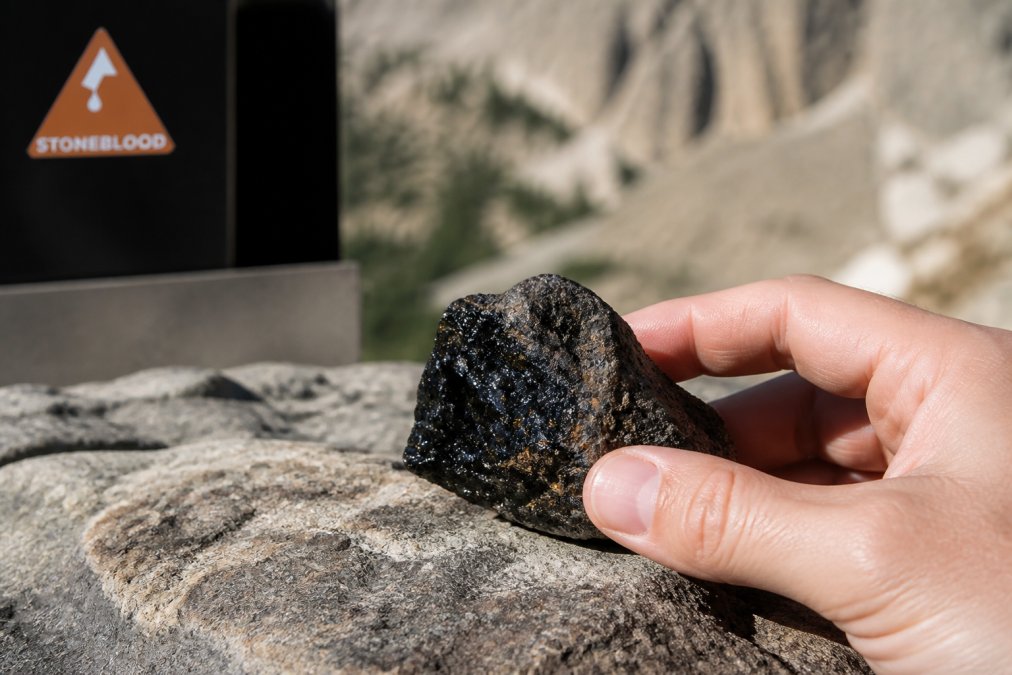
Mineral resin is a purified, tar-like substance that seeps from rock in high mountain ranges and carries fulvic acid, humic substances, and more than 85 trace minerals in a form your cells can absorb. In Ayurvedic tradition it is called shilajit, and it has been used for centuries as a daily tonic. At Stoneblood Shilajit, we wildcraft this resin by hand in the Rocky Mountains of Utah and refine it in distilled spring water.

Shilajit Dosage for Beginners: Finding Your Starting Point
The starting dose for most beginners is one pea-sized amount of resin per day, roughly 200 to 300 milligrams. Stay there for the first week before adjusting.
A simple approach:
- Week 1: one pea-sized amount daily
- Week 2: same dose, check how you feel
- Week 3 and beyond: add a second small dose if needed
The Pea-Sized Rule and Why It Works
The pea-sized rule works because shilajit is concentrated. A small amount delivers a meaningful dose of fulvic acid and minerals. Taking more does not multiply the benefit.
How to Dissolve Shilajit Resin (Without the Gritty Aftertaste)
To dissolve shilajit resin, drop your pea-sized amount into warm, non-chlorinated water and stir for 30 to 60 seconds until it fully breaks down. Chlorine can interfere with the resin, so filtered or spring water works best.
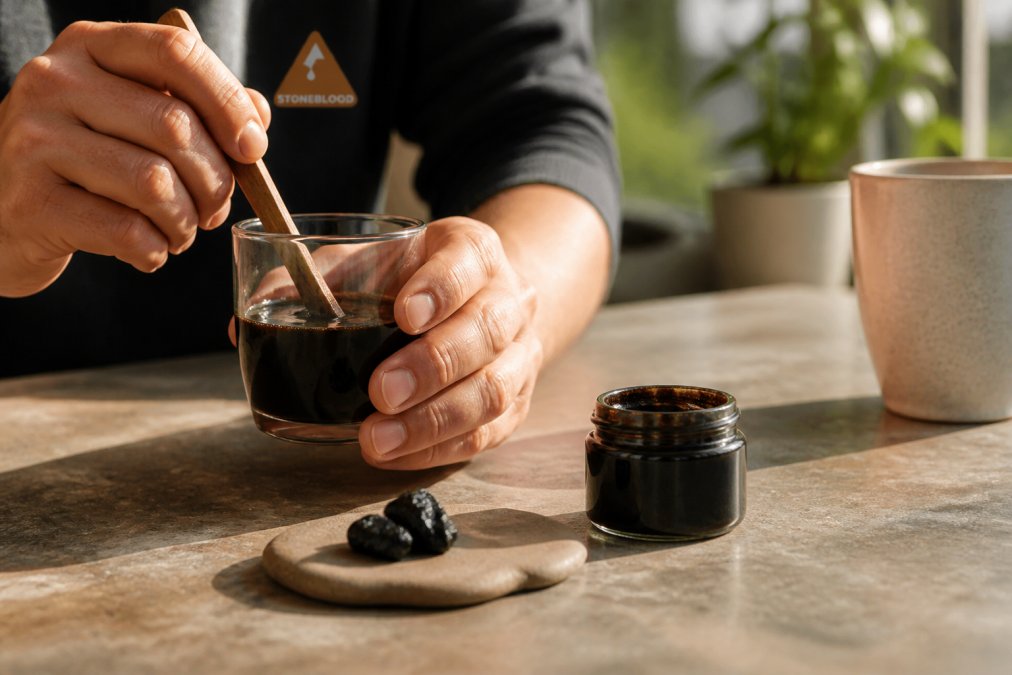
Here is the method that avoids grit:
- Warm your water first. Hot water can damage the compounds.
- Add the resin and stir with a wooden or ceramic spoon.
- Wait a minute, then stir again.
- Drink it all, including any fine sediment.
Taste Profile and Masking Techniques
Shilajit tastes earthy, bitter, and a little smoky. Some people love it. Others do not.
If the flavor puts you off, try these fixes:
- Stir it into black coffee or tea
- Blend it into a smoothie with berries
- Add a spoonful of raw honey
- Take it sublingually and chase with water
The Best Time to Take Shilajit for Energy and Focus
The best time to take shilajit is in the morning on an empty stomach, about 30 minutes before breakfast. Taking it early lets the fulvic acid and trace minerals absorb before food competes for the same pathways.
Sourcing and Purity Verification: What Third-Party Testing Actually Confirms
Third-party testing confirms what a supplier claims about purity. It checks for heavy metals, microbials, and other contaminants that resin can pick up during harvest and handling. But the phrase "third-party tested" on a label tells you almost nothing on its own. The real signal is the Certificate of Analysis (CoA), and most buyers never learn how to read one.
How to Read a Certificate of Analysis
A CoA is the lab report tied to a specific production lot. Ask for the report that matches the lot number printed on your bottle, not a generic sample report from the company website. Then check these fields:
Shilajit Original — Stoneblood →
- Lot number match. The lot on the CoA must match the lot on your jar. If it does not, the report is not about your product.
- Accredited lab. Look for an ISO/IEC 17025-accredited laboratory. Accreditation means the lab itself is audited, not just the product.
- Heavy metal panel. Lead, arsenic, cadmium, and mercury should each be listed with a measured result and a limit. ICP-MS (inductively coupled plasma mass spectrometry) is the standard method for trace metals at these levels.
- Microbial panel. Look for total aerobic count, yeast and mold, Salmonella, E. coli, and Staphylococcus aureus.
- Fulvic acid content. A useful CoA reports fulvic acid percentage, since that is the active fraction most people are paying for.
- Date of analysis. A report older than the batch itself is a red flag.
Reading the Numbers, Not Just the Checkmarks
A CoA that says "pass" without showing measured values is not useful. You want the actual result next to the limit. For example, a lead result reported in parts per million (ppm) or micrograms per gram (µg/g) tells you how close the batch sits to the action level, not just whether it cleared it. Two batches can both "pass" while one sits at a fraction of the limit and the other sits just under it.
What to Look for Before You Buy
- A lot-specific CoA you can request by lot number
- Testing by an ISO/IEC 17025-accredited lab, not just a claim on the label
- Heavy metal screening by ICP-MS with measured values
- Microbial testing for Salmonella, E. coli, and similar risks
- A fulvic acid percentage on the report
- A lot number on the bottle you can trace back to the report
Stoneblood Shilajit is bottled in a cGMP-certified facility and every batch is third-party tested. The lot number is printed on each bottle, and you can email for the results tied to your batch.
Interactions, Cycling Protocols, and Common Mistakes to Avoid
Shilajit can interact with other supplements and medications, so tell your doctor what you take. Fulvic acid may affect how your body absorbs certain drugs, and blood thinners and thyroid medications deserve extra caution. That is the short version. The longer version, which most guides skip, is how mineral resin fits into a daily vitality stack and whether you should cycle it.
Stacking With Common Daily Supplements
Most people taking mineral resin for vitality are already taking something else. Here is how the common combinations tend to behave:
- Caffeine. Shilajit and coffee are frequently paired, and many users report the combination feels smoother than caffeine alone. If you are sensitive to stimulation, take them at different times of day rather than together.
- Adaptogens (ashwagandha, rhodiola, holy basil). These are commonly stacked with shilajit because the goals overlap. There is no known conflict, but stacking multiple adaptogens at once makes it hard to tell which one is doing what. Introduce one at a time.
- B-complex and iron. Fulvic acid supports mineral transport, so some users take shilajit alongside a B-complex. If you take iron, separate it from shilajit by a couple of hours so you can tell how each affects you.
- Vitamin D and magnesium. These are common in vitality routines and generally stack without issue. Magnesium in particular pairs well with the hydration habit that shilajit already encourages.
- Prescription medications. This is where caution matters most. Blood thinners, thyroid medications, and anything with a narrow therapeutic window should be discussed with your prescriber before you add shilajit. Fulvic acid can influence absorption, and absorption changes can shift how a medication behaves.
Cycling Protocols: Do You Need to Take Breaks?
There is no single consensus on cycling, and most guides avoid the question entirely. A practical approach that many users settle into:
- Continuous use. Some people take a pea-sized dose every day indefinitely and report stable results. This works best for those who tolerate it well and are not chasing a specific short-term goal.
- Five days on, two days off. A common pattern for people who want to keep the effect from flattening out. The weekend break is easy to remember and easy to maintain.
- Eight to twelve weeks on, one week off. A longer cycle that suits people using shilajit for a defined training block or seasonal push. The one-week pause resets the routine without a long interruption.
Common Mistakes to Avoid
- Taking it on a full stomach and expecting fast results
- Using chlorinated tap water, which can interfere with the resin
- Skipping the label and buying the cheapest resin online without a CoA
- Doubling the dose after one week instead of titrating slowly
- Adding shilajit to a full supplement stack all at once
- Ignoring how it interacts with prescription medications
- Treating a break as a failure instead of part of the protocol
Consistency beats intensity here. A small daily dose for a month will do more than a large dose for three days.
Frequently Asked Questions
What happens if I take mineral resin every day?
Daily use of mineral resin like shilajit is generally well tolerated and is how most people experience its benefits for energy, focus, and recovery. The key is consistency and proper dosage. Start with a pea-sized amount or about 10 to 15 drops of a liquid tonic, take it at the same time each day, and stay hydrated with non-chlorinated water. Some users notice more stamina and mental clarity within the first week, while deeper vitality support builds over several weeks of regular use.
How much mineral resin should I take for daily vitality?
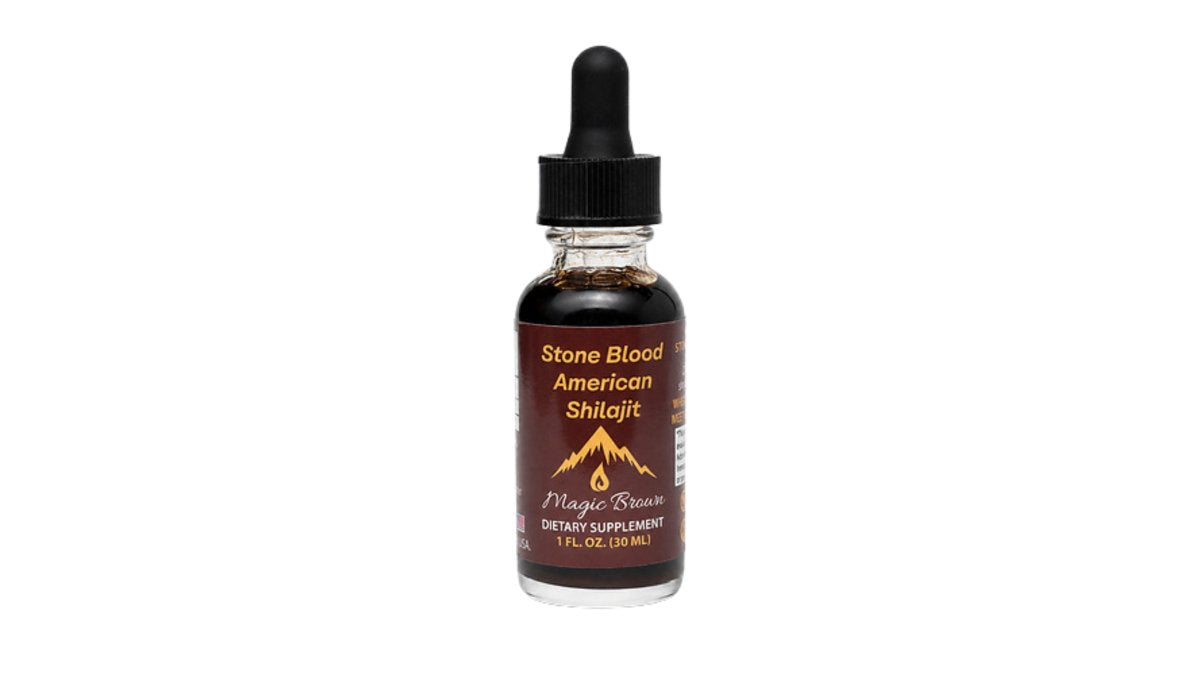
For beginners, a pea-sized amount of resin or roughly 10 to 15 drops of a water-soluble tonic is the standard starting point. This delivers a meaningful dose of fulvic acid and trace minerals without overwhelming your system. If you feel good after a week, you can maintain that amount or gradually increase under the guidance of a healthcare provider. Stoneblood Shilajit's Original resin comes in a 1 fl oz bottle, and most users find one bottle lasts about a month at the beginner dose.
What is the best time of day to take mineral resin?
Most people get the best results taking mineral resin in the morning on an empty stomach, about 20 to 30 minutes before breakfast. This timing supports steady energy and mental clarity through the afternoon without interfering with sleep. If you prefer, you can also take it before a workout for endurance support. Avoid taking it late in the evening, as its adaptogenic and energizing properties may keep some people awake.
Can I mix mineral resin with coffee or tea?
Yes, you can mix water-soluble mineral resin into coffee, tea, or smoothies. The resin dissolves cleanly in warm liquids, and many users find that coffee or tea masks the earthy, bitter taste. For best absorption, use non-chlorinated water or brewed beverages rather than tap water, since chlorine can degrade some of the organic compounds. If you want the full taste experience, take it sublingually or in a small glass of warm water first.

Share:
7 Best Natural Energy Boosters for Focus in 2026
How Many Minerals Does Shilajit Have? 85+ Explained