
Fulvic Acid Benefits for Energy and Recovery

Table of Contents
- What Fulvic Acid Does for Energy and Recovery
- Fulvic Acid Dosage for Energy: What Works
- Fulvic Acid Side Effects and Safety
- Shilajit vs Fulvic Acid: Which One Delivers More
- How to Choose a Quality Fulvic Acid Supplement
- Synergistic Nutrient Pairing for Better Results
- Long-Term vs Short-Term Fulvic Acid Use
- Frequently Asked Questions
Last Updated: September 14, 2026
What Fulvic Acid Does for Energy and Recovery
Fulvic acid benefits for energy and recovery start at the cellular level, where this naturally occurring compound helps your mitochondria produce ATP more efficiently. Fulvic acid is a humic substance formed when plant matter decomposes over millions of years, and it carries over 70 trace minerals your body needs for basic metabolic function (pubmed.ncbi.nlm.nih.gov). At Stoneblood Shilajit, our customers report sharper afternoon focus and faster post-training recovery after adding a mineral-rich resin to their routine. This guide breaks down what the research supports, what remains theoretical, and how to dose it.

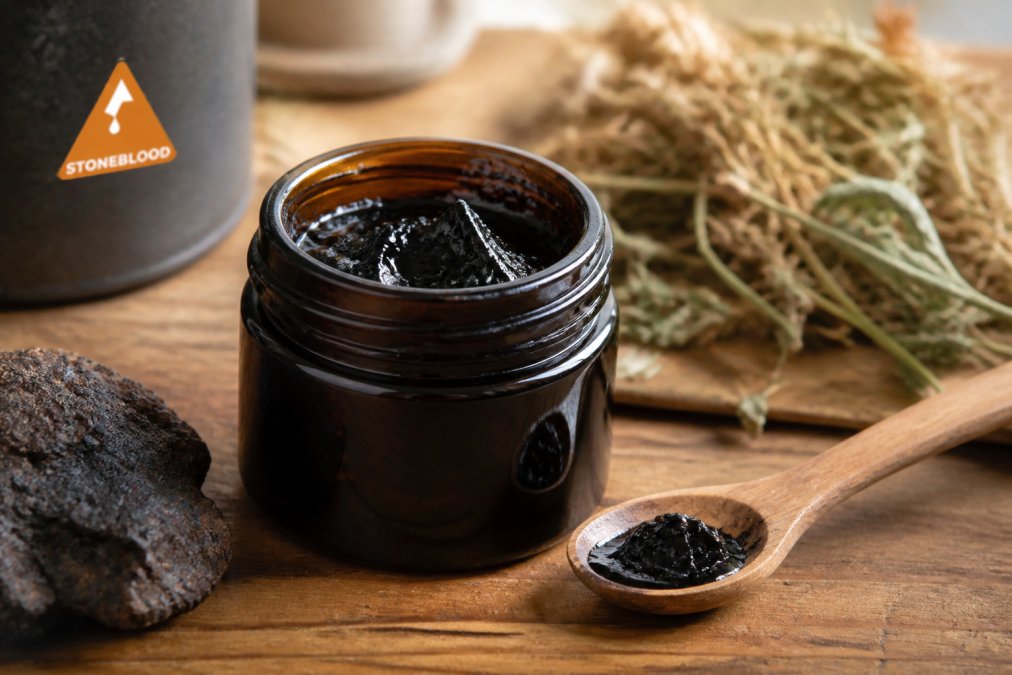
How Fulvic Acid Supports Cellular Energy
Fulvic acid supports cellular energy by improving how your mitochondria handle oxidative stress and by ferrying minerals into cells that would otherwise pass through undigested. Practitioners describe it as a nutrient transport agent rather than a stimulant, which is why it doesn't produce caffeine's jittery crash. Its molecular structure lets it bind minerals and carry them across cell membranes, supporting electrolyte balance and cellular respiration. Fulvic acid doesn't create energy on its own, it removes the friction slowing your existing energy systems.
Recovery and Muscle Repair Support
Recovery depends on reducing systemic inflammation and replenishing minerals lost through sweat and physical stress. Fulvic acid's antioxidant capacity appears to help neutralize free radicals generated during intense exercise, and its trace minerals support the enzymatic reactions involved in tissue repair. Athletes often report that mineral support shortens the soreness window, though results vary. Fulvic acid supports sleep, protein, and hydration, it doesn't replace them.
Fulvic Acid Dosage for Energy: What Works
There is no FDA-established daily value for fulvic acid, so every dose recommendation is extrapolated from traditional use, small human studies, and practitioner experience (the FDA). The right dose depends on your goal, body weight, and form.
Dose Ranges by Goal
| Goal | Typical Daily Range | Form Notes |
|---|---|---|
| General energy and focus | 250-500 mg | Capsules or liquid concentrate |
| Athletic recovery | 500-1,000 mg | Split into two doses |
| Mineral repletion after illness or heavy stress | 500-1,000 mg | Liquid or resin, with food |
| Maintenance after initial loading | 250-500 mg | Any form |
These ranges reflect practitioner reports, not controlled-trial data. A 150-pound person and a 220-pound athlete won't respond identically to the same milligram dose, so start low and titrate up rather than hitting a target on day one.
Form-by-Form Dosing
- Capsules: Often 250-500 mg per capsule. Easy to titrate but often include fillers that dilute the fulvic acid.
- Liquid concentrate: 1-2 mL per serving. Faster absorption, but concentration varies wildly between brands.
- Resin (shilajit): A rice-grain to pea-sized portion, roughly 250-500 mg. Contains fulvic acid plus humic acid and trace minerals, so the effective fulvic acid dose is lower than total resin weight.
- Powder: Usually 500-1,000 mg per scoop. Cost-effective but harder to measure without a scale.
A Recovery-Specific Protocol
For athletes or anyone recovering from burnout, a common pattern is:
- Week 1-2 (loading): 250 mg in the morning on an empty stomach, 20-30 minutes before food.
- Week 3-4 (build): 500 mg split into morning and early afternoon doses.
- Week 5-8 (recovery phase): 500-1,000 mg daily, with the larger dose taken post-training or post-stress window.
- Week 9+ (maintenance): Drop to 250-500 mg daily, or cycle as described in the long-term use section.
Timing for Energy vs. Recovery
Morning dosing aligns with the body's natural cortisol peak and supports daytime energy without interfering with sleep. For recovery, some practitioners recommend a second dose in the early afternoon or after training, when mineral losses are highest. Avoid dosing within three to four hours of bedtime if you're sensitive to stimulation, though fulvic acid is not a stimulant and most people tolerate evening doses fine.

What to Do If You Feel Nothing
If you've been at 500-1,000 mg daily for four weeks with no change, the issue is usually one of three things: the product is underdosed or contaminated, your baseline mineral status is already adequate, or your expectations are misaligned. Fulvic acid supports existing systems, it does not override poor sleep, under-eating, or overtraining.
Fulvic Acid Side Effects and Safety
Fulvic acid side effects are uncommon at standard doses, but the more important safety question is whether your product is clean. Fulvic acid is a chelator, meaning it binds to metals (pubmed.ncbi.nlm.nih.gov). If the raw material is contaminated with lead, arsenic, cadmium, or mercury, the supplement can deliver those toxins into your bloodstream rather than remove them.
Common Side Effects
The most frequently reported issues are mild and transient:
- Stomach upset or nausea, usually within the first hour of dosing
- Loose stools or changes in bowel frequency
- Headache during the first few days as the body adjusts to the mineral load
- Mild fatigue in people who start too high
These typically resolve within a week. If they don't, halve your dose and reassess. Starting low and titrating up avoids them entirely.
Who Should Be Cautious
- People on blood thinners: Fulvic acid can affect mineral absorption and platelet function in theory, though human data is limited. Talk to your physician first.
- People with autoimmune conditions: Fulvic acid may modulate immune pathways. Research is preliminary, and immune stimulation isn't always desirable in autoimmune contexts.
- Pregnant or nursing individuals: Long-term safety data doesn't exist. Avoid unless a physician recommends it.
- People with iron overload or hemochromatosis: Because fulvic acid improves mineral absorption, it could theoretically worsen iron accumulation.
- Anyone on multiple mineral supplements: The chelation effect can cause minerals to compete for absorption. Space high-dose calcium, zinc, and iron at least two hours apart from fulvic acid.
The Real Safety Issue: Purity and Contamination
Fulvic acid and shilajit are mined or extracted from soil, rock, and plant deposits. Those sources can contain heavy metals, microbial contaminants, and pesticide residue depending on where and how they were harvested.
The takeaway is not that fulvic acid is dangerous, it's that unverified products are.
How to Evaluate a Supplement's Purity
Ask these questions before you buy:
- Is there a batch-specific certificate of analysis (COA)? A generic "lab tested" badge means nothing. A real COA lists the testing laboratory, date, batch number, and specific heavy metal results in parts per million.
- Who harvested it, and where? Single-source, traceable supply chains are easier to audit than blends from multiple offshore suppliers.
- Is the facility cGMP-certified? FDA Current Good Manufacturing Practice certification is a baseline, not a guarantee, but it filters out the worst actors.
- Does the COA test for microbials and pesticides, not just heavy metals? Microbial contamination is a real risk in resin and powder forms.
- Is the fulvic acid content standardized? If the label doesn't state a percentage or milligram amount, you can't compare products.
Drug Interactions to Watch
Fulvic acid's chelating and mineral-transport properties mean it can theoretically interact with:
- Antibiotics: Mineral binding may reduce absorption of tetracyclines and fluoroquinolones. Separate by at least two hours.
- Thyroid medications: Iron and calcium interfere with levothyroxine absorption, and fulvic acid may amplify that effect.
- Blood pressure medications: Fulvic acid's electrolyte support could compound diuretics or ACE inhibitors.
- Immunosuppressants: If fulvic acid modulates immune function, it could work against these drugs.
None of these interactions are well-studied in humans, so anyone on prescription medication should clear fulvic acid with their physician or pharmacist first.
Shilajit vs Fulvic Acid: Which One Delivers More
Shilajit vs fulvic acid isn't an either-or question, because shilajit contains fulvic acid. Shilajit is a mineral-rich resin that naturally includes fulvic acid alongside humic acid, dibenzo-alpha-pyrones, and over 80 trace minerals. Isolated fulvic acid supplements give you one compound; shilajit gives you that compound plus its natural matrix.
| Feature | Isolated Fulvic Acid | Shilajit Resin |
|---|---|---|
| Primary compound | Fulvic acid only | Fulvic + humic acid + minerals |
| Trace mineral count | Varies, often 3-10 | 80+ naturally occurring |
| Traditional use history | Limited | Centuries in Ayurvedic practice |
| Absorption support | Fulvic acid alone | Fulvic acid plus mineral cofactors |
| Purity risk | Higher if unverified | Higher if unverified |
For most people chasing fulvic acid benefits for energy, a quality shilajit resin delivers more of what they're after. The trade-off: shilajit is harder to standardize, so sourcing matters more than with a lab-isolated powder.
How to Choose a Quality Fulvic Acid Supplement
Purity testing separates a supplement that works from one that quietly does nothing, or worse. Ask three questions before buying: who harvested it, where, and what does the lab report say.
Stoneblood Shilajit answers all three. Our resin is wildcrafted in the Rocky Mountains of Utah, hand-harvested by the founder, and bottled in a cGMP-certified facility. Every batch is third-party tested for heavy metals and microbials, and the chain of custody runs through one person rather than a network of offshore suppliers.
If you're comparing a resin to a capsule, look for a batch-specific certificate of analysis rather than a generic "lab tested" badge.
Synergistic Nutrient Pairing for Better Results
Because fulvic acid acts as a mineral transporter, pairing it with the right cofactors can meaningfully change how much you absorb.
- Vitamin C: Improves absorption of iron and other minerals fulvic acid carries
- Magnesium glycinate: Complements fulvic acid's electrolyte support for muscle recovery
- B-complex vitamins: Supports the mitochondrial energy pathways fulvic acid feeds
- Healthy fats: Slows transit time, improving mineral uptake in the gut
- Electrolytes: Sodium, potassium, and chloride work with fulvic acid to maintain cellular hydration
Long-Term vs Short-Term Fulvic Acid Use
Short-term fulvic acid use, four to eight weeks, is what most people start with to test tolerance and gauge response. Long-term use, six months or more, is where mineral replenishment and recovery benefits tend to compound, especially for people training hard or dealing with chronic mineral depletion from stress and poor soil quality in modern food.
There's no established upper limit, but long-term clinical data is limited. A reasonable approach is to cycle: eight to twelve weeks on, one to two weeks off, then reassess. This gives your body a reset and lets you notice whether the benefits were real or placebo.
The bigger long-term question is sourcing consistency. A supplement you take for a year needs a supply chain you trust for a year, which is why single-source, traceable products matter more the longer you commit.
Frequently Asked Questions
Does fulvic acid give you noticeable energy?
Many users report a subtle but steady lift in energy after consistent use. Fulvic acid benefits energy by supporting mitochondrial function and nutrient transport, which helps cells produce ATP more efficiently. It is not a stimulant like caffeine, so the effect builds over days rather than minutes. Athletes often notice improved endurance and faster recovery within one to two weeks of daily use.
What is the recommended fulvic acid dosage for energy?
Most practitioners suggest 250 mg to 500 mg of fulvic acid daily for energy support, taken with water on an empty stomach. Some athletes use up to 1,000 mg on training days. Start low to assess tolerance. Fulvic acid dosage for energy depends on body weight, activity level, and the concentration of your supplement. Always follow the product label and consult a healthcare provider if you take medication.
What are the common fulvic acid side effects to watch for?
Fulvic acid side effects are rare when taken at recommended doses. Some people experience mild digestive upset, headaches, or fatigue during the first few days as the body adjusts. These usually fade within a week. High doses may cause nausea or electrolyte imbalance. If you have kidney issues or take blood thinners, talk to your doctor before starting fulvic acid.
What is the difference between shilajit and fulvic acid?
Shilajit is a natural resin that contains fulvic acid along with over 85 trace minerals and humic substances. Fulvic acid is just one component, often sold as an isolated supplement. Shilajit vs fulvic acid is not either-or: shilajit provides fulvic acid in a synergistic matrix that may improve absorption. For energy and recovery, whole shilajit resin often delivers broader benefits than isolated fulvic acid.
How does fulvic acid help with post-workout recovery?
Fulvic acid assists recovery by reducing oxidative stress and inflammation, which are elevated after intense exercise. It also supports electrolyte balance and nutrient delivery to muscle tissue, helping you rehydrate and repair faster. Many athletes take it immediately post-workout for best results.
Can I take fulvic acid every day?
Yes, fulvic acid is generally safe for daily use. Many people take it continuously for months. However, some experts recommend cycling: five days on, two days off, or three weeks on, one week off. This prevents mineral imbalances and keeps your body responsive. Long-term use should be paired with a balanced diet and periodic blood work to monitor electrolyte levels.