
Mountain Blood Shilajit Review: Liquid Drops Compared

Table of Contents
- Mountain Blood Shilajit: What This Review Covers
- What Mountain Blood Shilajit Is and Where It Comes From
- The Stoneblood Lineup at a Glance
- Fulvic Acid Benefits and What the Drops Deliver
- Why Liquid Shilajit Drops Beat Resin for Daily Use
- How to Verify Quality Before You Buy
- Who Each Bottle Is For
- Frequently Asked Questions
Last Updated: October 2, 2026
Mountain Blood Shilajit: What This Review Covers
Mountain blood shilajit is the name many shoppers now use for wildcrafted North American shilajit. This review from Stoneblood Shilajit examines what the phrase describes, where the material comes from, and how the finished liquid compares with raw resin. If your searches for mountain blood shilajit return only imported listings with vague sourcing, the difference comes down to three things: origin, form, and how the batch is tested.
Below, we walk through what the term means, what the Stoneblood lineup includes, and how to check quality before you buy. The short version: the format you choose matters more than most buyers expect.
What Mountain Blood Shilajit Is and Where It Comes From
Mountain blood shilajit is a mineral-rich substance that seeps from rock in high mountain ranges, formed over long periods from compressed plant material and humus. In Ayurveda it is classified as a Rasayana and has a long history of traditional use, often called "tar of the gods" for how it oozes from stone as a thick, dark substance.
The name "mountain blood" comes from that appearance. In practice, the term describes a category, not a single product, and quality varies widely depending on where the material was collected and how it was handled afterward.
Resin in Nature, Liquid in the Bottle
Raw shilajit exists in nature as a resin, the starting point, not the finished product. Stoneblood takes wildcrafted North American shilajit and refines it in distilled Rocky Mountain spring water into a fully water-soluble liquid, which is what you find in the dropper bottle. The resin is the raw material; the drops are the delivery format.
That distinction matters when you shop. A listing that says "resin" describes the raw state; one that says "liquid shilajit drops" describes a refined, water-soluble form. Both can be legitimate, but they behave very differently in daily use.
The Stoneblood Lineup at a Glance
Three options make up the current Stoneblood range, differing mainly in strength and quantity. All three are liquid shilajit drops, wildcrafted in Utah and refined in distilled Rocky Mountain spring water.
- Magic Brown Liquid Shilajit Drops (Double Strength) is the flagship. It is the double-strength version of the liquid, bottled from a cGMP-certified, third-party-tested batch.
- Shilajit Original is the standard-strength liquid, the entry point for anyone trying drops for the first time.
- Shilajit Original 3-Bottle Pack bundles three bottles of the standard liquid for people who already know they want to keep it in rotation.
| Product | Format | Strength | Best For |
|---|---|---|---|
| Magic Brown Liquid Shilajit Drops | Liquid drops, 1 fl oz | Double strength | Experienced users wanting a stronger daily drop |
| Shilajit Original | Liquid drops, 1 fl oz | Standard | First-time buyers testing the format |
| Shilajit Original 3-Bottle Pack | Three 1 fl oz bottles | Standard | Regular users restocking |
If you are unsure where to start, the single bottle of Shilajit Original is the low-commitment way in. If you already know the format works for you, Magic Brown is the one most returning customers reach for.

Fulvic Acid Benefits and What the Drops Deliver
Fulvic acid is the component most often discussed in shilajit, and it is why a properly refined liquid behaves the way it does in a glass. It is a naturally occurring organic acid formed as plant material breaks down over long periods, part of a broader family called humic substances, and the fraction that stays dissolved in water across a wide range of conditions.
That solubility is the whole story. Fulvic acid molecules are small and carry a dense cluster of reactive groups that bind mineral ions and hold them in solution, which is why fulvic acid is often described as a natural carrier.
Why Solubility Is the Test That Matters
Raw shilajit comes out of the rock as a resin, which does not dissolve in cold water. It softens with warmth, sticks to the spoon, and leaves a dark film behind. To get from that raw material to something you can drop into a mug, the resin has to be refined, typically by dissolving it in water, letting insoluble grit and rock fines settle out, then drying or stabilizing what remains.
What the Drops Deliver
Stoneblood takes wildcrafted North American shilajit and refines it in distilled Rocky Mountain spring water into a fully water-soluble liquid. The fulvic acid and minerals arrive already in solution, so the dropper goes straight into water, coffee, tea or food with no warming, scraping or measuring. The label directions are simple: 1 dropper, about 10 to 15 drops, daily, or under the tongue as you acquire the taste.
Shilajit Original — Stoneblood →
A Note on What Fulvic Acid Does and Does Not Mean
Fulvic acid is studied for its role in mineral transport and solubility, and that research is ongoing. Those studies did not use Stoneblood products, and nothing here should be read as a claim about what our drops will do for you. What can be said plainly is structural: fulvic acid is what makes shilajit water-soluble in the first place, and a liquid that stays in solution is easier to work into a daily routine than a sticky resin you have to coax out of a jar.
Why Liquid Shilajit Drops Beat Resin for Daily Use
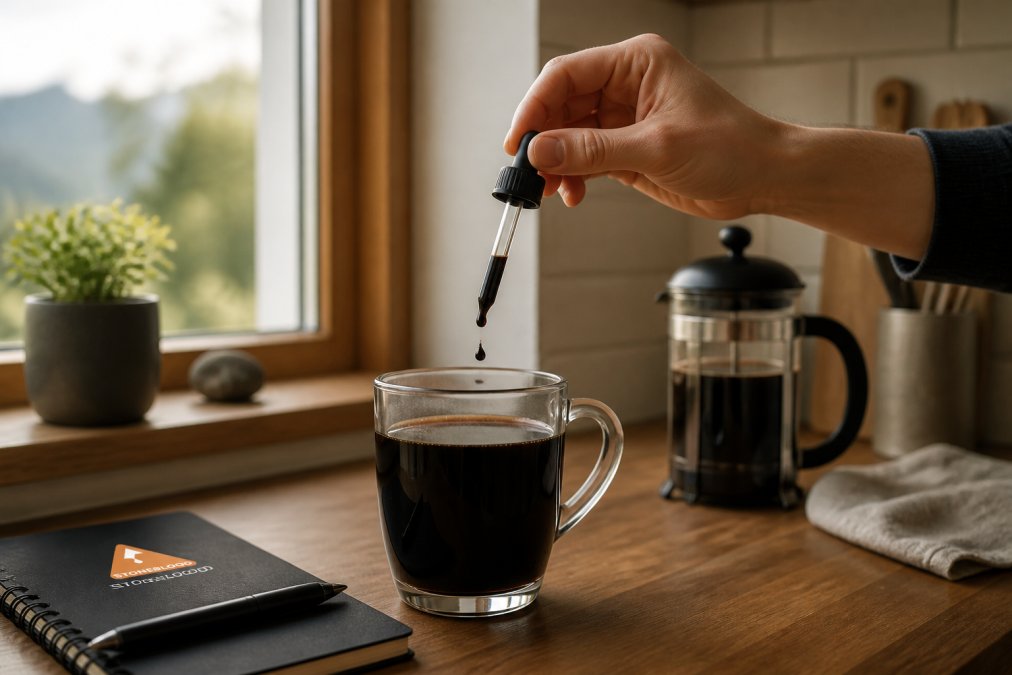
Convenience decides whether a supplement survives past week two, and this is where liquid shilajit drops pull ahead of raw resin. Resin has to be measured, warmed, and coaxed into a drink. Drops go straight from the dropper into whatever you are already drinking.
How to Verify Quality Before You Buy
Most guides tell you to "buy from a reputable source" and stop there, not useful when you are staring at two listings that look identical. Here is a set of checks you can run yourself, before and after you buy.
Before You Buy: The Paper Trail
A serious seller will tell you three things without being asked: where the material was wildcrafted, where it was bottled, and which laboratory tested the batch. Vague language about "ancient mountain traditions" with no facility named is a warning sign, not a marketing flourish.
After You Buy: Three Tests You Can Run at Home
These are simple physical checks. None is a laboratory method or definitive on its own, but together they will flag material that has been stretched, bulked, or never properly refined.
What Stoneblood Publishes
For transparency about how our own batches are handled, Stoneblood publishes its chain of custody and makes batch documentation available on request. Full details are on the quality and safety page. The point of the checks above is not that you should take our word for it, it is that you should be able to ask any seller the same questions and get a straight answer.
Who Each Bottle Is For
Worth noting honestly: liquid drops are not the cheapest way to buy shilajit by unit weight, and anyone shopping purely on price will find cheaper listings. What you are paying for is the refinement step, the domestic sourcing, and the traceability. Whether that trade is worth it depends on how much you care about knowing where your material came from.
Frequently Asked Questions
What is the difference between shilajit resin and liquid drops?
Raw shilajit oozes from rock as a thick, tar-like resin. Resin has to be measured and softened before use, and it carries a strong earthy taste. Liquid shilajit drops are that same material refined in distilled water so it mixes cleanly into any drink. Stoneblood bottles its shilajit as drops, which means you take one dropper daily in water, coffee, tea or food, or under the tongue.
How is North American shilajit harvested?
Shilajit forms over long periods as compressed plant material and humus break down in mountain rock. Stoneblood's raw material is hand-harvested by the founder in the Rocky Mountains of Utah, then refined in distilled Rocky Mountain spring water. Because one person handles the harvest, the chain of custody stays short, which limits the risk of contaminants or unknown additives entering the supply along the way.
What are the benefits of fulvic acid in shilajit?
Fulvic acid is the component in shilajit that helps carry minerals into cells. Shilajit also supplies humic compounds and trace minerals in ionic form. The fulvic acid benefits people ask about most often relate to how well minerals are absorbed, since minerals act as catalysts for vitamin assimilation. Stoneblood describes its fulvic acid as being in a natural form, delivered alongside more than 85 minerals.
How can I incorporate shilajit drops into my daily routine?
The label directions are simple: take 1 dropper, about 10 to 15 drops, once daily. Stir it into water, coffee, tea or food, or hold it under the tongue as you get used to the taste. Many customers treat it as a morning habit alongside their first cup of coffee. Each 1 fl oz bottle is wildcrafted in Utah, so a single bottle covers a steady daily routine.
What should I look for when buying pure shilajit?
Check where it was harvested, who refined it, and whether the batch was tested by an accredited lab. Stoneblood's batches are bottled in a cGMP-certified facility and tested for heavy metals and microbials by an ISO/IEC 17025 accredited laboratory. Every bottle is lot-coded, and you can email the lot number printed on your bottle to request the results for that specific batch.