
Table of Contents
- Why Shilajit for Athletes Fits a Recovery Routine
- How to Use Shilajit Drops in a Daily Training Routine
- Shilajit in Coffee: A Practical Morning Option
- Shilajit Quality and Sourcing: What to Check Before You Buy
- Recovery Methods Compared: Where Shilajit Sits
- Recovery Protocols for Martial Arts and Combat Sports
- Measuring Recovery and Deciding When to Train
- Safety, Realistic Expectations and When to See a Professional
- Frequently Asked Questions
Last Updated: October 20, 2026
Why Shilajit for Athletes Fits a Recovery Routine
Shilajit for athletes is best understood as a traditional mineral supplement that may support everyday energy and recovery, not a shortcut. At Stoneblood Shilajit, we describe it plainly: a natural substance with a long history of use, refined into a form you can actually take daily. Recovery is built from sleep, food, hydration and movement. Shilajit is a small supporting piece, never the foundation.
What Shilajit Is and How It Is Traditionally Used
Shilajit is a mineral-rich substance that seeps from rock in mountain ranges, formed over long periods from compressed plant material and humus. In Ayurveda it is classified as a Rasayana, a category of preparations traditionally used to support vitality and healthy aging. Classical texts describe it as a rejuvenating substance, and it has been used for centuries in that tradition.
Raw shilajit is a thick, tar-like resin. Our product is different: we refine wildcrafted North American shilajit into water-soluble liquid drops, so it mixes cleanly into drinks and food.

Where It Fits Alongside Sleep, Nutrition and Mobility Work
Think of recovery as a hierarchy. Sleep comes first, because it is when the body does most of its repair. Food comes second, since protein, carbohydrates and healthy fats supply the raw material for rebuilding. Hydration and mobility work follow.
Shilajit sits at the edges of that hierarchy. It may support everyday energy, and it is traditionally used for vitality. It does not replace any of the fundamentals.
How to Use Shilajit Drops in a Daily Training Routine
Using shilajit drops is simple: take 1 dropper, about 10 to 15 drops, once daily. Mix it into water, coffee, tea or food, or hold it under the tongue. That is the full instruction on our label, and we do not recommend anything beyond it.
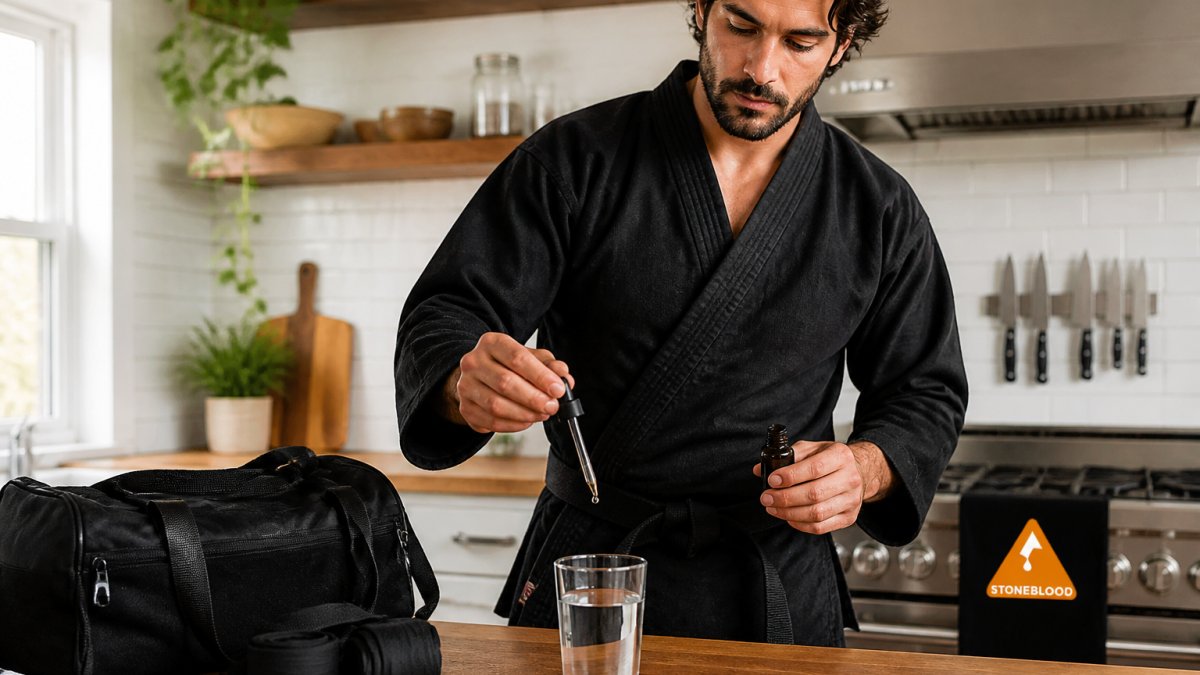
What makes it stick is timing. Attach the dropper to something you already do every day, and the habit forms on its own.
Step by Step: Building the Habit
- Pick a fixed anchor, such as your first glass of water or your morning coffee.
- Keep the bottle where you will see it, not in a cupboard.
- Add 1 dropper to your drink and stir.
- Repeat at the same time for two weeks before judging anything.
- Note how you feel in a short log, so your impressions are not guesswork.
Shilajit in Coffee: A Practical Morning Option
Shilajit in coffee is the most common way our customers take it, and for good reason. Coffee is already a daily ritual, the earthy flavor blends into the roast, and the habit needs no extra step. Add 1 dropper to a hot cup and stir.
One caution: very hot liquid can make the flavor sharper. Let the cup cool for a minute first if you are sensitive to taste. For a caffeine-free option, stir drops into warm water with a little honey, or into tea.
Shilajit Quality and Sourcing: What to Check Before You Buy
Quality is where most shilajit products separate. Before buying, ask four questions: where it was harvested, who refined it, whether it was tested by an independent lab, and whether you can see results for your batch. Rigorous vetting of these supplements ensures your body receives pure fuel, much like how understanding cold plunge benefits helps optimize the physiological stress response during your recovery cycles.
Our shilajit is wildcrafted in North America, hand-harvested by our founder, and refined in Utah. Every batch is bottled in a cGMP-certified facility and third-party tested for heavy metals and microbials. We publish how to request your lot's results, and you can read more on our quality and safety page.
Liquid Drops vs. Raw Resin, Capsules and Powder
Liquid drops win on convenience. Raw resin is the traditional form but is sticky, strong-tasting and awkward to measure.
| Format | Convenience | Taste | Best For |
|---|---|---|---|
| Liquid drops | High, pre-measured | Earthy, mixes well | Daily routines, coffee and water |
| Raw resin | Low, needs measuring | Very strong | Traditional use at home |
| Capsules | High, no taste | None | Travel and on-the-go |
| Powder | Medium, needs mixing | Gritty, variable | Blending into shakes |
For athletes who want one simple step, our Magic Brown double-strength liquid drops are the most direct option. For current options and prices, compare Stoneblood Original and Magic Brown.

Recovery Methods Compared: Where Shilajit Sits
Ranked by impact, sleep and nutrition do the heavy lifting. Active recovery, light movement and mobility work come next. Massage and manual therapy help with muscle tension. Hydration with electrolytes matters after long or hot sessions. Shilajit sits below all of these, as a modest daily support.
Recovery Protocols for Martial Arts and Combat Sports
Combat sports load the body differently from running or lifting. A single session can combine grip-intensive grappling, repeated takedowns, striking volume, and time on the feet in a low stance. The recovery plan should match that mix rather than copy a generic athlete template.
What a Combat Week Actually Demands
Break a typical training week into three load types, because each recovers on a different clock:
Shilajit Original — Stoneblood →
- Neural and impact load, hard sparring, heavy bag rounds, pad work. These stress the nervous system and joints, and they need the longest window before the next hard session.
- Muscular and grip load, clinch work, gi grips, takedown defense, mat time. Forearms, neck, and lower back accumulate fatigue that shows up as a weak grip and slower reactions.
- Skill and technical load, drilling, shadow work, film study. These are low-cost and can sit next to recovery days without adding much fatigue.
A common pattern among experienced coaches is to separate the two heavy load types by at least 48 hours. Sparring Monday and hard grappling Wednesday is usually fine; sparring Monday and hard grappling Tuesday is where people break down.
A Sample Weekly Rhythm
This is a template, not a prescription, adjust to your competition calendar.
| Day | Primary Work | Recovery Focus |
|---|---|---|
| Monday | Hard sparring | Protein and fluids within a couple of hours; protect sleep that night |
| Tuesday | Light technical drilling, mobility | Easy movement, stretching, no heavy lifting |
| Wednesday | Strength work (squats, deadlifts, rows) | Protein at each meal; walk or bike easy in the evening |
| Thursday | Grappling or clinch work | Grip and forearm care; extra fluids |
| Friday | Pad work and conditioning | Mobility and sleep; keep the evening calm |
| Saturday | Sparring or competition | Full recovery focus, food, fluids, rest |
| Sunday | Full rest or a walk | Sleep, food, and a genuine day off |
Around Competition and Weight Management
Competition weeks compress everything. The general approach most combat athletes use is to reduce hard sparring in the final week, keep technical work sharp, and protect sleep above all else. If you are managing weight for a division, work with a coach or a sports dietitian rather than improvising, crash approaches cost more in performance than they return.
Where Shilajit Drops Fit
Shilajit is a small supporting piece in this structure, not a replacement for any of it. Our label directions are 1 dropper (about 10 to 15 drops) daily in water, coffee, tea or food, or under the tongue. Athletes who already have a morning ritual often stir it into their first drink. If you want the most direct option, our Magic Brown double-strength liquid drops are the flagship; the Original liquid drops suit a gentler start.
Measuring Recovery and Deciding When to Train
You need a simple gauge, not a lab. Track resting heart rate each morning, how sore you feel on a 1 to 5 scale, and sleep quality. Two or three days of rising soreness with poor sleep is a signal to back off. One rough morning is not.
A useful rule: if a warm-up does not make you feel better, treat the session as a light one. That single check prevents most overtraining mistakes.
Safety, Realistic Expectations and When to See a Professional
Give it weeks, not days. Many people notice subtle changes in everyday energy first, and traditional use frames shilajit as a long-term support rather than a quick lift.
If you are pregnant, nursing, taking medication or managing a health condition, talk to a healthcare professional before starting. Stop if anything feels off, and see a doctor for persistent pain, swelling or fatigue that does not resolve with rest.
Recovery rewards patience, and the athletes who improve fastest are usually the ones who protect sleep and food first. Stoneblood Shilajit gives you a simple daily piece to add alongside them: wildcrafted liquid drops, third-party tested, and easy to stir into coffee or water. Start with Magic Brown and build the habit one dropper at a time.
These statements have not been evaluated by the Food and Drug Administration. This product is not intended to diagnose, treat, cure, or prevent any disease. Consult a healthcare professional before starting any supplement, especially if you are pregnant, nursing, taking medication or managing a health condition.
Frequently Asked Questions
What is shilajit, and how is it traditionally used?
Shilajit is a tar-like resin that seeps from mountain rock, formed over long periods from compressed plant material and humus. In Ayurveda it is classified as a Rasayana and has a long history of traditional use. Stoneblood takes that raw resin and refines it in distilled Rocky Mountain spring water into water-soluble liquid drops, so you get shilajit in a form that mixes cleanly into drinks. It is traditionally used for everyday energy and vitality, and it supplies fulvic acid along with a broad spread of trace minerals.
How do shilajit drops fit into an athlete's daily routine?
Keep it simple and consistent. Follow the label: 1 dropper (about 10 to 15 drops) daily in water, coffee, tea or food, or under the tongue. Many athletes take it in the morning with their first drink so it becomes part of the pre-training ritual rather than another task to remember later. Pair it with the recovery basics that do the heavy lifting: sleep, protein and carbohydrates after training, hydration with electrolytes, and light movement on rest days. Shilajit for athletes is a supplement, not a replacement for those habits.
How do liquid shilajit drops compare with raw shilajit resin?
Raw resin is thick, sticky and hard to measure, and it needs to be dissolved before use. Liquid drops are already refined into a water-soluble form, so a dropper goes straight into water, coffee or a smoothie with no mess and no guessing. That convenience matters if you want to take it consistently on training days. Stoneblood's drops are bottled from cGMP-certified, third-party-tested batches, and each bottle carries a lot number so you can request the Certificate of Analysis for your batch.
Can shilajit be mixed into water, coffee, or tea?
Yes. The label directions list water, coffee, tea and food, or taking it under the tongue. Coffee is a popular choice because the earthy flavor blends into a dark roast and the habit is already established. Stir it in rather than letting it sit, and avoid adding it to a drink so hot it scalds the tongue. If you use a travel mug, add the dropper after pouring so you can see it disperse. Read more on shilajit in coffee above.
What should athletes look for when choosing shilajit?
Start with sourcing and testing. Ask where the raw material comes from, who bottles it, and whether every batch is third-party tested for heavy metals and microbials. Lot codes matter: a brand that prints a lot number and will share the Certificate of Analysis for your bottle is showing its work. Stoneblood is wildcrafted in Utah and refined there, bottled in a cGMP-certified facility, and tested by an ISO/IEC 17025 accredited lab. Full results are at stonebloodshilajit.com/pages/quality-safety.
Share:
Improved Focus and Creativity for Sports Nutrition
5 Reasons to Choose North American Sourced Supplements