Table of Contents
- Why North American Sourced Supplements Are Worth a Closer Look
- Reason 1: Shorter Supply Chains Mean Fewer Hands on the Product
- Reason 2: How to Verify Sourcing Claims Instead of Trusting Them
- Reason 3: Supplement Quality Testing You Can Actually Check
- Reason 4: How to Read Supplement Labels Without Getting Fooled
- Reason 5: How to Choose Quality Supplements in a Crowded Market
- Where Liquid Shilajit Drops Fit Into a North American Sourcing Standard
- Frequently Asked Questions
Last Updated: October 21, 2026
Why North American Sourced Supplements Are Worth a Closer Look
North American sourced supplements are dietary supplements made from ingredients grown, harvested or refined within the United States, Canada or Mexico, with manufacturing that stays inside that same region.
The category is enormous. Vitamins, minerals and herbal products line every shelf and marketplace page, and most labels say roughly the same things about purity and potency.
Below, we walk through the five reasons that hold up under scrutiny, plus the verification steps that separate a real sourcing story from a marketing line.
Reason 1: Shorter Supply Chains Mean Fewer Hands on the Product
Every hand a raw material passes through is a chance for substitution, dilution or contamination. A shorter chain narrows that window.
A supplement made with imported raw materials can pass through a foreign harvester, a consolidator, an exporter, an importer, a distributor and a contract manufacturer before bottling.
Domestic sourcing does not remove that risk, but it reduces the number of parties between the field and the bottle.
Reason 2: How to Verify Sourcing Claims Instead of Trusting Them
Verification is the step most buyers skip. A sourcing claim is only as good as the documentation behind it, and the phrase "North American sourced" is one of the loosest in the supplement aisle. Before you can check a claim, you have to know what kind of claim it is.
What "North American sourced" can actually mean
The phrase gets used for at least four different things, and brands rarely say which one they mean:
- Raw material origin. The plant, mineral or resin was grown, wildcrafted or extracted in the United States, Canada or Mexico.
- Refining or processing location. The raw material may be imported, but it is cleaned, concentrated or refined domestically.
- Manufacturing location. The finished product was blended, filled and bottled in the region.
A brand can truthfully claim "North American sourced" while meeting only the last definition. That is why the useful question is not "is it North American?" but "which part of the chain is North American, and can you show me?"
Ingredient origin and manufacturing location are two different facts
"Made in the USA" is a manufacturing statement. Under FTC rules, a product labeled "Made in the USA" must be all or virtually all made in the United States, but that standard applies to the finished good, it does not by itself tell you where a raw botanical was harvested.
Read the label for both facts separately: a raw-material origin statement and a manufacturing statement. If only one appears, ask the brand for the other in writing.
A practical verification checklist
Work through these in order. Each one is something a brand can answer without revealing trade secrets:
- Lot code on the bottle. A traceable product carries a lot number and a best-by date. That code should map to a specific batch record, not a generic product page.
- Certificate of Analysis for your lot. A COA is a lab report listing what was tested and the results. Ask for the one matching your lot code, not a sample from a different run.
- Supplier documentation. For a botanical or resin, ask whether the brand can describe the supplier relationship, direct harvest, named cooperative, or open-market broker. You do not need the supplier's name; you need to know which category it falls into.
- A named manufacturing facility. "Bottled in a cGMP facility" is a start; a facility name or registration is better.
- Consistency between label and website. If the label says one origin and the product page says another, that mismatch is the answer.
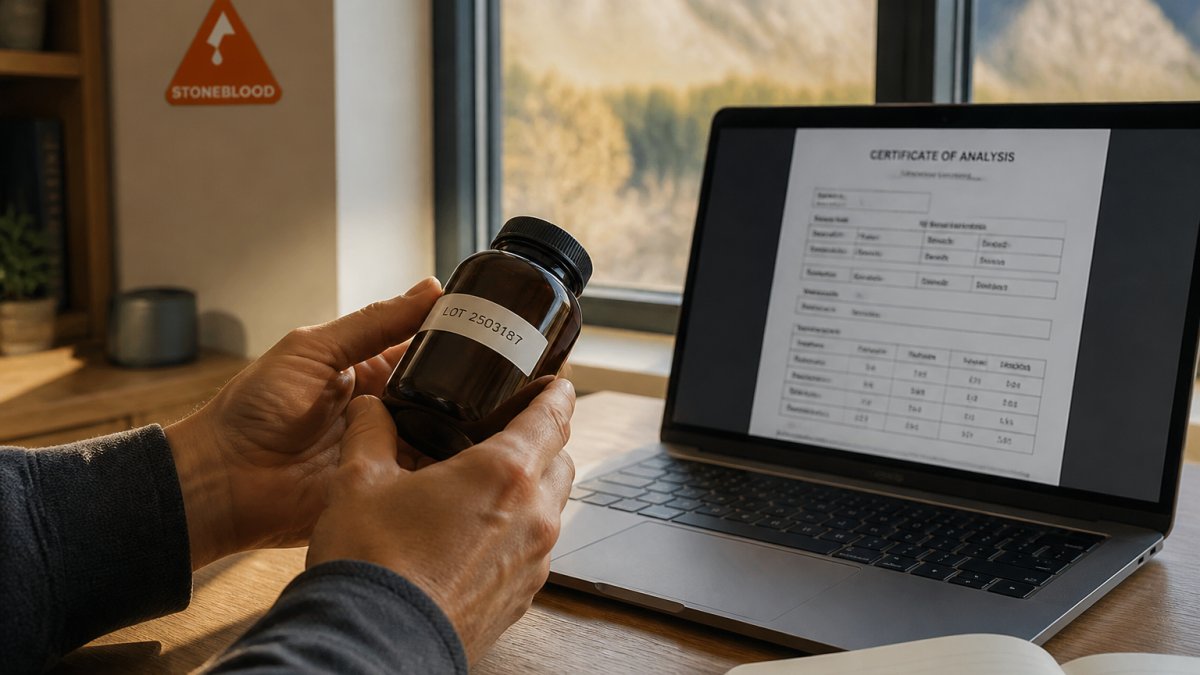
The FDA's dietary supplement guidance explains that firms are responsible for the identity and purity of their ingredients, which is why documentation matters more than a label badge. The FTC's Made in the USA standard is the reference point for what a domestic-origin marketing claim is allowed to mean.
A balanced note on geography
None of this means a North American supply chain is automatically safer. Testing, supplier qualification and manufacturing controls matter regardless of where a material originates, and a well-documented import can outperform a poorly documented domestic batch. Origin is a starting signal. Documentation is the proof.
Reason 3: Supplement Quality Testing You Can Actually Check
Supplement quality testing is the practice of sending finished batches to a laboratory to confirm identity, potency and freedom from contaminants. The useful question is not whether a brand tests, but whether you can see results for your batch.
Look for testing on three fronts:
| Check | What It Confirms | What to Ask For |
|---|---|---|
| Identity and potency | The material is what the label says | Assay results on the COA |
| Heavy metals | Arsenic, lead, cadmium, mercury levels | Method used and reported values |
| Microbial screening | Salmonella, E. coli, yeast and mold | Pass or fail per organism |
An independent lab with accreditation under ISO/IEC 17025 is the standard to look for, since that accreditation covers the lab's testing competence. We publish our testing pathway on our quality and safety page rather than restating numbers here.
Reason 4: How to Read Supplement Labels Without Getting Fooled
Learning how to read supplement labels is the cheapest quality filter available. The Supplement Facts panel is regulated, and the ingredient list has to account for what is inside, but the panel has real limits, and knowing them is what separates a careful buyer from a hopeful one.
For current options and prices, compare Stoneblood Original and Magic Brown.
Work through the label in this order
- Serving size. Confirm what one serving actually is, then check how many servings the container holds. A large bottle with a tiny serving size can be less product than it looks.
- Ingredient names. Look for the plant or mineral name, not a proprietary blend that hides individual amounts. A blend can list its total weight while disclosing nothing about how much of each ingredient is inside.
- "Other ingredients." These are binders, fillers, flavors and preservatives. Shorter is usually cleaner, and the list must appear in descending order by weight.
- Origin language. "Made in the USA" refers to manufacturing, not ingredients. Look for a separate statement about where raw materials come from, and treat a vague phrase like "globally sourced" as a signal to ask questions.
- Structure/function language. Words like "supports" and "helps maintain" are the standard vocabulary for supplements. A label that promises to cure or treat a condition has crossed a line the FDA does not allow.
What the panel does not tell you
The Supplement Facts panel is required to disclose serving size, ingredients and amounts per serving. It is not required to disclose the origin of each ingredient, the supplier, the testing lab, or the batch history.
That is the gap a careful buyer has to close manually. A label can be fully compliant and still tell you almost nothing about where the raw material came from.
A worked example
Imagine two bottles of the same herbal product. Bottle A says "Made in the USA" and lists a proprietary blend. Bottle B says "Wildcrafted in [region], refined in [region]" and lists each ingredient with its amount.
The FDA's labeling requirements for dietary supplements set out what must appear on that panel. If a label is vague about amounts or origin, that vagueness is a choice.
How this connects to origin claims
Origin language on a label is marketing until it is backed by a document. The label tells you what the brand chose to say; the COA and lot record tell you what is actually true. Read the label first, then verify the parts that matter to you.
Reason 5: How to Choose Quality Supplements in a Crowded Market
Choosing quality supplements comes down to a short list of questions you can ask any brand. Most fail on the first two.
Use this checklist before you buy:
- Does the label name the ingredient source and the manufacturing location separately?
- Is there a lot number on the bottle?
- Will the brand share a COA for your specific lot?
A brand that answers all five is worth a closer look. A brand that deflects on lot numbers or lab reports is telling you something useful.
Where Liquid Shilajit Drops Fit Into a North American Sourcing Standard
Shilajit is a useful test case because sourcing is central to it. In Ayurveda, shilajit is a resin that seeps from mountain rock, traditionally used as a Rasayana.
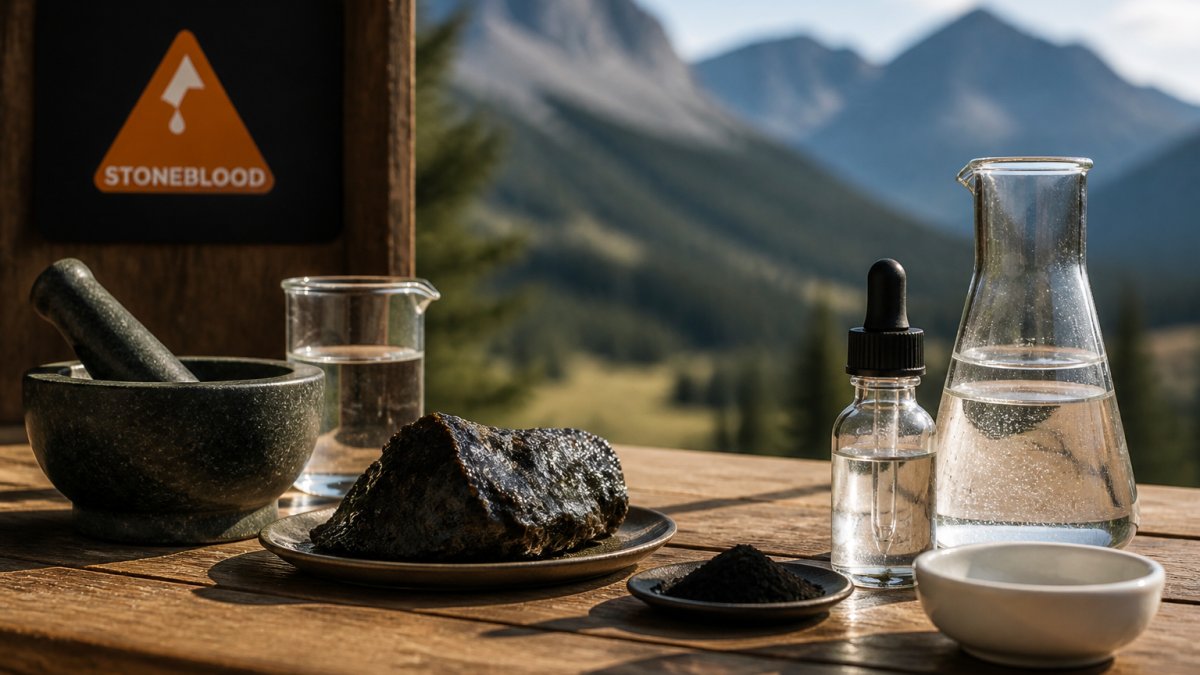
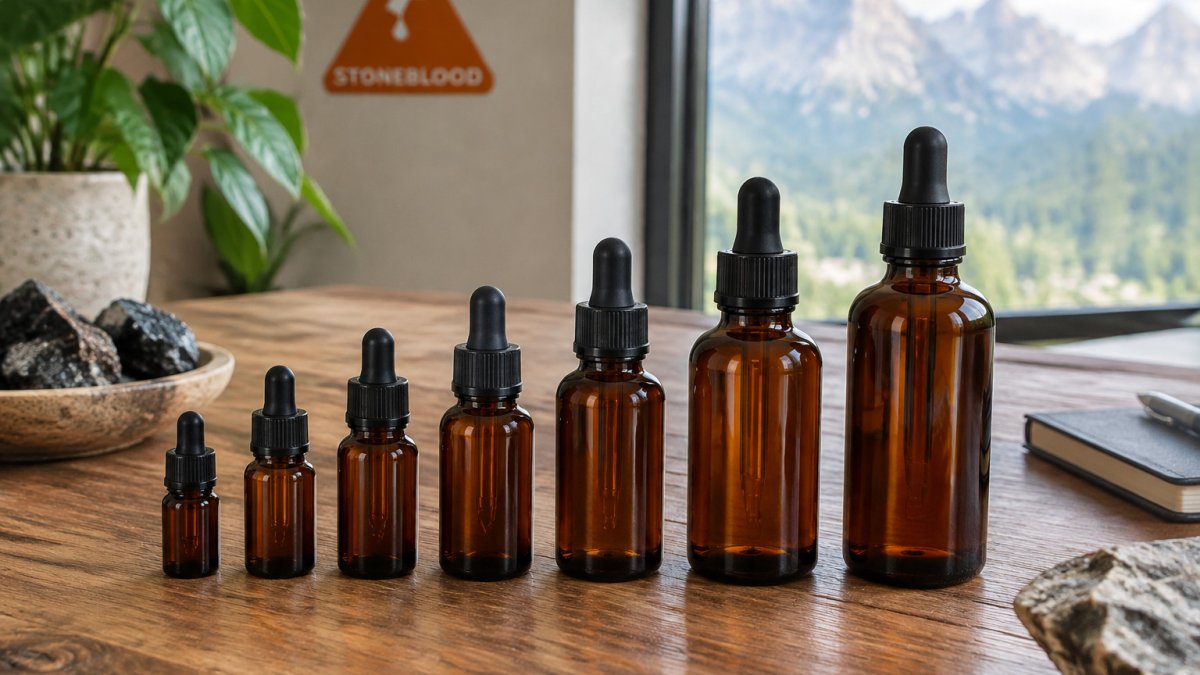
Our approach keeps the whole chain close. Stoneblood is wildcrafted in the Rocky Mountains and refined in Utah into water-soluble liquid shilajit drops, which mix cleanly into water, coffee or tea. Magic Brown Liquid Shilajit Drops (Double Strength) is the flagship, and Shilajit Original Liquid Drops is the standard-strength option. For current options and prices, compare Stoneblood Original and Magic Brown.


Label directions are simple: 1 dropper, about 10 to 15 drops, daily in water, coffee, tea or food, or under the tongue.
The supplement aisle rewards brands that make big claims and punishes buyers who do not check. Start with Magic Brown liquid shilajit drops and see what a short, documented chain tastes like.
These statements have not been evaluated by the Food and Drug Administration. This product is not intended to diagnose, treat, cure, or prevent any disease.
Frequently Asked Questions
What does North American sourced mean for supplements?
It means the raw materials were harvested or produced in North America rather than imported, though the term is used loosely. A label can say sourced in North America while the ingredient was grown elsewhere and only processed here. Ask the brand where the raw material was actually harvested, not just where the bottle was filled. Stoneblood, for example, wildcrafts its shilajit in Utah and refines it in distilled Rocky Mountain spring water, so the origin and the processing location are the same.
How can I verify where a supplement's ingredients come from?
Start with the label and the brand's website: look for a named harvest region, a lot number, and a certificate of analysis you can request. Then email the company and ask two specific questions: where was the raw material harvested, and which laboratory tested the finished batch. A brand with real traceability answers both without hesitation. Stoneblood prints a lot number and best-by date on every bottle and shares the per-lot results by email.
Does a supplement's source affect its quality?
Origin alone does not determine quality. What matters is what happens after harvest: how the raw material is handled, whether it is tested for heavy metals and microbials, and whether manufacturing follows current good manufacturing practices. A North American source can still produce a poor product if testing is skipped, and an imported ingredient can be excellent if controls are strict. Treat sourcing as one signal among several, and weigh it alongside third-party testing and label transparency.
What should I look for on a supplement label?
Check the Supplement Facts panel for ingredient identity and amount per serving, the serving size, and whether a proprietary blend hides individual quantities. Look for a lot number and best-by date, a manufacturer name and address, and any testing claims with a named laboratory. Vague phrases like lab tested mean little without a lab name. A label that tells you who made it, when, and from what is doing the work that consumer protection rules cannot do for you.
How do liquid shilajit drops compare with other supplement forms for convenience?
Liquid drops mix into water, coffee, tea or food and need no measuring or swallowing of large tablets. Stoneblood's liquid shilajit is refined into a water-soluble form, so it disperses cleanly rather than leaving grit. The label directions are 1 dropper (about 10 to 15 drops) daily, which makes a 1 fl oz (30 ml) bottle easy to plan around. Convenience matters most when it helps you take the product consistently.

Share:
Shilajit for Athletes: Recovery and Performance
What Is Fulvic Acid Mineral? A Clear Guide