
Last Updated: October 27, 2026
Quick Summary
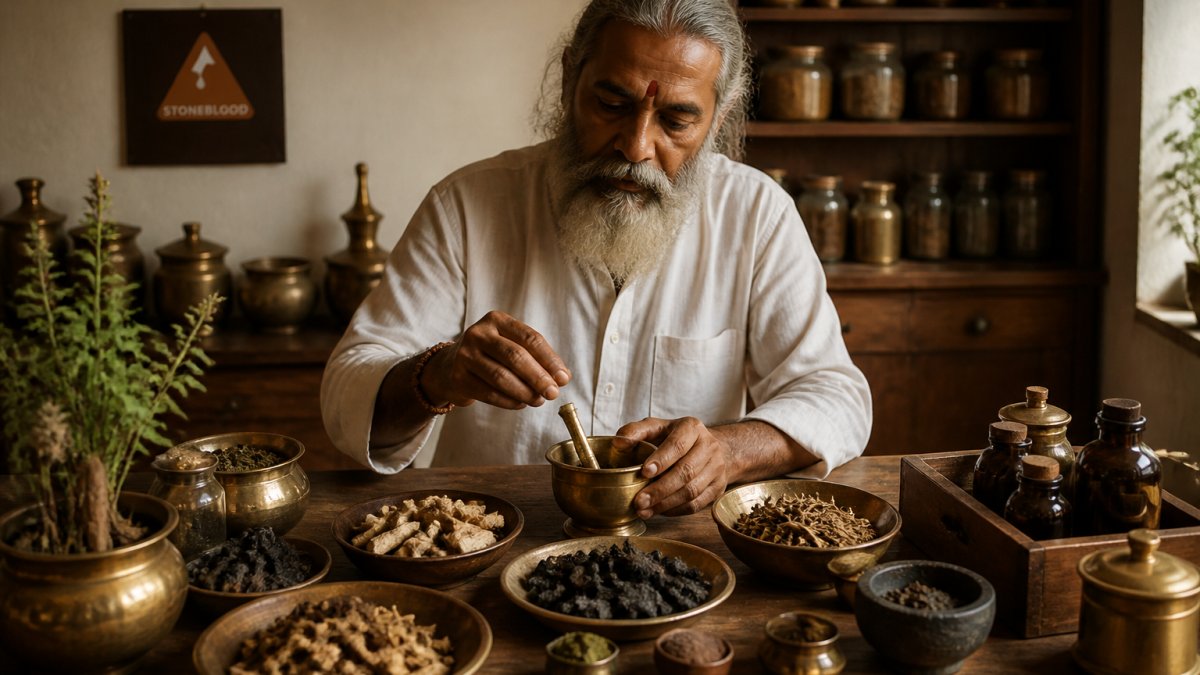
The ayurvedic tradition of shilajit use centers on shilajatu, a mineral-rich exudate that seeps from rock in high mountains and hardens into resin. Classical texts including the Charaka Samhita, Sushruta Samhita and Ashtanga Hridaya place it among rasayana, or rejuvenation, substances, prepared through repeated soaking, straining and sun-drying.
- Classical sources categorize shilajatu by where it exudes and by color and luster as quality signs.
- The Surya Taphi method used sunlight and heat to soften and separate the raw resin.
- Traditional purification ran a soak, strain and sun-dry cycle repeatedly until the liquid ran clear.
- Anupana, the vehicle a substance is taken with, was matched to constitution in classical practice.
- Our label directions are one dropper, about 10 to 15 drops, daily in water, coffee, tea or food.
Table of Contents
- What Shilajit Is in Ayurveda and Where It Comes From
- Traditional Uses of Shilajit in Ayurvedic Practice
- How Shilajit Was Traditionally Prepared and Purified
- Shilajit Resin vs Liquid Shilajit: What Changed and What Stayed
- How to Identify Pure Shilajit in the Spirit of Ayurvedic Standards
- What Modern Research Says and Where the Evidence Stands
- Bringing Shilajit Into a Daily Wellness Ritual
- Frequently Asked Questions
What Shilajit Is in Ayurveda and Where It Comes From
The Ayurvedic tradition of shilajit use begins with a substance that oozes from rock under extreme mountain heat. In classical Ayurvedic medicine, shilajit is described as a mineral-rich exudate that seeps from stone in high-altitude ranges during warm months, then hardens into a dark resin as temperatures drop. Stoneblood Shilajit offers wildcrafted North American shilajit refined into water-soluble liquid drops.
Classical texts call it Shilajatu, a Sanskrit compound often translated as "conqueror of mountains" or "destroyer of weakness." The name reflects both its origin and its reputation in the tradition.
What the Classical Texts Actually Say
Most modern guides repeat the same two or three tradition claims without naming a source. The primary references are worth knowing, because they show how old and how specific the tradition is.
- Charaka Samhita, the foundational compendium of Ayurvedic internal medicine, compiled and redacted over roughly the first centuries CE. Shilajatu appears in its discussions of rasayana (rejuvenation) therapy and of substances used to support strength and steadiness over long periods.
- Sushruta Samhita, the classical surgical and medical compendium attributed to Sushruta. It discusses shilajatu among mineral-origin substances and describes varieties by source and appearance.
- Ashtanga Hridaya, a later, condensed synthesis by Vagbhata that organizes earlier material into a practical clinical format and repeats shilajatu's place among rasayana substances.
- Rasa shastra literature, the branch of Ayurveda concerned with mineral and metallic preparations, which treats shilajatu as a purified mineral exudate rather than a plant.
A useful distinction: these texts describe shilajatu in the language of their own system, qualities, tastes, and effects on the body's tissues, not in the language of modern chemistry. When a modern article says shilajit "contains fulvic acid," that is a laboratory finding layered onto an older description, not something the classical authors wrote. Keeping those two registers separate is the honest way to read the tradition.
The Mountain Origin Story: Shilajatu and the Conqueror of Mountains
Ayurvedic literature ties Shilajatu to high peaks and the slow compression of plant material over geological time. Classical sources also categorize shilajatu by where it exudes, rock, earth, and other substrates, and by color and luster, treating those physical signs as indicators of quality. That story of shilajit as the resin of life carries the tradition forward into how it is understood today.
Rasayana: The Path of Essence
Rasayana is a Sanskrit term meaning "path of essence," and it names a whole category of Ayurvedic practice. Shilajit sits inside that category. In the classical framing, rasayana therapy was paired with diet, routine, and conduct. For readers who want the plain definition first, what shilajit is covers the basics before the Ayurvedic story gets deeper.
Traditional Uses of Shilajit in Ayurvedic Practice
Traditional uses of shilajit in Ayurveda are part of its historical context.
Energy, Stamina and Everyday Vitality
Classical practitioners associated Shilajatu with strength and endurance, particularly for people whose work demanded physical output. The framing was cumulative. Our own label directions are one dropper daily.
Rejuvenation and Healthy Aging in the Classical Texts
Ayurvedic texts place shilajit among rasayana substances. The tradition linked it to vitality in later life rather than to any single outcome. Modern marketing often flattens this into a headline claim. The classical framing is quieter and more patient.
How Shilajit Was Traditionally Prepared and Purified
Traditional preparation of shilajit was slow, physical work. Classical sources describe purification as part of traditional preparation.
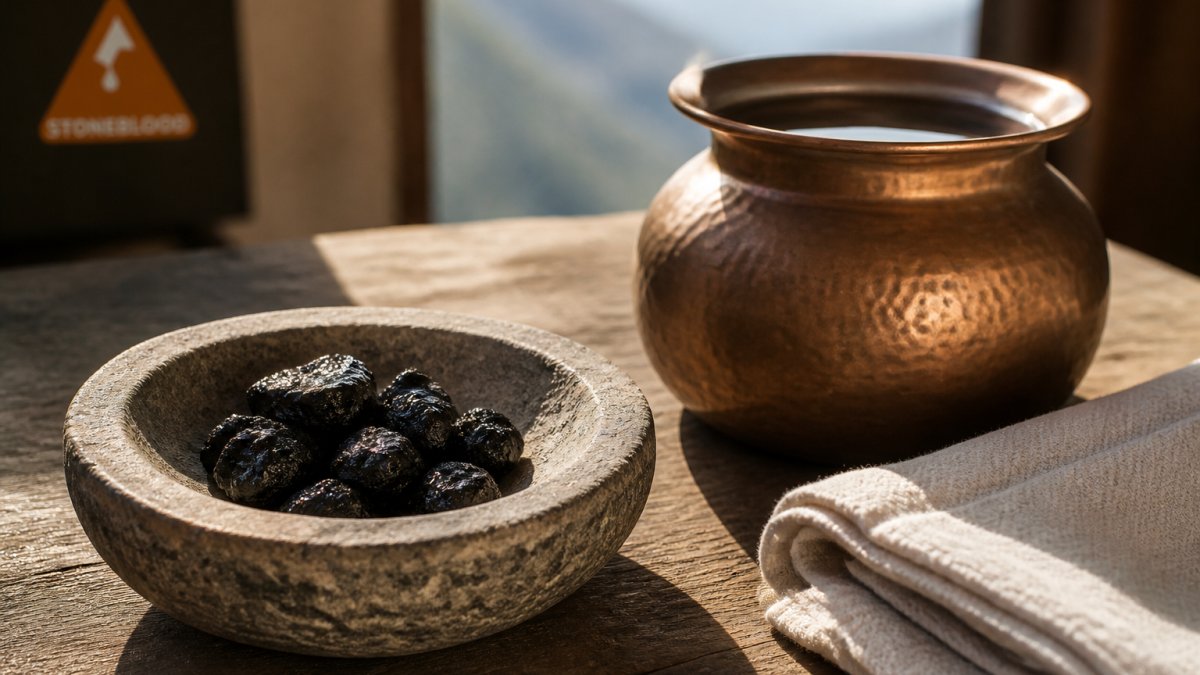
Sunlight, Decoctions and the Surya Taphi Method
The Surya Taphi method used sunlight and heat to soften and separate the resin. The general sequence in traditional practice ran like this:
- Soak, the raw resin was placed in water, often in a shallow vessel, and left to soften.
- Strain, the mixture was poured through cloth to catch grit, rock, and plant matter.
- Sun-dry, the filtered liquid was set out in sunlight (surya taphi refers to the sun-heated approach) to evaporate and concentrate.
- Repeat, the soak-strain-dry cycle was run multiple times until the liquid ran clear and the residue was minimal.
Traditional Purification vs. Modern Quality Control
Traditional purification and modern quality control address different questions.
Modern quality control answers different questions:
Stoneblood refines wildcrafted North American shilajit into water-soluble liquid drops. Buyers can find quality and safety information at /pages/quality-safety.
Shilajit Original — Stoneblood →
Dosha, Constitution and Anupana: The Vehicle Matters
Anupana is the Ayurvedic term for the vehicle a substance is taken with, and the tradition treated that choice as part of the preparation. Different constitutions, or doshas, were matched with different carriers. The substance was not considered in isolation from how it was taken.
A careful note on this point: the classical texts discuss anupana in the context of individualized practice guided by a practitioner, not as a one-size-fits-all rule. Modern readers should treat the concept as historical context rather than a personal protocol. Our label directions are one dropper (about 10 to 15 drops) daily in water, coffee, tea, or food, or under the tongue.
Shilajit Resin vs Liquid Shilajit: What Changed and What Stayed
Shilajit resin vs liquid shilajit comes down to form, not tradition. Raw shilajit is a resin in nature. Stoneblood's liquid shilajit drops are refined into a water-soluble liquid. The classical purification logic survives the format change.
| Form | Preparation | Taste | Daily Use |
|---|---|---|---|
| Raw resin | Softened and strained by hand | Strong, bitter, earthy | Measure and dissolve manually |
| Liquid drops | Refined in distilled spring water | Earthy, mixes into drinks | One dropper, ready to use |
| Capsules | Dried and encapsulated | None | Swallow with water |
Our Magic Brown Liquid Shilajit Drops (Double Strength) are refined in distilled Rocky Mountain spring water, and Shilajit Original Liquid Drops are also available as liquid drops.


How to Identify Pure Shilajit in the Spirit of Ayurvedic Standards
Purity in the Ayurvedic tradition meant a clean separation of resin from rock and debris. Readers who want practical checks can learn how to identify high quality shilajit resin. Today, buyers can review quality and safety information at /pages/quality-safety.
Reading a Certificate of Analysis and Asking the Right Questions
A certificate of analysis is a lab report tied to a specific batch. Buyers can find Stoneblood's quality and safety information at /pages/quality-safety.
What Modern Research Says and Where the Evidence Stands
None of that research used Stoneblood products, and the results do not transfer to our drops or to any other brand.
Bringing Shilajit Into a Daily Wellness Ritual
The label directions are one dropper, about 10 to 15 drops, daily in water, coffee, tea, or food, or under the tongue. How to take Stoneblood covers the practical details.
Stoneblood Shilajit offers wildcrafted North American shilajit refined in distilled Rocky Mountain spring water into water-soluble drops. Magic Brown is double-strength liquid shilajit, and Shilajit Original is also available as liquid drops. See the label directions for use.
These statements have not been evaluated by the Food and Drug Administration. This product is not intended to diagnose, treat, cure, or prevent any disease. Consult a healthcare professional before starting any supplement, especially if you are pregnant, nursing, taking medication or managing a health condition.
Frequently Asked Questions
What is shilajit in Ayurveda and how was it traditionally used?
In Ayurveda, shilajit is described as a rasayana. Classical texts refer to it as Shilajatu, or conqueror of mountains, because it oozes from high-altitude rock. Traditional accounts describe its place in Ayurvedic practice.
Is shilajit warming or cooling in Ayurvedic tradition?
Ayurvedic sources describe shilajit within the tradition's own framework. Anupana is the Ayurvedic term for a vehicle taken with a substance.
How do you identify pure shilajit?
Stoneblood's Shilajit Original 3-Bottle Pack listing describes third-party testing for heavy metals and microbials, a cGMP-certified bottling facility, and lot-coded bottles. Buyers can request the certificate of analysis for their batch by emailing stonebloodshilajit@gmail.com.
How does modern liquid shilajit compare to traditional shilajit preparations?
Stoneblood's liquid shilajit drops are refined in distilled Rocky Mountain spring water. The Shilajit Original 3-Bottle Pack listing describes third-party testing, lot-coded bottles, and a cGMP-certified bottling facility.
Can shilajit be part of a daily wellness ritual based on Ayurvedic principles?
The label directions are one dropper (about 10 to 15 drops) daily in water, coffee, tea, or food, or under the tongue.
What is the best way to take liquid shilajit drops in a modern routine?
Follow the label: one dropper, about 10 to 15 drops, daily in water, coffee, tea, or food, or under the tongue.


Share:
How to Use Shilajit for Daily Energy Support
Is Vitamin D3 Good for Muscle Force Recovery?