
Table of Contents
- Benefits of Shilajit for Ladies: A Grounded Look at the Tradition
- What Is Shilajit, and Where Does It Come From?
- Why Everyday Energy and Focus Come Up First for Women
- Shilajit Quality and Purity: What to Check Before You Buy
- How to Use Liquid Shilajit in a Daily Routine
- Shilajit in Coffee: A Simple Morning Pairing
- What Shilajit Is Not: Setting Realistic Expectations
- Conclusion
- Frequently Asked Questions
Last Updated: October 8, 2026
Benefits of Shilajit for Ladies: A Grounded Look at the Tradition
Shilajit is a mineral-rich substance traditionally used in Ayurveda, and women tend to notice everyday energy and focus first. At Stoneblood Shilajit, we wildcraft and refine North American shilajit into liquid drops, and we hear the same question from women again and again. Does this actually fit into a real daily routine, or is it just another supplement trend?
This guide answers that plainly. We will cover what shilajit is, why energy and mental clarity come up first, how to judge quality before you buy, and how to use liquid shilajit without overcomplicating your morning.

What Is Shilajit, and Where Does It Come From?
Shilajit is a mineral-rich resin that seeps from rock in high mountain ranges, formed over long periods from compressed plant material and humus. In Ayurvedic tradition it is classified as a Rasayana, a category of substance traditionally associated with vitality and healthy aging.
Raw shilajit is a thick, tar-like resin. That texture is why so many people struggle with it. Traditional resin is sticky, strong-tasting, and awkward to measure, especially on a busy morning.
A Rasayana in Ayurvedic Tradition
The word Rasayana translates roughly as "path of essence," and in early Ayurvedic writing it referred to the study of lengthening lifespan. Shilajit was often called the "Destroyer of Weakness" or "Conqueror of Mountains" for its rejuvenating reputation.
That is tradition, not a modern medical claim. It is worth knowing because it explains why shilajit is discussed alongside energy and resilience.
National Center for Complementary and Integrative Health overview of Ayurvedic medicine
Why Everyday Energy and Focus Come Up First for Women
Ask women who take shilajit what changed, and the answer is rarely dramatic. It is usually smaller and more practical: steadier attention through a long workday, and a morning routine that does not depend entirely on a second cup of coffee.
Shilajit contains fulvic acid and a broad range of trace minerals. Fulvic acid is the component most often discussed because it helps move minerals into cells, where the body can use them. That mechanism is why shilajit is usually framed as a mineral-delivery substance rather than a stimulant.
Here is the honest framing: shilajit may support everyday energy and focus. It is not a jolt, and it is not a replacement for sleep, food, or movement. Women who get the most from it tend to be the ones who already have a routine and simply want to support it.
Shilajit Quality and Purity: What to Check Before You Buy
Quality is where most shilajit purchases go wrong. The market is full of products labeled "pure" and "Himalayan" with no traceable supply chain behind the label, and a jar of dark paste tells you nothing about what is actually inside it.
A few checks separate a serious product from a gamble:
- Sourcing. Can the seller tell you exactly where the raw material came from? Vague regional claims are a warning sign.
- Testing. Look for third-party testing for heavy metals and microbials, not just a purity claim printed on the label.
- Facility standards. Bottling in a certified facility means someone external has inspected the process.
- Traceability. Lot numbers and best-by dates let you request the results for your specific batch.
- Format. Resin, drops, and dry formats behave very differently in daily use.
We publish our own testing and facility details on our quality and safety page.
Liquid Drops, Resin, and Other Formats
| Format | Ease of Use | Taste | Best For |
|---|---|---|---|
| Liquid drops | High, measured by dropper | Earthy, mixes into drinks | Daily routines, travel, coffee and tea |
| Traditional resin | Low, requires softening and measuring | Strong, tar-like | Those who prefer the raw traditional form |
| Dry formats | High, pre-measured | Minimal | People who dislike any earthy flavor |
Resin is the traditional form, and there is nothing wrong with it if you enjoy the ritual. For most women building a daily habit, liquid drops remove the two barriers that cause people to quit: measuring and taste.
U.S. Food and Drug Administration guidance on dietary supplement labeling
How to Use Liquid Shilajit in a Daily Routine
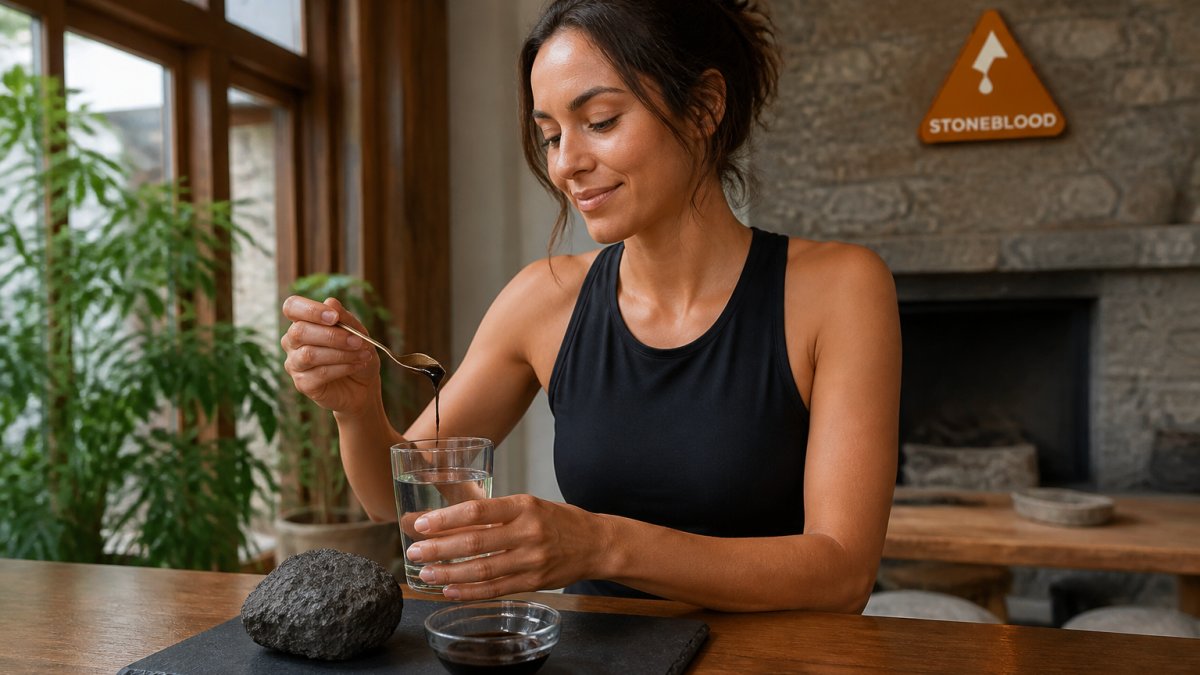
The label directions are simple: take one dropper, about 10 to 15 drops, once daily. You can stir it into water, coffee, tea, or food, or hold it under your tongue if you do not mind the taste.
Shilajit Original — Stoneblood →

That is the whole routine. The hard part is not the method, it is consistency. Attach it to something you already do every day, like your first glass of water or your morning coffee, and it stops being a decision.
Our flagship Magic Brown double-strength liquid shilajit is made for exactly this: a water-soluble liquid that mixes cleanly into any drink, so there is no resin to soften and no grit at the bottom of the glass.
Shilajit in Coffee: A Simple Morning Pairing
Coffee is the easiest place to start, and it is the pairing we hear about most. The earthy flavor of liquid shilajit drops sits naturally against dark roast, so you are not masking anything or adding a second step to your morning.
Stir one dropper into a hot cup and drink it as usual. Some people find the combination feels less spiky than coffee alone, though that is a personal observation rather than a promise.
Other Easy Ways to Take It
- Tea. Works especially well with black or chai, where the earthy note blends in.
- Water. The plainest option. A squeeze of lemon helps if the taste is new to you.
- Smoothies. Blends in completely, and the flavor disappears behind fruit.
- Sublingual. Hold the drops under your tongue briefly, then swallow.
Our Shilajit Original liquid drops follow the same daily directions. For current options and prices, compare Stoneblood Original and Magic Brown.

What Shilajit Is Not: Setting Realistic Expectations
Shilajit is not a stimulant, not a meal replacement, and not a shortcut around sleep. It will not fix a schedule that has no room in it, and it will not feel like anything at all if you take it twice and stop.
What it is: a traditional mineral substance with a long history of use, best approached as a small daily habit that supports a routine you already have. Some women notice a difference within a couple of weeks.
One more thing worth saying plainly. If you are pregnant, nursing, taking medication, or managing a health condition, talk to a healthcare professional before adding any supplement. That is not a formality, it is the right order of operations.
Office of Dietary Supplements consumer information on dietary supplements
Conclusion
The challenge with shilajit is not finding it, it is finding one you can trace. Vague sourcing and unverifiable purity claims are the norm, and that is exactly the problem we set out to solve. Stoneblood Shilajit is wildcrafted in North America, hand-harvested by one person, refined into water-soluble liquid drops, and bottled in a facility certified by the Utah Department of Agriculture and Food, with every batch third-party tested. Start with Magic Brown and build it into a morning you already have.
Frequently Asked Questions
What is shilajit, and where does it come from?
Shilajit is a mineral-rich substance that seeps from rock in high mountain ranges. In nature it appears as a thick, tar-like resin formed over long periods from compressed plant material and humus. In Ayurveda it is classified as a Rasayana, a category traditionally associated with vitality and lengthening lifespan. Stoneblood takes a North American approach: raw resin is wildcrafted in the Rocky Mountains of Utah and refined in distilled spring water into water-soluble liquid shilajit drops, so it mixes cleanly into drinks and food.
How can you tell whether shilajit is high quality?
Start with the label and the supply chain. Look for a specific harvest region, a stated refining method, and a maker willing to share batch testing for heavy metals and microbials. Stoneblood's liquid shilajit drops are bottled in a cGMP-certified facility and third-party tested, with lot codes printed on every bottle so you can request results for your batch. You can read more on the quality and safety page. Vague claims about purity without documentation are the main red flag.
How do you use liquid shilajit drops in a daily routine?
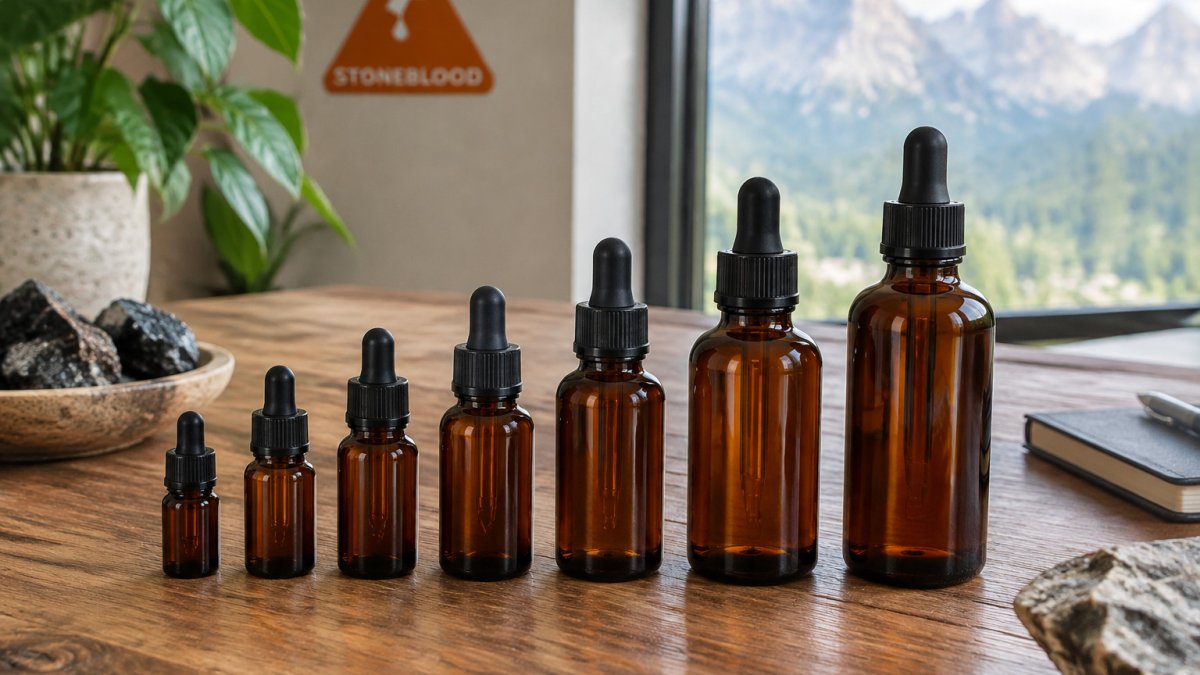
Follow the label: take 1 dropper, about 10 to 15 drops, once daily. You can stir it into water, coffee, tea or food, or hold it under the tongue if you don't mind the earthy taste. Most people anchor it to something they already do every morning, like making coffee or filling a water bottle, so it becomes automatic. Each 1 fl oz (30 ml) bottle is sized for a daily dropper, and Magic Brown is the double-strength option if you prefer a more concentrated drop.
Can shilajit be mixed into coffee, tea, or food?
Yes. Because Stoneblood liquid shilajit is water-soluble, it dissolves into hot and cold drinks rather than settling at the bottom of the cup. Coffee is a common choice: the roasted flavor blends with the earthy, mineral taste of the drops. Tea, warm water with lemon, smoothies and even oatmeal work just as well. Add it after brewing rather than during, stir once, and drink as usual. If you take it in coffee, keep to the label directions of one dropper daily.
These statements have not been evaluated by the Food and Drug Administration. This product is not intended to diagnose, treat, cure, or prevent any disease. Consult a healthcare professional before starting any supplement, especially if you are pregnant, nursing, taking medication or managing a health condition.

Share:
Is Shilajit Good for Kidneys? What Research Shows
Is There Any Science Behind Shilajit? Evidence Explained