
Table of Contents
- Is There Any Science Behind Shilajit? A Straight Answer
- How Shilajit Research Studies Are Actually Designed
- What Shilajit Scientific Research Has Examined So Far
- Five Limits of the Evidence Nobody Mentions
- Shilajit Quality and Purity: Why It Changes Everything
- Liquid Shilajit Drops and the Practical Side of Daily Use
- Conclusion: How to Read Shilajit Claims Like a Skeptic
- Frequently Asked Questions
Last Updated: October 9, 2026
Is There Any Science Behind Shilajit? A Straight Answer
Is there any science behind Shilajit? Yes, but it is thinner and more preliminary than most supplement marketing suggests.
Shilajit is a mineral-rich, humic substance that seeps from rock in high mountain ranges, formed over long periods from compressed plant material. In Ayurvedic tradition it is classified as a Rasayana, a category of preparations used to support vitality and healthy aging.
The honest summary: shilajit is not a proven remedy for anything, and it is not a placebo with zero research either. It sits in the middle, which is exactly where most traditional substances sit before large trials arrive.
Below, we break down how shilajit scientific research is actually designed, what it has measured, and the five limitations nobody mentions.
How Shilajit Research Studies Are Actually Designed
Understanding study design is the fastest way to read a shilajit claim critically. A finding from a petri dish, a mouse, and a randomized human trial carry very different weight, and most summaries blur them together.
Animal Studies and Lab Research
Laboratory research typically exposes cells to fulvic acid or a shilajit extract and observes a measurable change. Animal studies go further, giving a standardized extract to rodents and tracking outcomes over weeks.
These models are useful for generating hypotheses. They are poor at predicting what happens in free-living people, because the dose, the delivery, and the biology all differ.
Human Trials: What They Measured and What They Missed
Human trials on shilajit tend to be small, short, and focused on a narrow outcome. Many measured subjective ratings such as perceived fatigue rather than objective performance markers.
Common gaps: no long-term follow-up, no standardized product identity across studies, and no independent verification of what was actually in the supplement used. That last point is not academic. A trial is only as good as the material tested.
What Shilajit Scientific Research Has Examined So Far
The research clusters around a few themes, and fulvic acid sits at the center of most of them. PubMed research database on shilajit studies indexes the primary literature if you want to read the source material directly. What follows is a plain-language map of what has actually been studied, organized by theme rather than by headline.
Fulvic Acid and Mineral Transport
Fulvic acid is a humic substance that occurs naturally in shilajit and in some soils. It is studied for its ability to bind minerals and hold them in a form that stays dissolved in water. That solubility matters practically: minerals that stay dissolved disperse more evenly through a liquid than minerals that settle out, which is one reason fulvic acid shows up in so much of the shilajit literature. It also contributes to the mineral-rich matrix that gives shilajit its characteristic dark color and earthy taste.
Cellular Energy and Everyday Stamina
A recurring theme in the literature is mitochondrial function, the process cells use to produce energy. Some laboratory and animal research has examined whether shilajit components influence this pathway, and a smaller number of human studies have looked at subjective measures such as perceived fatigue during daily activity. Worth stating plainly: none of these studies used Stoneblood products, and their results should not be read as applying to our drops or to any specific brand. What the research suggests is a plausible mechanism worth studying further, not a settled conclusion.
Antioxidant Activity in Laboratory Models
Another common thread is antioxidant activity. In cell and animal models, researchers have measured how shilajit extracts interact with oxidative stress markers. These are mechanistic findings, they describe a pathway that exists, not an outcome a person would notice. The distinction matters because antioxidant activity in a petri dish is one of the most frequently overstated results in supplement writing.
Cognitive and Brain-Related Research
A handful of small human studies have looked at cognitive measures such as memory recall or reaction time over short periods. Sample sizes are typically modest, durations are measured in weeks rather than years, and the preparations tested are not standardized across studies. Treat these as early signals, not as established effects.
How to Read the Evidence by Study Type
The table below is the fastest way to grade any shilajit claim you encounter. It separates what each study type can actually support from what it cannot.
| Study Type | Typical Size | What It Can Support | What It Cannot Support |
|---|---|---|---|
| In-vitro (cell) | N/A | A plausible biological mechanism | Any effect in a living person |
| Animal | Dozens of animals | A directional signal worth testing in humans | Human dose response or timing |
| Small human trial | A few dozen participants | Short-term tolerability and a preliminary signal | Long-term outcomes or generalization |
| Larger replicated trial | Hundreds of participants | Stronger confidence in a specific outcome | Universal effectiveness across products |
A useful rule: the further down that table a claim sits, the more cautiously it should be stated. Most marketing language collapses all four rows into one.
Five Limits of the Evidence Nobody Mentions
Most shilajit articles skip the caveats. Here are the five that actually matter when you weigh a claim, with the shilajit-specific detail that generic supplement writing leaves out.
- Small sample sizes. Many human studies enroll a few dozen participants. At that scale, a single unusual responder can shift the group average, which limits how confidently results generalize to a broader population.
- Short durations. Weeks-long trials cannot speak to what happens over months or years of daily use. This is the single largest unknown in the entire literature.
- Product variability. "Shilajit" is not one standardized substance. Composition shifts with the geographic source, the altitude and rock type it seeps from, the purification method, and whether the finished product is a resin, a liquid, or a dried extract. A result from one preparation does not automatically transfer to another.
- Publication bias. Positive findings are more likely to be published than null results (The existence of publication bias and risk factors for its occurrence). When a literature is small, this skew is proportionally larger, a handful of unpublished null trials can meaningfully change the picture.
- No independent replication. A single study is a data point, not a consensus. In shilajit research, many findings appear once and are never independently repeated with a different team, product, or population.
| Evidence Type | What It Can Show | What It Cannot Show |
|---|---|---|
| Lab research | Plausible mechanism | Effect in living people |
| Animal studies | Directional signal | Human dose response |
| Small human trials | Short-term tolerability | Long-term outcomes |
| Replicated trials | Stronger confidence | Universal effectiveness |
What a Credible Certificate of Analysis Should Contain
Because product variability is the loudest caveat in this field, the practical question is how a buyer verifies what is actually in a bottle. A credible certificate of analysis (COA) from an independent laboratory typically includes:
Shilajit Original — Stoneblood →
- Lot or batch number that matches the bottle in your hand
- Identity confirmation that the material is shilajit, not a substitute humic source
- Heavy metal panel covering at minimum lead, arsenic, cadmium, and mercury
- Microbial panel for total plate count, yeast, mold, and common contaminants
- Testing laboratory name and accreditation, so you can confirm the lab exists and is independent of the seller
If a brand publishes a COA without a lot number, or one that does not match the product you bought, it is not a verification document, it is marketing. We publish our approach on our quality and safety page rather than restating lab figures in every article.
A Direct Answer: Is Shilajit Scientifically Proven?
No, not in the sense that word usually implies. "Proven" would require large, replicated, long-duration human trials using a standardized preparation, and that body of work does not exist for shilajit. What does exist is a plausible mechanistic story supported by laboratory and animal work, plus a small number of short human studies with modest sample sizes. That is a meaningful starting point and an honest ceiling. Anyone who tells you the science is settled in either direction is overselling.
Shilajit Quality and Purity: Why It Changes Everything
Quality and purity decide whether a shilajit product is worth taking at all. Because shilajit is a mined, humic material, the raw substance can carry soil-derived contaminants if it is not properly refined and tested.
This is where sourcing transparency separates brands. We publish our approach on our quality and safety page rather than restating lab figures in every article.
For context on why heavy metals are a real concern in mined supplements, the FDA guidance on heavy metals in dietary supplements outlines the framework regulators apply.
Liquid Shilajit Drops and the Practical Side of Daily Use
Liquid shilajit drops solve a practical problem: raw shilajit is a sticky resin that is awkward to measure and strong in taste. Refining it into a water-soluble liquid makes consistent daily use far easier.
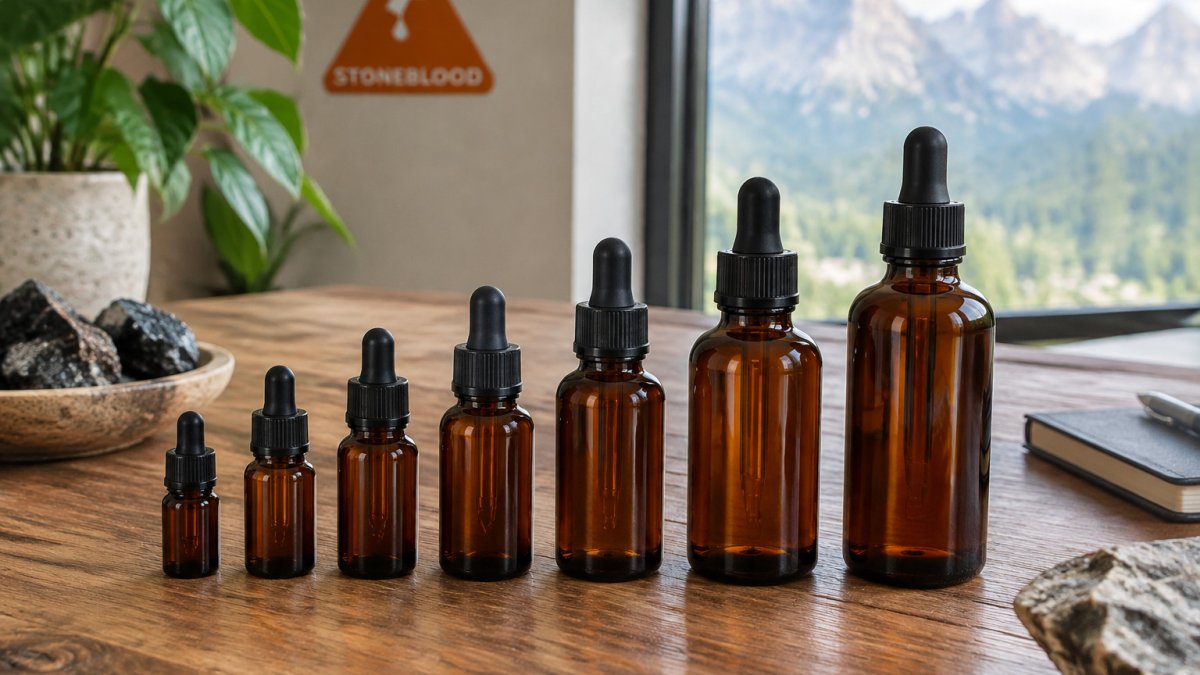
Our drops are wildcrafted North American shilajit, refined in distilled Rocky Mountain spring water. Magic Brown, our double-strength liquid shilajit, mixes cleanly into coffee, tea, or water. For current options and prices, compare Stoneblood Original and Magic Brown.


Label directions are simple: take one dropper, about 10 to 15 drops, daily in water, coffee, tea, or food, or under the tongue.
Conclusion: How to Read Shilajit Claims Like a Skeptic
The question is not whether shilajit has any science behind it. It does, and the honest version of that science is preliminary, mechanistic, and limited by small studies and variable products.
That is not a reason to dismiss shilajit.
We wildcraft our shilajit in the Rocky Mountains, refine it into water-soluble liquid drops, and bottle every batch in a cGMP-certified facility with third-party testing. If you want a liquid shilajit you can actually trace, start with Magic Brown.
Reading supplement claims critically takes practice, and shilajit is a good place to build that skill. Rather than chasing the strongest-sounding study, look for a product that is transparent about sourcing, testing, and what it actually contains.
These statements have not been evaluated by the Food and Drug Administration. This product is not intended to diagnose, treat, cure, or prevent any disease.
Frequently Asked Questions
How strong is the scientific evidence on shilajit?
Moderate at best. Most shilajit research studies are small human trials, animal experiments, or lab work, not large randomized controlled trials. A few human studies reported changes in markers like ATP or antioxidant activity, but sample sizes were small and the products used were not independently verified. That means the evidence is interesting and worth following, not settled. Treat shilajit science as early-stage rather than confirmed.
Are shilajit studies conducted on people or in laboratories?
Both, but the balance matters. A larger share of published work is animal studies and in-vitro research, where cells or animals are exposed to shilajit extracts under controlled conditions. Human trials exist but are fewer and smaller. Lab results can point toward a mechanism worth testing in people, but they cannot confirm what a person will notice. When you read a shilajit claim, check which type of study it came from.
Can research on one shilajit product be applied to another?
No. Shilajit varies by source, purification method, and concentration. A study using a specific resin extract tells you about that extract, not about every product sold under the same name. This is why shilajit quality and purity matters: a liquid shilajit drops product made from wildcrafted North American resin and tested per batch is a different material from an untested import. Batch-level testing is the only way to know what is in the bottle.
How can you assess the quality of a shilajit product?
Ask four questions. Where was it sourced and by whom? Is the facility cGMP-certified? Is there third-party testing for heavy metals and microbials, and can you see the results for your lot number? Is the product lot-coded and traceable? Stoneblood, for example, is wildcrafted in Utah, bottled in a cGMP-certified facility, and tested by an ISO/IEC 17025 accredited lab. You can review the full results at stonebloodshilajit.com/pages/quality-safety.

Share:
Benefits of Shilajit for Ladies: What to Know
How to Verify Supplement Sourcing Transparency