
Table of Contents
- What Ethical Wildcrafted Shilajit Harvesting Actually Means
- The Wildcrafted Shilajit Harvesting Process, Step by Step
- Ethical Shilajit Sourcing: What Responsible Brands Disclose
- Shilajit Origin and Traceability: Following One Jar Back to the Mountain
- How Shilajit Is Refined After Harvesting
- Ethics Claims vs. Evidence: How to Verify a Sourcing Story
- Common Mistakes That Undermine Ethical Shilajit Sourcing
- Conclusion: Ethical Harvesting Is a Chain, Not a Claim
- Frequently Asked Questions
Last Updated: October 12, 2026
What Ethical Wildcrafted Shilajit Harvesting Actually Means
Ethical wildcrafted shilajit harvesting means taking resin from mountain rock without harming the site, the people who work it, or the traceability of the final jar.
Shilajit is a mineral-rich resin that seeps from rock layers in high-altitude regions (Shilajit: a review).
Most guides describe shilajit as "pure" and "lab tested" and stop there. That tells you almost nothing about how it was actually taken from the mountain.
The Wildcrafted Shilajit Harvesting Process, Step by Step
The wildcrafted shilajit harvesting process follows a clear order: read the rock, extract carefully, then close the site so it can recover. Each step protects either the material's purity or the mountain itself.
Step 1: Reading the Rock Layers Before Any Tool Touches Stone
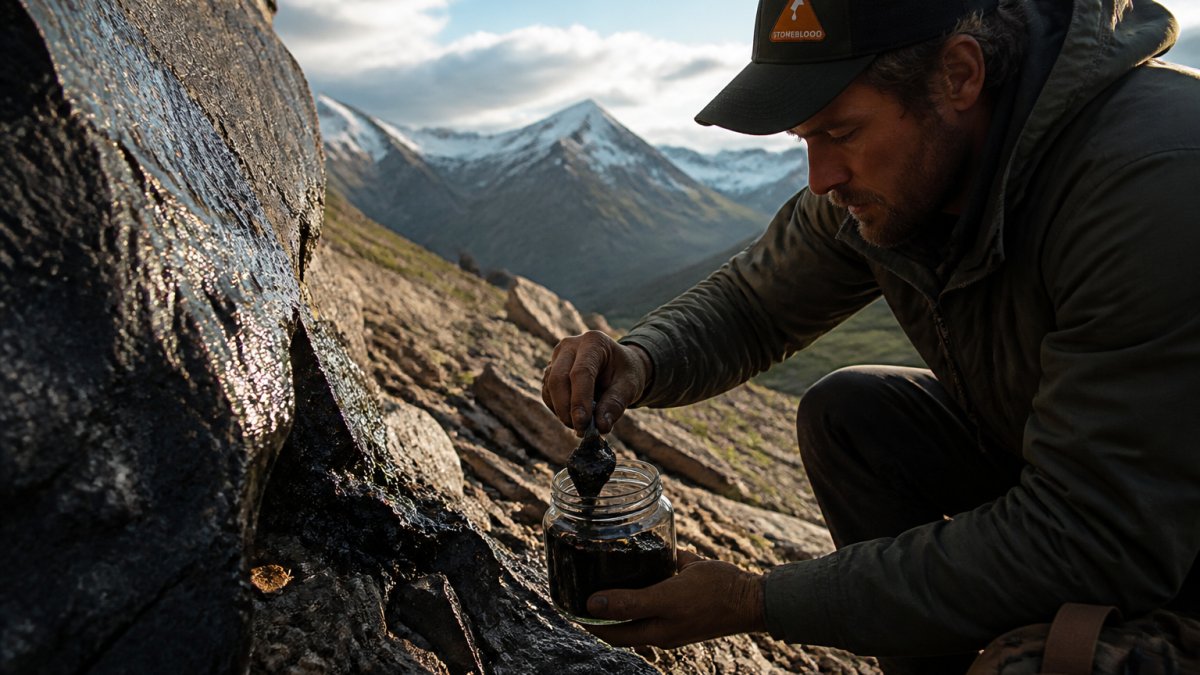
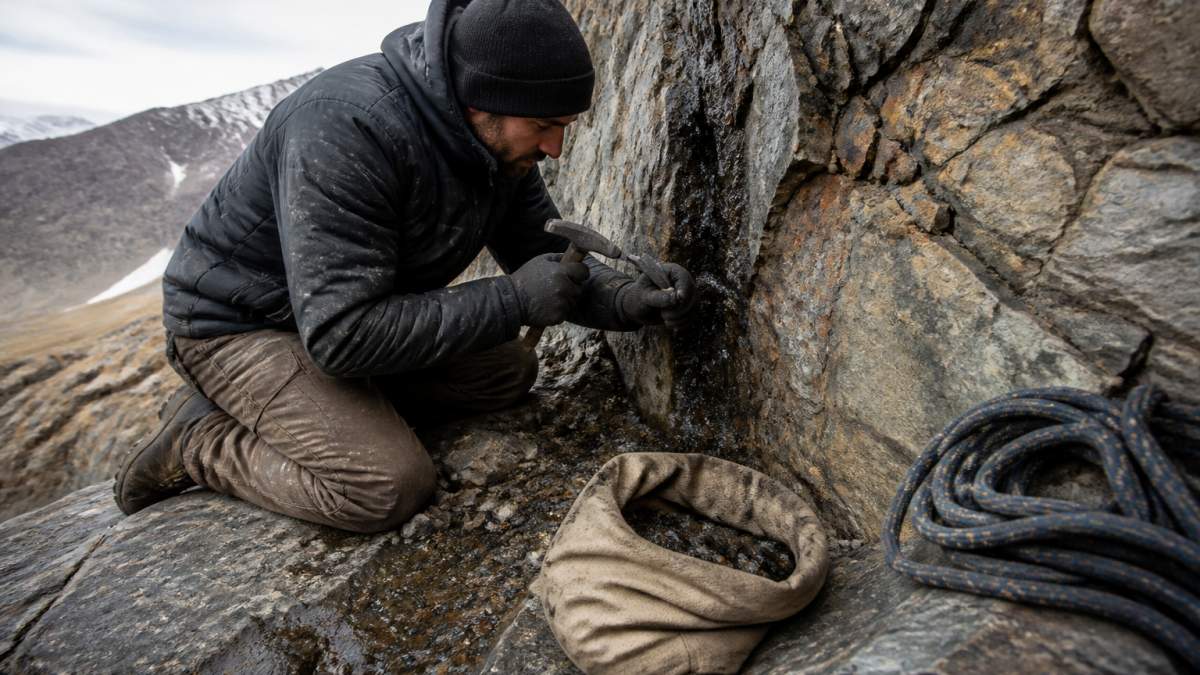
Harvesters study the rock layers first. They look for the dark seep lines where resin has pushed toward the surface. A careful harvester notes the slope, the moisture, and how much material is actually present before touching anything.
This step prevents waste. If the seep is thin, you leave it. If the rock is unstable, you leave it. Reading first is what separates collection from stripping a site bare.
Step 2: Careful Extraction With Picks and Chisels
Extraction uses small hand tools: a geologist's pick, a flat chisel, and a stiff brush. No machinery, no drilling, no blasting. The harvester works the resin out of narrow crevices by hand, taking only what has gathered.
The goal is minimal disturbance. You do not widen cracks, break rock faces, or dig into the mountain to reach more. A working rule many field harvesters follow is to take only the resin that has already seeped to the surface and to leave the seam itself intact so it can continue to weep.
Step 3: Sealing the Seep and Leaving the Site Intact
After collection, the harvester closes the site. Loose rock is set back, the seep is left to re-form naturally, and the area is returned as close to how it was found as possible. No trash, no abandoned tools, no scarred rock.
This is the step most sourcing stories skip. Responsible sourcing is not just what you take. It is what you leave behind.
What Ethical Collection Looks Like in Practice
Ethical harvesting is defined by restraint, and restraint shows up in specific decisions:
- Seasonal timing. Collection is typically done in warmer months when seeps are active and rock is stable. Working frozen or storm-threatened rock raises risk to the harvester and damages the site.
- Collection limits. A harvester takes a portion of what a seep has produced and moves on, rather than working one seam until it stops producing. Over-collection is the single most common ecological failure in wildcrafting.
- Site rotation. Returning to the same seep season after season without rest depletes it. Rotating between sites gives each one time to recover.
- Altitude safety. High-altitude work means thin air, sudden weather, and loose scree. Harvesters work in pairs, carry rope and layers, and turn back when conditions change. Safety is part of ethics, a rushed harvester takes shortcuts that harm the site.
- Habitat awareness. Alpine plant communities recover slowly. Avoiding trampled ground, staying on established paths, and packing out everything are basic field courtesies.
Where the Evidence Is Thin
It is worth being honest: there is no universal certification for wild shilajit harvesting, and published field studies on collection limits are limited. Much of what counts as "ethical" rests on the practices a harvester chooses and the transparency a brand is willing to offer. That is exactly why documentation matters more than adjectives.
Ethical Shilajit Sourcing: What Responsible Brands Disclose
Ethical shilajit sourcing comes down to disclosure. A responsible brand can tell you where the raw material came from, who collected it, and how it was handled afterward.
Ask for these specifics:
- The region and elevation of collection
- Whether harvesting is by hand or by machine
- How many people touch the material from rock to bottle
- Whether the batch carries a lot number
Vague answers are a red flag. "Sourced from the Himalayas" is not traceability. It is a region, not a supply chain.
Shilajit Origin and Traceability: Following One Jar Back to the Mountain
Shilajit origin and traceability mean you can follow a single jar back to a single collection point.
Long supply chains create risk. Every handoff is a chance for dilution, contamination, or an unknown additive. A short chain reduces those chances.
At Stoneblood Shilajit, our raw material is hand-harvested by one person, our founder. That keeps the chain of custody short.
For details on how we test and bottle, see our quality and safety page.
How Shilajit Is Refined After Harvesting
How shilajit is refined decides whether the final product is clean and consistent. Raw resin is thick and tar-like.
The gentler method is low-temperature concentration. Heat can degrade delicate compounds, so careful makers keep temperatures low and let water evaporate slowly.
Purification removes grit, plant matter, and debris from the raw resin. Then the material is filtered and stabilized into a finished supplement.
Shilajit Original — Stoneblood →
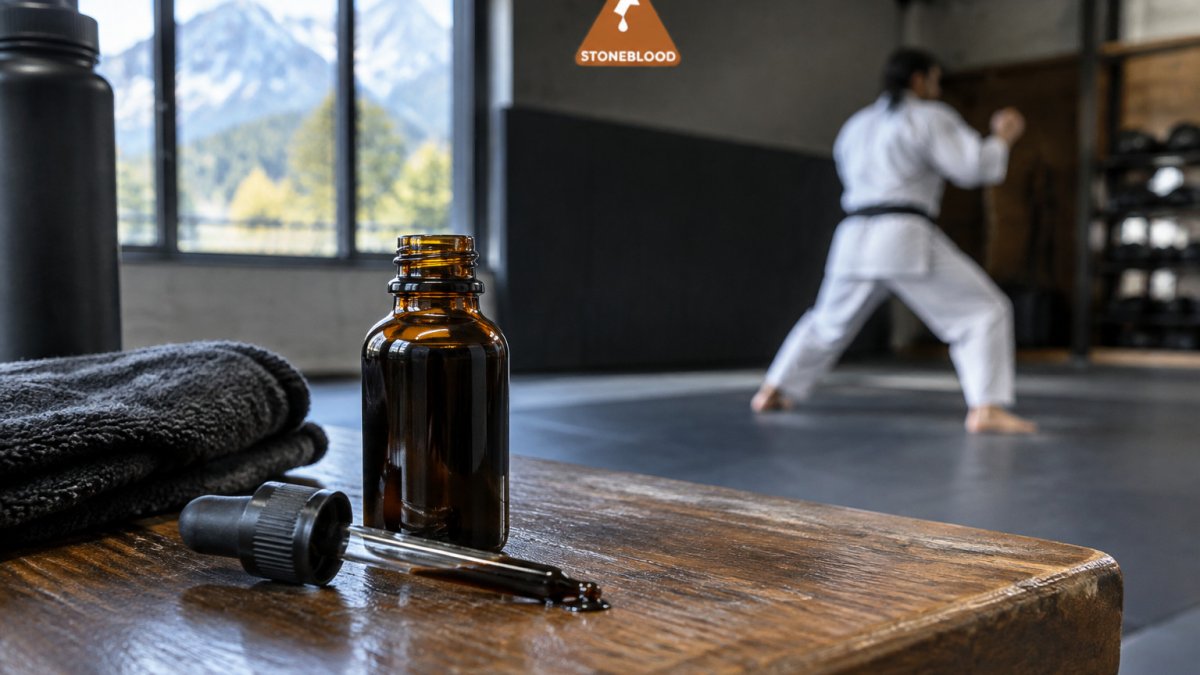
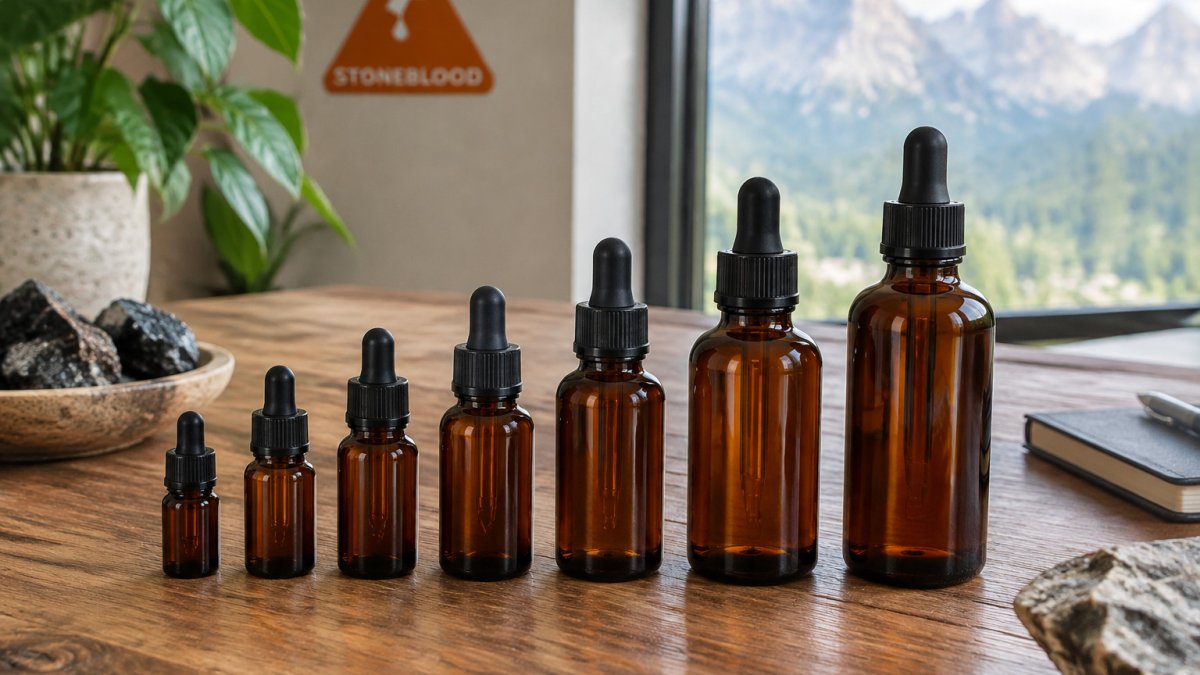
Stoneblood takes a different final step. That means our shilajit drops mix cleanly into water, coffee, tea, or food, or can be taken under the tongue.

| Stage | What Happens | Why It Matters |
|---|---|---|
| Collection | Hand removal from rock seeps | Keeps material clean and site intact |
| Purification | Grit and plant matter removed | Removes debris from raw resin |
| Low-temp concentration | Water evaporates slowly | Avoids degrading delicate compounds |
| Liquid refining | Resin made water-soluble | Easy to mix and measure |
Ethics Claims vs. Evidence: How to Verify a Sourcing Story
Ethics claims versus evidence is the gap that matters most. Anyone can print "ethically sourced." Fewer can show you a document that backs it. The difference between a claim and evidence is whether the brand can hand you something a stranger could check.
What a Credible Answer Looks Like
Here is how to check a sourcing story, and what separates a real answer from a deflection:
- Collection region and elevation. A credible answer names a specific range or watershed and a rough elevation band. "The mountains" is not an answer.
- Harvest method. Hand tools versus machinery. If the brand cannot say, assume the worst.
- Who collected it. A named harvester, a family operation, or a cooperative. Anonymous sourcing is a gap in the chain.
- Lot number on your bottle. Every bottle should carry one. If it does not, batch-level traceability is not real.
- Which lab tested the batch and when. A named lab and a date. "Third-party tested" without a lab name is a slogan.
- Heavy-metal screening. Confirmation that the batch was screened for lead, arsenic, mercury, and cadmium. This is a baseline, not a bonus.
A brand that answers all six is doing the work. A brand that deflects on two or more is not.
Documentation You Can Actually Request
Marketing language is easy to write. Records are harder to fake. Ask for:
- A certificate of analysis (COA) for your lot, not a generic sample report.
- The name of the testing laboratory and its accreditation status.
- A harvest record or collection log that ties a batch to a location and a date.
- A chain-of-custody summary showing how many hands the material passed through.
If a brand cannot produce these on request, the sourcing story is a narrative, not a record.
Audits, Standards, and What They Do and Do Not Prove
Independent audits and facility certifications, such as current Good Manufacturing Practice (cGMP) registration through the FDA, speak to how a product is made, not where the raw material came from. That distinction matters. A cGMP-certified facility can still bottle resin of unknown origin.
What closes the gap is batch-level traceability: a documented line from a specific collection site to a specific bottle.
For details on how we test and bottle, see our quality and safety page.
Common Mistakes That Undermine Ethical Shilajit Sourcing
The biggest mistake in ethical shilajit sourcing is treating ethics as a label instead of a practice. That shows up in a few predictable ways.
- Over-harvesting a single seep until it stops producing
- Mixing material from many unknown sources into one batch
- Skipping heavy-metal screening to save time
- Using heat that degrades the raw material
- Claiming "lab tested" without naming the lab or the batch
Each shortcut saves effort and costs trust. Buyers who care about sourcing can usually spot the difference.
The fix is unglamorous. Take less, test more, and document everything. That is the whole game.
Conclusion: Ethical Harvesting Is a Chain, Not a Claim
Ethical harvesting is a chain: careful collection, clean refining, real testing, and honest disclosure. Break one link and the rest does not matter.
At Stoneblood Shilajit, we keep that chain short. Our shilajit is wildcrafted in the Rocky Mountains of Utah, hand-harvested by our founder, refined into water-soluble liquid drops, bottled in a cGMP-certified facility, and third-party tested. For current options and prices, compare Stoneblood Original and Magic Brown.

If sourcing matters to you, start with a brand that can show its work. Get started with Stoneblood Shilajit and taste the difference a short, traceable chain makes.
These statements have not been evaluated by the Food and Drug Administration. This product is not intended to diagnose, treat, cure, or prevent any disease.
Frequently Asked Questions
How is wildcrafted shilajit harvested?
A harvester locates shilajit seeps in high-altitude rock layers, then works the exposed resin free with small picks and chisels rather than blasting or digging out the rock. The resin is collected into clean containers, the seep is resealed, and the site is left so the same spot can produce again in later seasons. Because the material forms slowly from compressed plant matter and microbial decomposition, restraint at each step matters as much as the extraction itself.
What makes shilajit harvesting ethical?
Ethical wildcrafted shilajit harvesting comes down to restraint and disclosure. In practice that means taking only part of what a seep offers, resealing the rock afterward, avoiding sensitive ground, paying harvesters fairly, and being able to name where a batch came from. Ethical shilajit sourcing also shows up in paperwork: lot codes, batch testing, and a chain of custody that runs from the collection site to the finished supplement without changing hands anonymously.
How can you verify where wildcrafted shilajit comes from?
Ask for specifics rather than adjectives. A trustworthy answer names the region, describes the harvesting method, and ties the bottle to a lot number you can trace. Shilajit origin and traceability should survive a simple test: email the brand with the lot number printed on your container and ask for the matching batch documentation. If a company cannot connect a specific jar to a specific batch and collection area, the sourcing story is marketing, not evidence.
How is raw shilajit refined after harvesting?
Raw shilajit arrives as a thick, tar-like resin mixed with grit, plant fragments and rock dust. Refining starts with dissolving the resin in clean water so debris settles out, then filtering the liquid and concentrating it slowly at low temperature to protect heat-sensitive compounds. The goal is a clean, water-soluble finished supplement. Stoneblood takes this route, refining wildcrafted North American shilajit in distilled Rocky Mountain spring water into liquid drops rather than leaving it as raw resin.
These statements have not been evaluated by the Food and Drug Administration. This product is not intended to diagnose, treat, cure, or prevent any disease. Consult a healthcare professional before starting any supplement, especially if you are pregnant, nursing, taking medication or managing a health condition.

Share:
How to Verify Supplement Sourcing Transparency
Liquid Shilajit Drops vs Resin: Which Is More Convenient?