

Table of Contents
- Raw Mineral Resin vs Synthetic Energy Supplements for Focus: The Core Difference
- Natural vs Synthetic Supplements: How the Two Categories Actually Differ
- Side-by-Side Comparison: Onset, Duration, and the Rebound Question
- Supplement Absorption and Format: Why Delivery Changes the Experience
- How to Choose a Quality Shilajit Supplement
- Shilajit Liquid Drops in a Daily Focus Routine
- Common Mistakes When Comparing Mineral Resin and Synthetic Energy Products
- Conclusion: Matching the Format to the Goal
- Frequently Asked Questions
Last Updated: October 13, 2026
Raw Mineral Resin vs Synthetic Energy Supplements for Focus: The Core Difference
The raw mineral resin vs synthetic energy supplements for focus debate comes down to one question: do you want a whole-food mineral source or a lab-built stimulant blend? At Stoneblood Shilajit, we wildcraft shilajit from Rocky Mountain rock, refine it into liquid drops, and let the mineral content speak for itself. This guide breaks down how each category works and what the trade-offs are. While mineral resins provide a foundational approach to cellular vitality, modern metabolic pathways are also influenced by NAD supplements for focus to help maintain consistent mental clarity throughout the day.
What Counts as a Raw Mineral Resin
Raw mineral resin is a naturally occurring, mineral-dense substance harvested from rock, then cleaned and refined without synthetic additives. Shilajit is the classic example: a tar-like resin that seeps from mountain rock after centuries of compressed plant material and humus break down.
The National Center for Complementary and Integrative Health overview of Ayurvedic medicine notes that shilajit has a long history of traditional use in Ayurveda, where it is classified as a Rasayana. It is naturally rich in fulvic acid, humic acid, and a broad spectrum of trace minerals.
What Counts as a Synthetic Energy Supplement
A synthetic energy supplement is a formulated product built around isolated or lab-made compounds, usually caffeine, taurine, or manufactured B-vitamin forms, designed for a fast, measurable lift. These products are standardized for consistency, not for whole-food complexity.
The difference matters because the two categories are not trying to do the same job. One supplies minerals.
Natural vs Synthetic Supplements: How the Two Categories Actually Differ
Natural supplements draw their nutrients from whole sources: plants or minerals, with the full matrix of cofactors intact. Synthetic supplements isolate a single compound or a short list of compounds and deliver them in a purified form.
That distinction shapes everything downstream: how the body handles the ingredient, how long the effect lasts, and how the label reads. Natural vs synthetic supplements is not a moral question. It is a question of what you actually want from the product.
| Feature | Raw Mineral Resin (Shilajit) | Synthetic Energy Supplement |
|---|---|---|
| Source | Wildcrafted rock resin | Isolated or lab-made compounds |
| Delivery | Fulvic acid mineral transport | Direct stimulant absorption |
| Onset | Gradual, cumulative | Fast, often within 30 minutes |
| Duration | Steady through the day | Peaks then fades |
| Rebound | Minimal | Common after the peak |
| Best for | Sustained focus support | Short bursts of alertness |
Side-by-Side Comparison: Onset, Duration, and the Rebound Question
Onset is where synthetic stimulants can sharpen alertness quickly, which is why so many people reach for one before a deadline. The trade-off shows up an hour or two later, when the peak fades and focus drops below baseline.
Mineral resin works the opposite way. Fulvic acid helps transport minerals into cells, so the support builds gradually rather than arriving all at once. There is no spike to crash from, which is why many people describe the effect as smooth support rather than a jolt.
| Dimension | Raw Mineral Resin (Shilajit) | Synthetic Energy Supplement |
|---|---|---|
| Active driver | Fulvic and humic acid mineral matrix | Caffeine, taurine, isolated B vitamins |
| Onset | Gradual, builds over days of consistent use | Fast, often within 30 minutes |
| Duration | Steady background support | Peaks, then fades |
| Rebound | Minimal | Common after the peak |
| Consistency | Supports consistent daily use | Effects may vary with daily use |
| Sensitivity | Traditionally used for overall vitality | Individual responses may vary |
| Best for | Sustained focus support | Short bursts of alertness |
What the Evidence Actually Shows
It helps to separate established findings from traditional claims. Caffeine's effect on alertness is among the most studied topics in nutrition science, and the research is consistent for short-term wakefulness. For shilajit, the picture is different: most human studies are small, and the research has not used Stoneblood products. Traditional Ayurvedic use describes shilajit as a Rasayana, a category of preparations used for overall vitality, but that is a traditional framework, not a clinical finding. Fulvic acid's role as a mineral carrier is described in laboratory and review literature.
Safety and Sensitivity Considerations
Anyone taking prescription medication, managing a health condition, or who is pregnant or nursing should talk with a clinician before adding any supplement, including shilajit. That guidance applies to both categories.
Supplement Absorption and Format: Why Delivery Changes the Experience
Supplement absorption and format decide how much of what you swallow actually reaches your cells. A mineral can be present on a label and still never make it past the gut wall in a usable form.
Fulvic acid is the reason shilajit is studied at all in this context. It acts as a natural carrier, helping move minerals across cell membranes.
Liquid Drops Compared With Tablets and Powders
Liquid shilajit drops mix directly into water, coffee, or tea, so there is nothing to break down first.

Our own FDA guidance on dietary supplement labeling requires that supplement facts panels list every ingredient, which is why we keep our labels short: shilajit, distilled spring water, nothing else.
How to Choose a Quality Shilajit Supplement
Choosing a quality shilajit supplement comes down to three things: where it was harvested, how it was refined, and whether the batch was tested. Skip any product that cannot answer all three. This is the part of the comparison most articles skip, and it is where the two categories diverge most sharply.
Why Testing Matters More for a Wildcrafted Resin
A synthetic energy supplement starts from purified compounds, so the main quality question is whether the label matches the contents. A wildcrafted mineral resin starts from raw material pulled out of rock, which means the raw material itself varies batch to batch. That variability is not a flaw, but it does raise the bar for verification. Heavy metals and microbial contamination are risks that show up in independent testing of shilajit products on the market.
What a Certificate of Analysis Should Tell You
A certificate of analysis, or COA, is the document a third-party lab issues after testing a batch. A useful COA names the lot number, the lab that performed the work, the test methods, and the results. Look for:
- Heavy metal screening for lead, arsenic, cadmium, and mercury, with results reported against a stated limit.
- Microbial testing for total plate count, yeast, and mold.
- Identity confirmation that the material is shilajit and not a filler or substitute.
- A lot number that matches the bottle in your hand. A COA for a different lot tells you nothing about your product.
If a brand cannot produce a COA on request, that is the answer.
Shilajit Original — Stoneblood →
Sourcing, Refinement, and Format
- Sourcing: Wildcrafted, single-origin resin beats mass-imported material with an unclear supply chain. A short chain of custody is easier to verify than a long one.
- Refinement: Look for resin refined in distilled water rather than cut with fillers, sweeteners, or flow agents.
- Format: Liquid drops are easier to take daily than sticky resin or chalky powder, and they mix cleanly into water, coffee, or tea.
- Taste: Real shilajit tastes earthy and bitter. If it tastes sweet, it is not the real thing.
Our own approach is documented on our quality and safety page, which walks through sourcing, refinement, and batch testing rather than restating lab numbers here.
A Quick Side-by-Side on Quality Signals
| Quality Signal | Wildcrafted Mineral Resin | Synthetic Energy Supplement |
|---|---|---|
| Raw material variability | Higher, batch to batch | Low, standardized inputs |
| Key verification | COA with heavy metal and microbial screening | Label accuracy and stimulant content |
| Quality considerations | Purity and sourcing | Ingredient balance |
| Traceability | Lot-level, ideally single-origin | Manufacturer-level |
The takeaway is that a wildcrafted product earns trust through documentation, and a synthetic product earns trust through label accuracy. Ask for the paperwork either way.
Shilajit Liquid Drops in a Daily Focus Routine
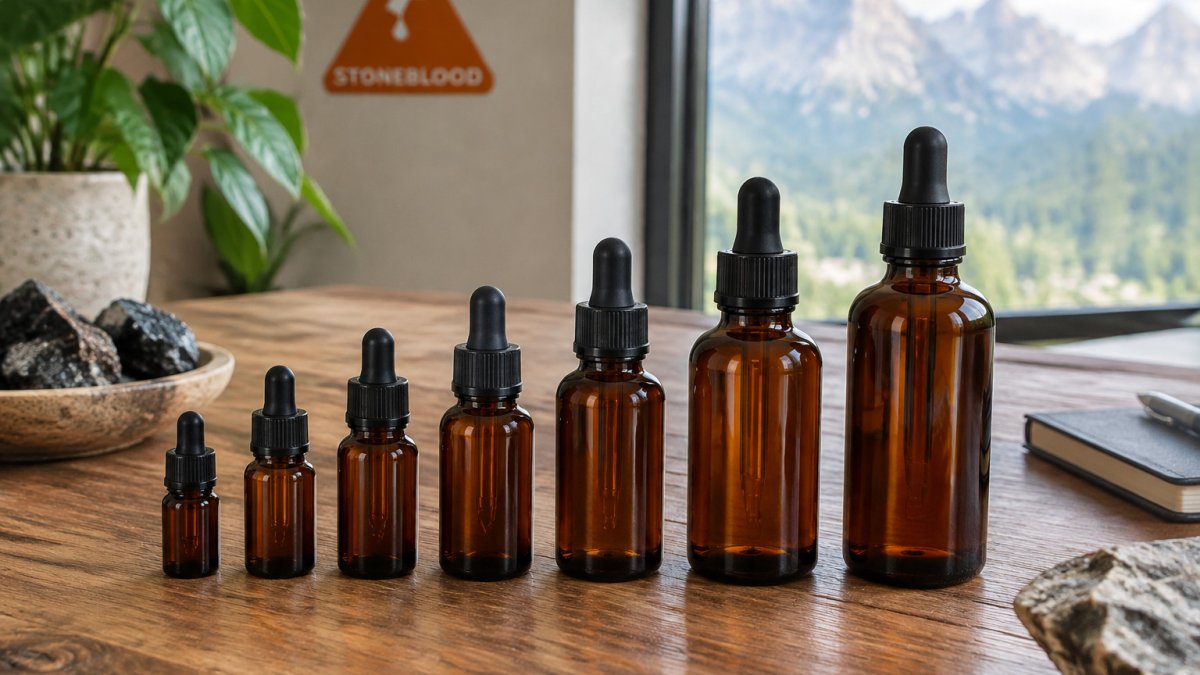
Shilajit liquid drops fit into a daily focus routine without adding another step to your morning. One dropper, about 10 to 15 drops, goes into water, coffee, tea, or food, or under the tongue once you get used to the taste.

Our Magic Brown double-strength liquid shilajit is wildcrafted in Utah and refined into water-soluble drops, so it mixes cleanly into any drink. For current options and prices, compare Stoneblood Original and Magic Brown.

For readers who want to understand how we handle sourcing and batch testing, our quality and safety page walks through the process.
Common Mistakes When Comparing Mineral Resin and Synthetic Energy Products
The biggest mistake people make is comparing the two categories as if they compete on the same axis. They do not. One is a mineral source.
A second mistake is judging a mineral resin by how it feels in the first 30 minutes. Mineral support builds over days and weeks, not minutes.
A third is assuming "natural" means "no testing needed." It does not. A wildcrafted product needs more verification than a synthetic one, not less, because the raw material varies batch to batch.
Conclusion: Matching the Format to the Goal
Every focus product is a tool, and the right one depends on the job.
Stoneblood Shilajit wildcrafts North American shilajit, refines it in distilled Rocky Mountain spring water, and bottles it in a cGMP-certified facility with third-party testing on every batch.
Get started with Stoneblood Shilajit and build a daily routine around a mineral source you can actually trace.
These statements have not been evaluated by the Food and Drug Administration. This product is not intended to diagnose, treat, cure, or prevent any disease.
Frequently Asked Questions
What is the difference between natural and synthetic supplements?
Natural supplements are made from plant or mineral sources, often with minimal processing. Synthetic supplements are manufactured in a lab to copy a specific vitamin or compound. What matters is the ingredient form, the dose on the label, and whether the product has been tested for purity. A mineral resin like shilajit sits at the natural end of that spectrum, while many energy blends rely on isolated or lab-made compounds.
Which form of supplement is best absorbed?
Absorption depends on the nutrient, not just the format. Liquid drops mix into water or another drink. Some compounds absorb better with food, and some are better absorbed in specific chemical forms. For mineral-rich products, the presence of fulvic acid is often cited as a factor that helps minerals move into cells. If absorption is your main concern, look for a format you will take consistently and a label that states the actual ingredient form.
What should I look for when comparing energy supplements?
Start with the label. Check whether the ingredients are named individually or hidden in a proprietary blend, and whether amounts are listed. Look for third-party testing, a lot number, and a certificate of analysis you can request. Consider onset and duration: mineral-based products are usually taken daily as part of a routine. Finally, match the product to your goal. A short workout boost and steady afternoon focus are different jobs.
How can I check the quality of a mineral supplement?
Ask three questions. Where was it sourced? How was it processed? And who tested it? A trustworthy seller will name the facility, the testing lab, and the batch. Stoneblood Shilajit, for example, bottles in a cGMP-certified facility in Utah and tests each batch for heavy metals and microbials through an accredited third-party lab. You can also request the certificate of analysis for your lot number. Vague claims about purity without documentation are a warning sign.
What is mineral resin, and how is it different from a liquid supplement?
Mineral resin is the raw, tar-like substance that seeps from rock in mountain ranges, formed over long periods from compressed plant material. A liquid supplement is that same material refined and diluted into a water-soluble form, usually in a dropper bottle. Stoneblood takes wildcrafted North American shilajit and refines it in distilled spring water so it mixes cleanly into water, coffee, tea, or food.
These statements have not been evaluated by the Food and Drug Administration. This product is not intended to diagnose, treat, cure, or prevent any disease. Consult a healthcare professional before starting any supplement, especially if you are pregnant, nursing, taking medication or managing a health condition.


Share:
Liquid Shilajit Drops vs Resin: Which Is More Convenient?
Natural Alternatives to Synthetic Mineral Supplements