Table of Contents
- Vital Herbs Shilajit Review: What This Brand Actually Offers
- Shilajit Quality and Purity: What to Check on Any Label
- Shilajit Resin vs Liquid: Which Form Fits Your Routine
- How to Identify Authentic Shilajit Before You Pay
- Shilajit Sourcing and Wildcrafting: Why Origin Matters
- Cost Per Serving: Comparing Value Across Shilajit Options
- Verdict: Who Vital Herbs Shilajit Suits, and Who It Doesn't
- Safety, Interactions, and What the Evidence Does Not Show
- Frequently Asked Questions
Last Updated: October 5, 2026
Vital Herbs Shilajit Review: What This Brand Actually Offers
Vital Herbs Shilajit is one option in a crowded market.
The category has a transparency problem: labels often make purity claims that are hard to confirm. The useful question is not "is this brand good" but "what can I verify before I pay."
Below, we break down the label details that matter, compare resin and liquid formats, and show you how to spot authentic shilajit. The same criteria apply to Vital Herbs Shilajit or any other brand.
Shilajit Quality and Purity: What to Check on Any Label
Shilajit quality and purity come down to three verifiable things: where it was sourced, what testing was done, and whether the brand will show you the results.
Start with the source. A brand that names a specific region and harvesting method is easier to trust than one that says only "Himalayan." The U.S. Food and Drug Administration guidance on dietary supplement labeling explains what supplement labels are and are not required to disclose, which helps you see how much is left to the brand's own honesty.
Then look for testing. A serious brand tests every batch for heavy metals and microbials through an accredited lab and shares results on request. If it will not show you a certificate of analysis, treat the purity claim as unproven.
Fulvic Acid and Trace Mineral Content
Fulvic acid is the component most shilajit buyers care about, and the hardest to verify from a label. It is a naturally occurring organic compound that helps transport minerals into cells, which is why it is central to how shilajit is traditionally described.
Labels often state a mineral count, such as 85 or more trace minerals. That number is a starting point, not proof. For our own products, we keep full testing detail on our quality and safety page.
Third-Party Testing and Certificates of Analysis
A certificate of analysis is a lab report showing what was tested in a specific batch and the results, the most useful document a shilajit buyer can ask for.
Here is what a real one should tell you:
- Which lab ran the test and whether it is accredited
- The batch or lot number it applies to
- Heavy metal results, including arsenic, lead, cadmium, and mercury
- Microbial results, including common contamination markers
- The date the test was run
If a brand cannot connect a certificate to the exact lot number on your bottle, the document proves nothing.
Shilajit Resin vs Liquid: Which Form Fits Your Routine
The difference between shilajit resin and liquid shilajit is consistency and convenience, not necessarily potency.

Resin has tradition on its side: it is the form shilajit has taken for centuries, and some buyers prefer it for that reason.
Liquid drops solve most of that: add a dropper to water, coffee, tea, or food, and you are done.
| Format | How You Take It | Best For | Main Trade-off |
|---|---|---|---|
| Resin | Measure and dissolve manually | Traditionalists who want the raw form | Sticky, slower to prepare |
| Liquid drops | One dropper into any drink | Daily routines, travel, taste-sensitive users | Needs a brand you trust to refine it well |
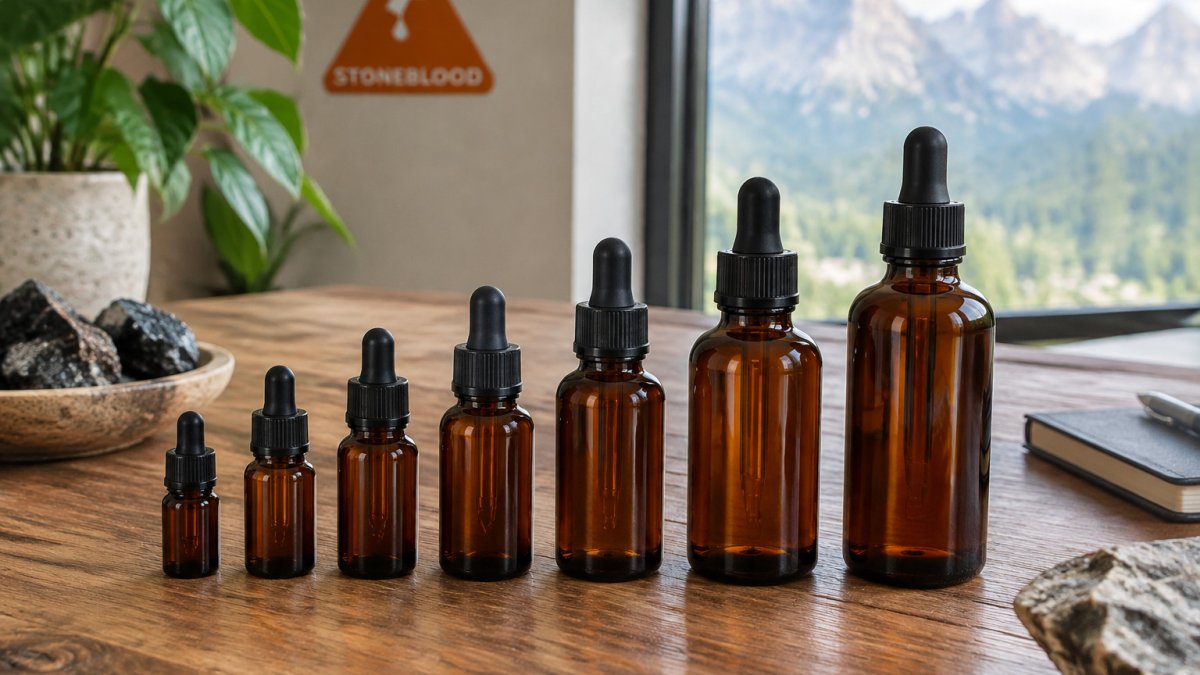
Our own products are liquid shilajit drops, including Magic Brown, our double-strength liquid shilajit, and Shilajit Original.

How to Identify Authentic Shilajit Before You Pay
Authentic shilajit is hard to fake perfectly, so use physical and documentary clues together. No single signal proves authenticity on its own.
What to check before you buy:
- Traceable origin. The brand names a region and a harvesting method, not just a continent.
- Lot coding. Every bottle or jar carries a lot number and a best-by date.
- Accessible testing. The brand shares batch results when you ask, tied to your lot.
- Honest flavor. Real shilajit tastes earthy and slightly bitter, not sweet or pleasant.
- Sensible packaging. Liquid products should be in sealed dropper bottles; resin should be in a container that protects it from heat and moisture.
- No miracle language. A brand that promises dramatic overnight results is telling you something about its standards.
A common mistake is judging by price alone in either direction. Cheap shilajit is often diluted or cut, but a high price is not proof of quality either. The certificate matters more than the tag.
Shilajit Sourcing and Wildcrafting: Why Origin Matters
Shilajit sourcing and wildcrafting determine more about the final product than any later step.
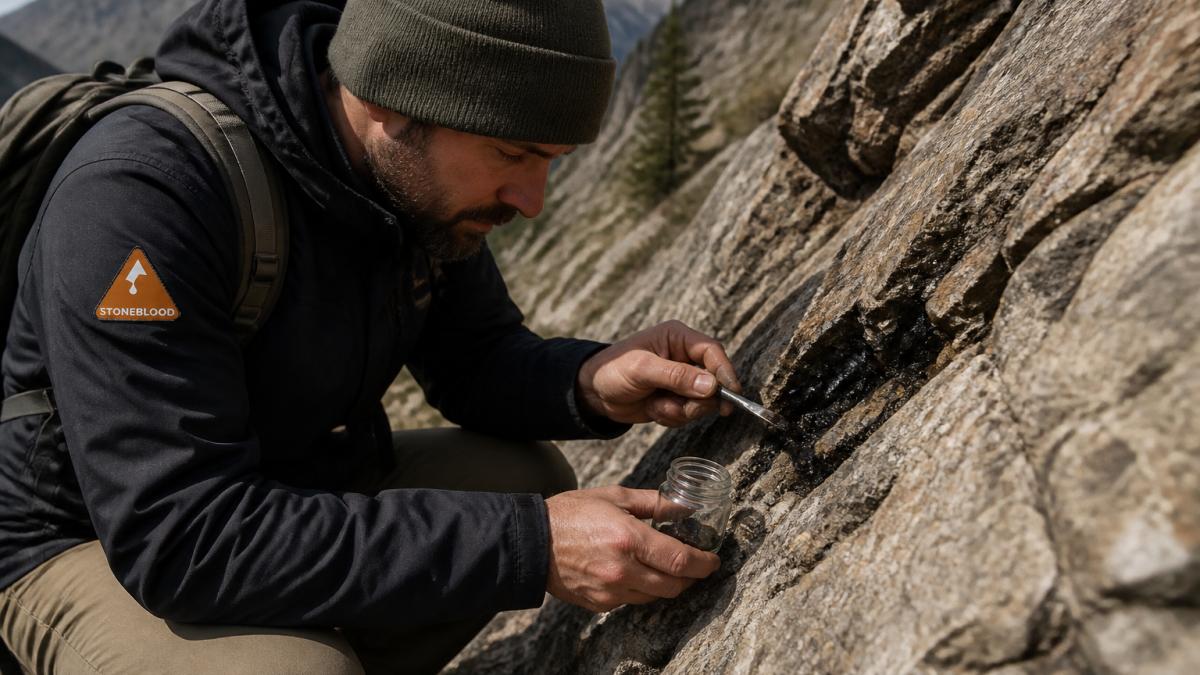
Wildcrafting means harvesting from the natural environment rather than producing the material in a facility.
Shilajit Original — Stoneblood →
Here is the chain to trace, and the question to ask at each step.
- Harvest. Who collected the resin, and in what region? A brand that names a range and a harvesting method is easier to trust than one that says only "Himalayan." The more specific the answer, the shorter the supply chain usually is.
- Transport and storage. Raw shilajit is a soft, tar-like resin that reacts to heat and moisture. Ask how it is held between harvest and refining. Material stored warm or damp is harder to vouch for later.
- Refining. This is where raw resin becomes a finished product. Some brands sell the resin as-is; others refine it into a water-soluble liquid. Refining is the step most likely to introduce dilution, so the brand's process description matters most here.
- Bottling. Look for a facility that follows current Good Manufacturing Practice (cGMP), a documented set of production and record-keeping standards, and the difference between a kitchen operation and a controlled one.
- Testing. Every batch should be tested for heavy metals and microbials by an accredited lab, with results traceable to the lot number on your container.
The U.S. Department of Agriculture's information on organic and natural claims is a useful reference for understanding how loosely terms like "natural" can be applied to supplements, and why origin documentation carries more weight than a word on a label. The U.S. Food and Drug Administration guidance on dietary supplement labeling shows what labels are and are not required to disclose, which helps you see how much is left to the brand's own honesty.
Our own approach is to keep that chain short and name it. Full testing detail sits on our quality and safety page.
Cost Per Serving: Comparing Value Across Shilajit Options
Cost per serving, not sticker price, is the honest way to compare shilajit value.
Here is the normalized method, which works for any brand in any format.
- Find the labeled serving size. For liquid drops, that is the dropper. For a jar of raw resin, it is the pea-sized portion the label describes.
- Find the number of servings in the container. If the label does not state it, divide total volume by serving size. A 1 fl oz (30 ml) dropper bottle taken as one dropper daily works out to roughly a month of servings.
- Divide the container price by the number of servings. That number is the only fair basis for comparison.
Two traps catch most buyers.
- Unit mismatch. Milliliters and grams are not interchangeable. A 30 ml dropper bottle and a 100 g resin jar cannot be compared by size, because the formats are measured differently and serving sizes are not equivalent. Convert both to cost per daily serving before deciding.
- Hidden serving counts. When a brand will not state how many servings a container holds, assume the value is worse than it looks. A vague serving count is usually deliberate.
A second layer matters just as much: what you are actually paying for per serving.
For our own line, the label directions are one dropper (about 10 to 15 drops) daily, so a single 1 fl oz bottle covers roughly a month. For current options and prices, compare Stoneblood Original and Magic Brown. Full batch testing detail lives on our quality and safety page.
Run the math on any brand before you commit. The number that matters is not what the bottle costs. It is what each day of use costs, and what you get alongside it.
Verdict: Who Vital Herbs Shilajit Suits, and Who It Doesn't
If verifiable sourcing and per-lot testing are your priority, we would point you to our own liquid drops instead. Every Stoneblood batch is wildcrafted in Utah, bottled in a cGMP-certified facility, and third-party tested, and we share the certificate for your lot when you email us. For current options and prices, compare Stoneblood Original and Magic Brown.
Safety, Interactions, and What the Evidence Does Not Show
Shilajit is a supplement, not a medicine, and the evidence base behind it is thinner than most marketing suggests. Many studies are small, and results vary.
What we can say is what the tradition says.
Talk to a healthcare professional before starting any supplement, particularly if you take medication, are pregnant or nursing, or manage a health condition.
Choosing a shilajit product means choosing how much verification you want to do yourself. Our liquid drops, including Magic Brown, mix cleanly into any drink and take one dropper a day.
These statements have not been evaluated by the Food and Drug Administration. This product is not intended to diagnose, treat, cure, or prevent any disease.
Frequently Asked Questions
What should I look for when comparing shilajit products?
Start with the form and the paper trail. Check whether the label says resin, liquid drops, or a powder blend, since each behaves differently in a drink. Then look for a lot number, a best-by date, and a stated testing laboratory. A brand that publishes heavy metal and microbial screening results, and will share a Certificate of Analysis for your specific batch, gives you something to verify. Vague words like pure or authentic without a batch number behind them are the main thing to treat with caution.
How can I tell whether shilajit is authentic?
Authentic shilajit has a strong, bitter, earthy taste, and it does not dissolve into a sweet or neutral drink. In resin form it softens with warmth and stays sticky. Liquid drops should mix cleanly into water or coffee and carry that same earthy flavor. Beyond taste and texture, the strongest signal is traceability: a lot code on the bottle, a named testing lab, and a brand willing to send you the results for your batch. Sweet-tasting products are usually cut with something else.
What is the difference between liquid shilajit and traditional resin?
Raw shilajit comes out of the rock as a thick, tar-like resin. Traditional use means breaking off a small piece and dissolving it in warm water or milk, which takes time and leaves grit behind. Liquid shilajit, such as Stoneblood's drops, is that same resin refined in distilled spring water into a water-soluble form, so one dropper mixes straight into water, coffee, tea, or food. The trade-off is convenience and consistent flavor versus the hands-on ritual of raw resin.
How do I use liquid shilajit drops in a drink?
Follow the label. Stoneblood's direction is 1 dropper, about 10 to 15 drops, once daily, stirred into water, coffee, tea, or food, or taken under the tongue as you get used to the taste. The earthy flavor is strong, so many people pair it with coffee or a smoothie rather than plain water. Shake the bottle first, since a liquid shilajit can settle, and keep it capped and out of direct heat between uses.
What does fulvic acid mean on a shilajit label?
Fulvic acid is the fraction of shilajit most often tied to how it carries minerals. It is a humic substance formed over long periods from compressed plant material, and it acts as a carrier that helps move minerals into cells. Shilajit naturally contains both fulvic and humic acids along with a broad spread of trace minerals. When a label lists fulvic acid, treat the number as one data point among several, not proof of quality on its own.

Share:
Ash Content of Pure Shilajit: What It Tells You
What Is Shilajit Made Of? Composition Explained | 2026