
Table of Contents
- What Is Shilajit Made Of? A Plain-Language Answer
- How Shilajit Forms in Mountain Environments
- Shilajit Composition: The Main Chemical Constituents
- What Is Fulvic Acid in Shilajit and Why It Matters
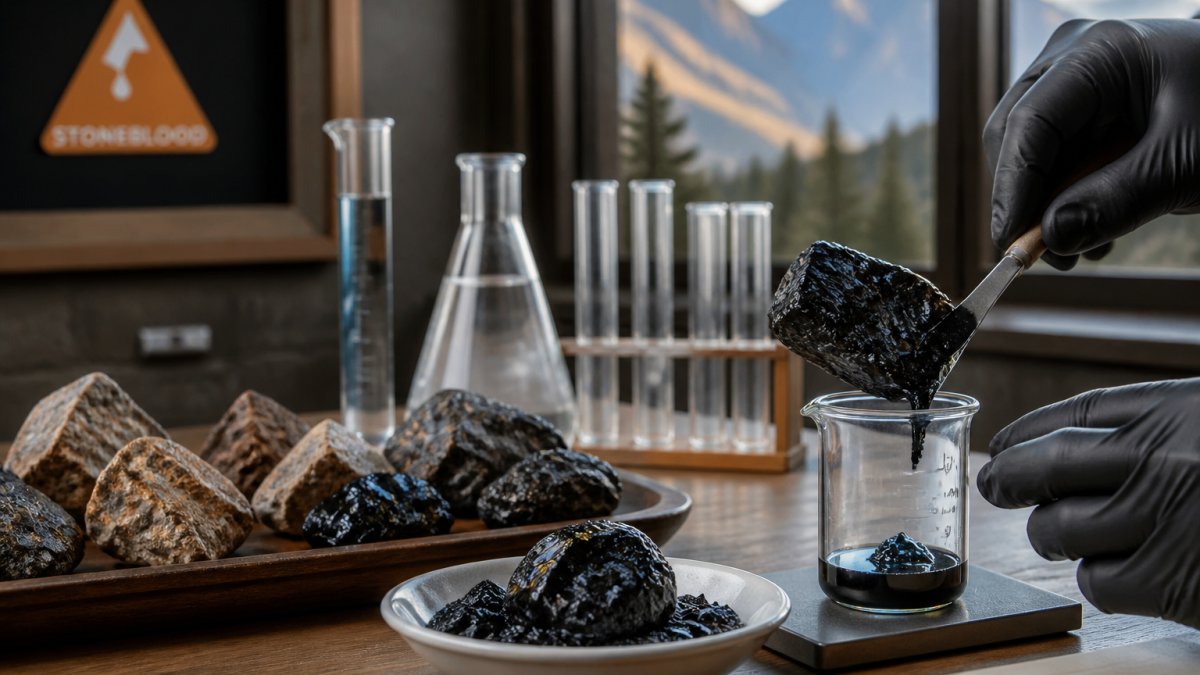
- How Shilajit Is Processed: From Raw Resin to Liquid Drops
- How Composition Varies by Source, Geography, and Sample
- How Shilajit Is Tested and What Laboratory Results Show
- Conclusion: What Matters Most When You Read a Shilajit Label
- Frequently Asked Questions
Last Updated: October 6, 2026
What Is Shilajit Made Of? A Plain-Language Answer
Shilajit is a mineral-rich, tar-like substance that seeps from rock in high mountain ranges, formed over long periods from compressed plant material and humus.
The two families that matter most are humic substances and minerals.
- Humic substances: fulvic acid and humic acid, the bioactive fraction most often discussed
- Minerals and trace elements: the ionic mineral content that gives shilajit its reputation
- Organic compounds: amino acids, fatty acids, polyphenols, and related plant-derived material
Below, we break down each fraction, explain where the numbers on a label come from, and show you what a lab result actually tells you.
Why the 60-80% Fulvic Acid Figure Needs Context
That widely repeated "60-80% fulvic acid" claim describes a fraction of the humic substance content, not the whole material. It usually refers to the proportion of fulvic acid within the humic and fulvic portion of a given sample, measured by a specific analytical method.
Change the method, change the source, or change the batch, and the figure moves. Treat it as a rough indicator of humic richness, not a purity grade.
How Shilajit Forms in Mountain Environments
Shilajit forms through slow decomposition of organic plant material layered into rock crevices, where microorganisms, bacteria, and fungi break the material down over long periods.
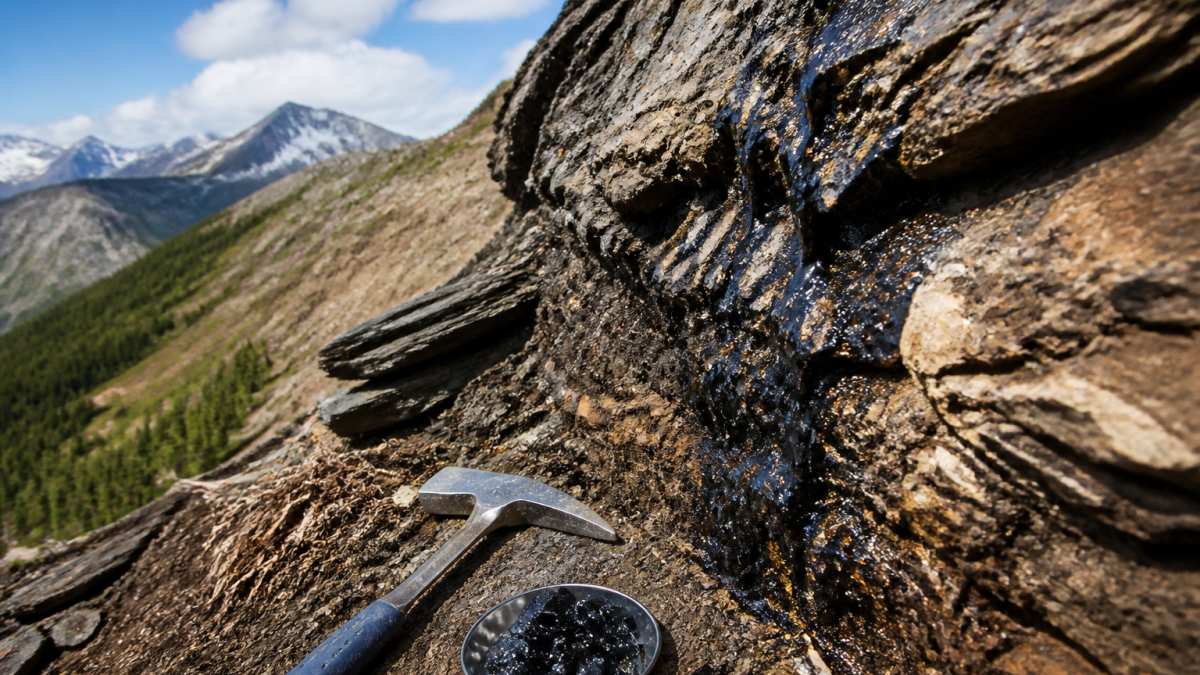
Geology shapes the outcome. The U.S. Geological Survey overview of humic substances in soils and sediments explains how humus and organic matter behave in natural deposits.
Shilajit Composition: The Main Chemical Constituents
Shilajit composition breaks into a few broad groups that analytical labs look for. The exact profile depends on the sample, but the categories are consistent.
| Constituent Group | What It Includes | Why It Matters |
|---|---|---|
| Humic substances | Fulvic acid, humic acid | The bioactive fraction most often studied |
| Minerals | Macro and trace minerals | Ionic mineral content in the raw material |
| Organic compounds | Amino acids, fatty acids, polyphenols | Plant-derived material from decomposition |
| Dibenzo-alpha-pyrones | Chromoprotein-bound compounds | A frequently referenced research group |
| Microorganisms | Bacteria, fungi | Part of the formation process, not the final product |
Humic Substances: Fulvic Acid and Humic Acid
Humic substances are the organic backbone of shilajit, and fulvic acid and humic acid are its two main fractions. Fulvic acid is the smaller, more water-soluble fraction; humic acid is the larger one that tends to stay behind in solution.
This difference is practical, not academic. Fulvic acid dissolves readily in water, which is why it is the fraction most often discussed in liquid formats. Humic acid contributes to the darker color and heavier body of raw material.
Minerals, Trace Elements, and Other Organic Compounds
Minerals and trace elements make up the inorganic side of the material, and they arrive alongside the organic fraction rather than separately. Beyond minerals, shilajit contains amino acids, fatty acids, and polyphenols carried over from the plant material it formed from.
Dibenzo-alpha-pyrones, often described as dibenzo-alpha-pyrone-chromoproteins, are another group that appears in chemical analysis of shilajit. These are bioactive compounds of research interest, and their presence is one reason the material is studied as a natural phytocomplex rather than a simple mineral supplement.
What Is Fulvic Acid in Shilajit and Why It Matters
Fulvic acid in shilajit is the water-soluble humic fraction that acts as a carrier, helping minerals move into solution and stay available. It is the component most responsible for shilajit's reputation as a mineral-delivery material.
In practice, this is why a liquid format is appealing. Fulvic acid dissolves cleanly in water, so a water-soluble liquid shilajit drops product mixes into a drink without grit or residue. Our own National Institutes of Health Office of Dietary Supplements fact sheets resource explains why mineral bioavailability is a genuine consideration in any supplement, not just shilajit.

How Shilajit Is Processed: From Raw Resin to Liquid Drops
Raw shilajit is a resin in nature: thick, sticky, and difficult to measure. Purification turns that raw material into something consistent and usable, and the method matters as much as the source.
Processing generally follows these stages:
- Collection: raw resin is hand-harvested from rock crevices
- Cleaning: visible debris and grit are separated from the resin
- Purification: the material is dissolved and filtered to remove insoluble matter
- Concentration: the solution is reduced to a stable, measurable form
- Testing: the finished batch is screened for contaminants before bottling
This is where raw material versus purified shilajit becomes a real distinction. Raw resin carries whatever the mountain carried. A purified, tested batch is a controlled product with a documented profile.
How Composition Varies by Source, Geography, and Sample
Composition varies by source, geography, and even batch, which is the single most underreported fact about shilajit. Two samples from the same range can differ in mineral content, humic ratio, and color.
Sample variation comes from several places:
- The plant material that originally decomposed at the site
- The mineral composition of the surrounding rock
- Moisture and temperature conditions during formation
This is why we are cautious about any brand claiming a fixed, universal composition. A responsible label reports what was found in a specific, lot-coded batch. Ours carries a lot number and best-by date so the results can be traced to the bottle in your hand.
How Shilajit Is Tested and What Laboratory Results Show
Testing is what separates a documented product from an unknown one, but "third-party tested" on a label tells you almost nothing on its own. What matters is what was tested, by what method, and whether the result connects to the bottle in your hand. This is the part of shilajit most articles skip, so it is worth walking through carefully.
Shilajit Original — Stoneblood →
The Main Analytical Methods
A serious shilajit test panel usually draws on several techniques, each answering a different question:
- ICP-MS (inductively coupled plasma mass spectrometry), the standard method for elemental analysis. It identifies and quantifies minerals and trace elements, and it is also the workhorse for detecting heavy metals such as lead, arsenic, cadmium, and mercury at very low concentrations.
- Microbial plating, screens for total aerobic bacteria, yeast, and mold to confirm the material is clean enough for consumption.
- Moisture and ash content, basic physical measures that indicate how much water and inorganic residue a sample carries.
Each method has a detection limit, the smallest amount it can reliably see. A result reported as "not detected" does not always mean zero. It often means below the limit of that particular test. A lab with a tighter detection limit can report a real number where a less sensitive lab reports nothing, which is why method details belong on the report.
What a Certificate of Analysis Actually Contains
A certificate of analysis, or COA, is the document a lab issues for a specific sample. A complete one typically includes:
- Sample identity, what was submitted and how it was described
- Lot or batch number, the link between the test and the finished product
- Test date and lab identification, when and where the work was done
- Methods used, the specific technique behind each result
- Results and units, the measured value for each analyte
- Detection limits, the threshold below which a result cannot be trusted
- Pass or fail against a stated specification, the standard the sample was held to
If any of those pieces is missing, the document is incomplete. A COA with results but no lot number cannot be tied to a specific bottle. A COA with a lot number but no methods cannot be compared against another lab's work.
Identity Testing Versus Contaminant Testing
These are two different jobs, and a good panel covers both.
Contaminant testing asks whether anything harmful is present above a safe threshold, heavy metals and microbials are the usual targets. This is the safety side of the report.
Identity testing asks whether the material is genuinely shilajit and what its composition looks like. This is the authenticity side. A sample can pass contaminant testing cleanly and still not be what the label claims, which is why identity work matters just as much.
How to Read a Lab Report Without Overreading It
A lab report tells you what was detected in one sample, at what level, and by what method. It does not tell you what the material will do in your body, and it does not transfer to a different batch. Two rules keep you honest when reading one:
- Match the lot number. A COA only speaks for the batch it names. If the number on the report does not match the number on your bottle, the paperwork proves very little about what you are holding.
- Read the method, not just the result. A number without its method and detection limit is hard to interpret and impossible to compare.
Our batches are third-party tested for heavy metals and microbials by an ISO/IEC 17025 accredited laboratory, and certificates of analysis are issued per lot. Email us the lot number printed on your bottle and we will share the results for your batch. You can also review our quality and safety documentation for how we handle testing and traceability.
Conclusion: What Matters Most When You Read a Shilajit Label
A shilajit label is only as useful as the information behind it.
Magic Brown, our double-strength liquid shilajit is wildcrafted North American shilajit refined into water-soluble drops, bottled from a cGMP-certified, third-party-tested batch, and it mixes cleanly into water, coffee, tea, or food.
For current options and prices, compare Stoneblood Original and Magic Brown.

Composition questions are fair questions, and a brand that cannot answer them clearly is telling you something.
These statements have not been evaluated by the Food and Drug Administration. This product is not intended to diagnose, treat, cure, or prevent any disease.
Frequently Asked Questions
What is shilajit made of?
Shilajit is made of decomposed plant material and humus compressed over long periods in mountain rock. Its main chemical constituents include fulvic acid and humic acid (together called humic substances), plus minerals and trace elements, dibenzo-alpha-pyrones, amino acids, fatty acids, and polyphenols. Because it is a natural material, exact shilajit composition varies by source, geography, and sample. Stoneblood Shilajit refines raw resin into water-soluble liquid drops rather than selling it as a powder or solid.
What is fulvic acid in shilajit and why is it important?
Fulvic acid is the most discussed bioactive fraction in shilajit. It is a humic substance that forms as organic plant material breaks down, and it is valued for its ability to bind minerals and help carry them into cells. In shilajit composition, fulvic acid is the component most often linked to how well minerals are absorbed. Stoneblood Shilajit describes its fulvic acid as being in a natural form, delivered alongside 85+ minerals in liquid drop format.
How does shilajit form in mountain environments?
Shilajit forms over millions of years as organic plant material, microorganisms, bacteria, and fungi break down into humus. That humus is then compressed by rock and geological pressure in mountain environments. Over time, the compressed material slowly oozes from rock crevices as a thick, tar-like mountain resin. This slow decomposition and compression process is why shilajit is described as a natural phytocomplex with a complex, variable chemical makeup.
How is raw shilajit refined into liquid drops?
Raw shilajit is a resin that must be purified before use. The refinement process typically involves dissolving the raw resin in water, filtering out rock debris and insoluble material, and then concentrating the solution. Stoneblood Shilajit refines its wildcrafted North American resin in distilled Rocky Mountain spring water to make it fully water-soluble. The result is liquid shilajit drops that mix cleanly into water, coffee, tea, or food, with 1 dropper (about 10 to 15 drops) taken daily.
How can you assess the quality of shilajit?
Quality assessment starts with sourcing and testing. Look for a brand that names where its shilajit comes from, how it is purified, and whether batches are third-party tested for heavy metals and microbials. Stoneblood Shilajit wildcrafts its resin in Utah, refines it in distilled spring water, and bottles it in a cGMP-certified facility. Certificates of Analysis are issued per lot, and customers can email with their bottle's lot number to request results for their batch.
What are the main natural components of shilajit?
The main natural components of shilajit include humic substances (fulvic acid and humic acid), minerals and trace elements, dibenzo-alpha-pyrones and related chromoproteins, amino acids, fatty acids, and polyphenols. These make up what is often called a natural phytocomplex. The exact proportions shift depending on where the shilajit formed and how it was purified, which is why two samples from different sources can have noticeably different shilajit composition.

Share:
Vital Herbs Shilajit Review: What Buyers Should Know
Is Shilajit Good for Kidneys? What Research Shows